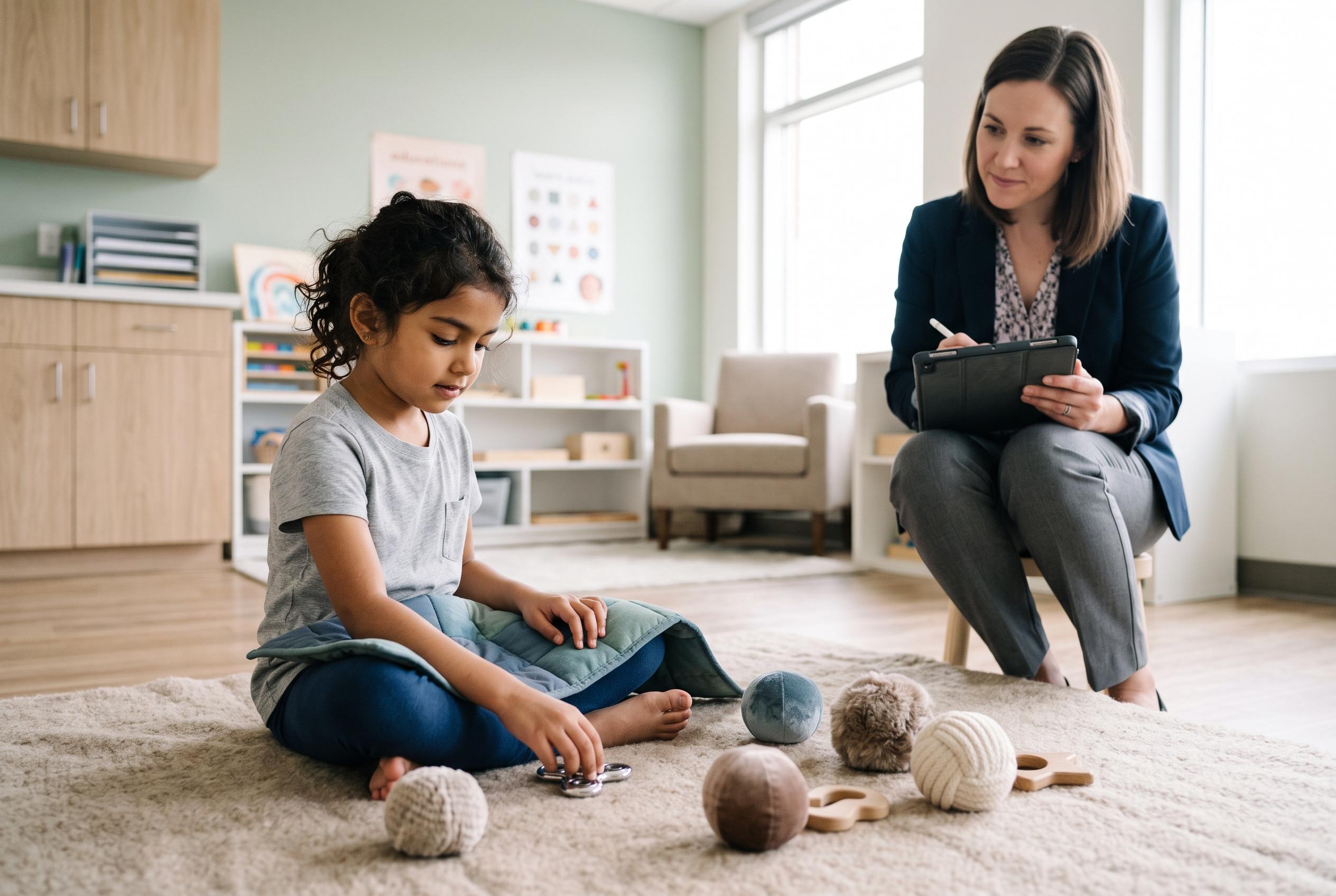

Innovative use of sensory toys in autism evaluations offers clinicians deeper insights into children’s behaviours, potentially transforming diagnosis and support strategies.
Sensory toys are increasingly being used to give clinicians a fuller picture of autistic children than standard checklists alone can provide. The approach draws on the work of Marilyn Monteiro, who found that conventional testing could miss important clues about a child’s development, communication and social behaviour until sensory materials were introduced into the assessment process. That thinking later helped shape the Monteiro Interview Guidelines for Diagnosing the Autism Spectrum, Second Edition, a sensory-based method designed to build a richer behavioural profile and support diagnosis and treatment planning.
The idea is simple: toys and other sensory items can make it easier to see how a child responds to sound, texture, movement and novelty. Monteiro’s “sensory conversation starters” are meant to reveal strengths and differences that may not emerge in a formal question-and-answer setting. According to the Texas Autism Resource Guide, MIGDAS-2 brings together information from parents, caregivers, teachers and the individual being assessed, then uses a sensory interview to supplement test scores with qualitative detail.
In practice, evaluators may use different types of materials to observe distinct abilities. Noisemakers can show how a child processes sound, while science objects and visual cause-and-effect toys can highlight problem-solving, engagement and understanding of cause and effect. Tactile items may help reveal fine motor skills and sensory responses, and alternative objects such as figures, books or familiar characters can draw out communication when a child is especially interested in a topic. For verbally fluent adults, Monteiro has recommended placing novel fidget items nearby so that self-regulation can be observed during the interview, rather than suppressed.
Support for the approach is echoed in broader research on sensory tools. A 2023 study in SciELO Brazil found sensory toys can help reduce anxiety in clinical settings, while a 2022 study published by Sage Journals reported that movement-based toys improved children’s engagement time with caregivers. Other research cited in the source material suggests that multi-sensory toys, especially those combining sound and light, can produce strong engagement in autistic children. The Centres for Disease Control and Prevention has also said a comprehensive evaluation should include how a child plays, learns, communicates, acts and moves.
That does not mean sensory toys replace standard diagnosis. Rather, they appear to work best as part of a broader, more flexible assessment that can reduce stress and improve observation. For children who may struggle in rigid testing environments, and for adults who communicate differently under pressure, sensory materials can help clinicians see behaviour more clearly and tailor support more effectively.
Disclaimer: This content is for informational purposes only and is not intended to be a substitute for professional medical judgment, advice, diagnosis, or treatment.