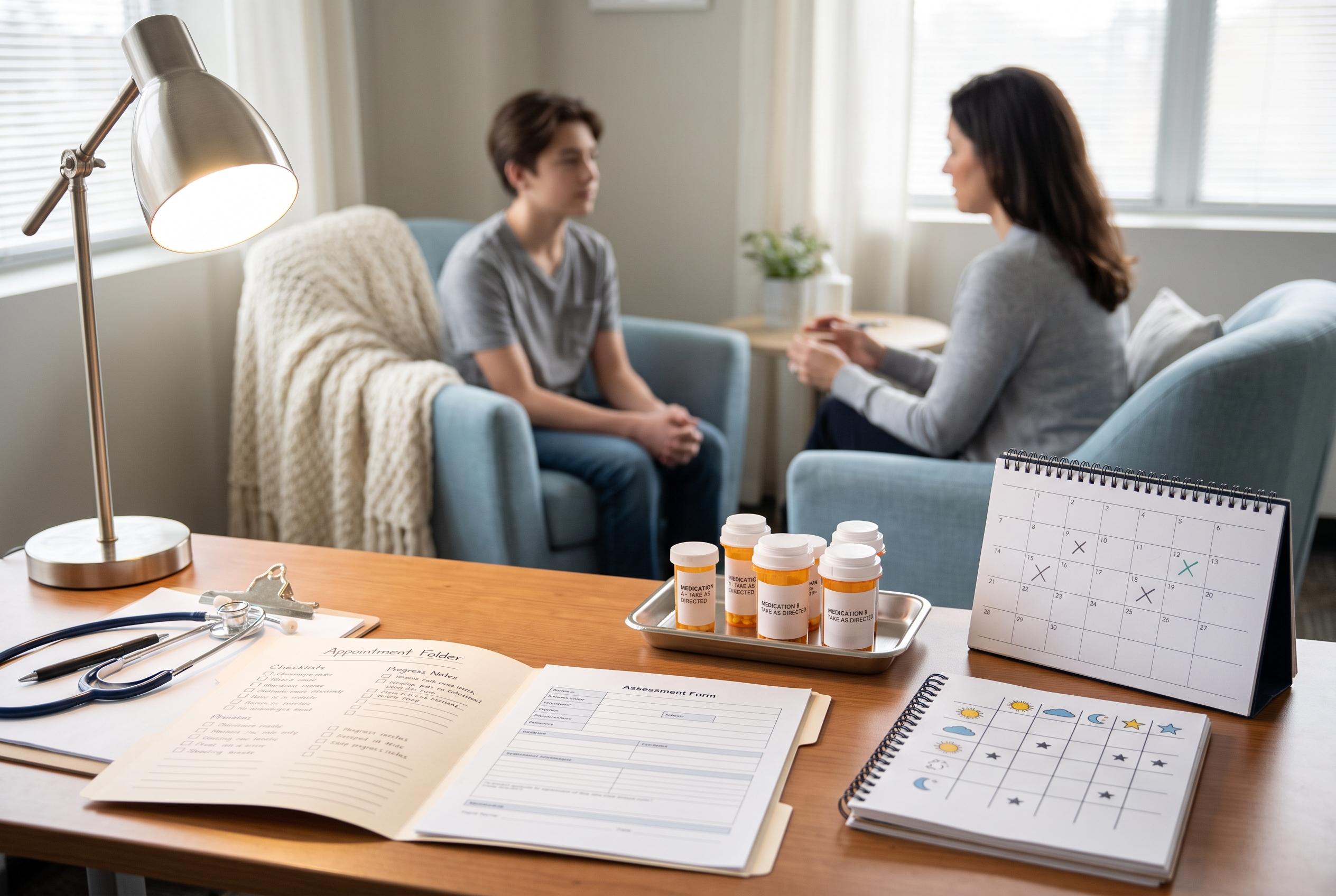

An increasing number of teenagers and young adults are consulting for mental health issues, prompting discussions among clinicians about the careful use of psychotropic medicines and the importance of comprehensive assessment and follow-up.
The question of whether there is “a pill for this” is coming up more often in consultations with teenagers and young adults who are struggling with sleeplessness, anxiety, low mood or persistent distress. Clinicians quoted by EL DIA say that rising demand does not automatically mean a generation is being overmedicated; it may also reflect greater awareness of mental health and less stigma around asking for help.
That distinction matters, because experts say the line between ordinary suffering and a diagnosable disorder is not always clear. Santiago Primerano, a psychiatrist and medical psychologist who works with adolescents and young adults, says anxiety is among the most common reasons for consultation, while depressive symptoms often overlap with broader emotional distress. The task, he says, is to judge severity, duration and impact on daily life before deciding whether medication has a place.
María Florencia Iveli, a child and adolescent psychiatry consultant, told EL DIA that antidepressants and other psychotropic medicines can be appropriate for some young patients, but only under stricter conditions than in adults. She said only certain drugs have evidence for use in children and adolescents, and that treatment is generally reserved for moderate or severe cases and should be paired with psychological care.
That caution is echoed by the Mayo Clinic, which says antidepressants are sometimes used in children and teenagers after a careful evaluation of symptoms, family history and other risk factors. The clinic notes that some medicines carry a warning about suicidal thoughts, but says that does not mean they should not be used when they are clearly indicated. It also lists fluoxetine and escitalopram among the antidepressants approved in the United States for certain young patients.
Evidence from the United States suggests that use of psychiatric medication in children and adolescents remains relatively limited overall, even if some categories have risen. A report from the Department of Health and Human Services found that SSRI use among people aged 3 to 17 increased from 1.5% in 2006 to 3.6% in 2023, while no medication class studied exceeded 5.3% of that age group. A separate review indexed on PubMed found that only a minority of psychotropic medicines are approved for children or adolescents in at least one country, especially antidepressants and anxiolytics.
Both specialists interviewed by EL DIA warned that the main risk is not always starting treatment, but continuing it without proper follow-up. Iveli said a medicine that was correctly prescribed can remain in use long after the original reason for it has changed, while Primerano said some patients stop monitoring because of cost or access problems and continue obtaining prescriptions elsewhere. They both stressed that these drugs can require gradual dose changes and planned withdrawal, because stopping abruptly may trigger discontinuation symptoms.
Primerano also said that modern consultations increasingly involve patients who arrive having searched symptoms online or through artificial intelligence tools. That, he suggested, can be helpful when it encourages people to seek care, but it cannot replace a clinical assessment that takes account of the person’s history, family environment, school life and social setting. In young people especially, he said, prevention and treatment extend beyond the prescription pad and depend on the wider context as much as on the diagnosis itself.
Disclaimer: This content is for informational purposes only and is not intended to be a substitute for professional medical judgment, advice, diagnosis, or treatment.