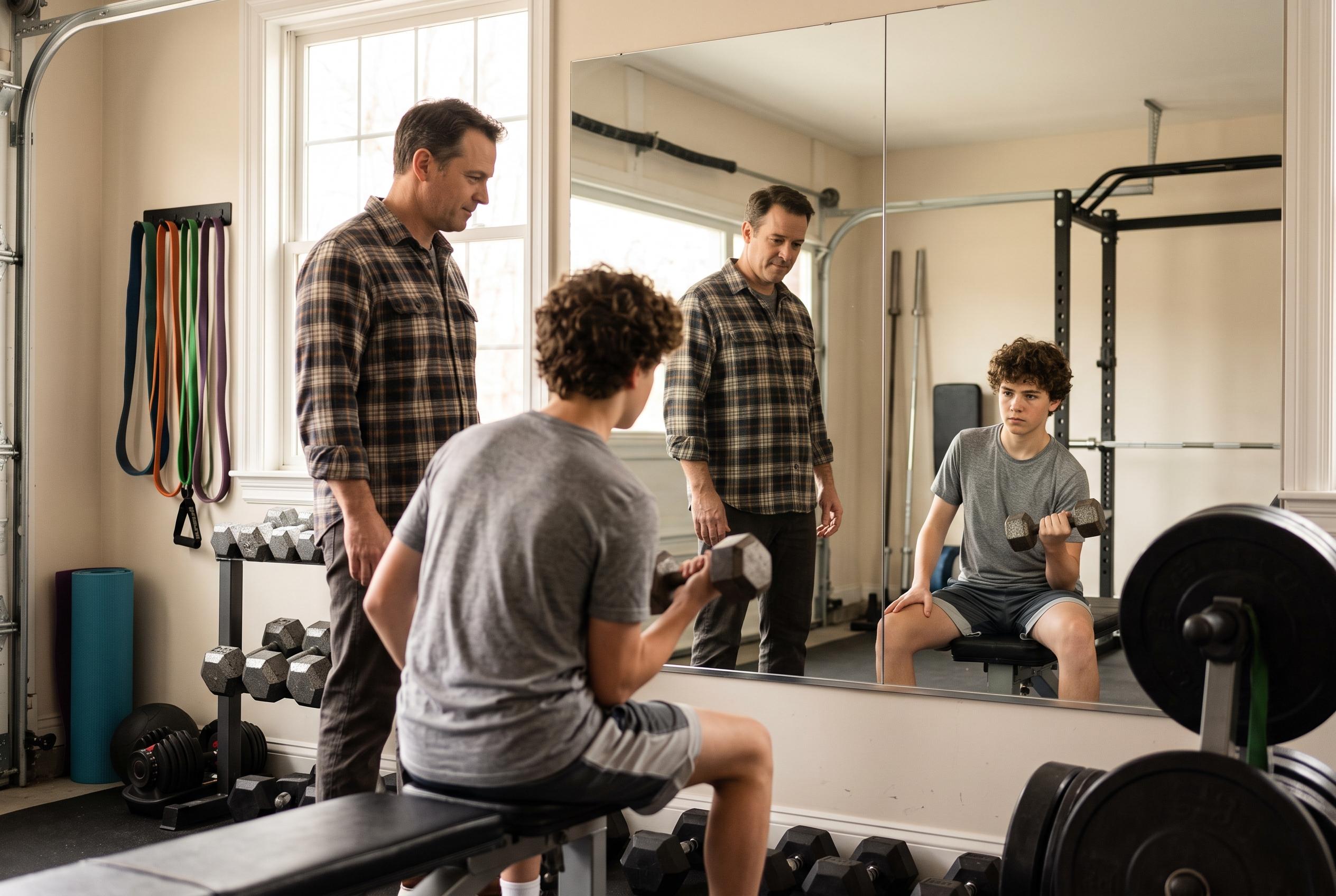

Experts warn that muscle dysmorphia, or bigorexia, is increasingly affecting boys and young men, with social media and steroid use identified as key contributing factors. Parents are urged to recognise behavioural signs and seek early intervention.
Parents have long been taught to watch for eating disorders such as anorexia, but specialists say a less familiar problem is increasingly affecting boys and young men: muscle dysmorphia, often called bigorexia. The condition involves a distorted belief that one’s body is too small or not muscular enough, even when the person already has an unusually muscular build, according to clinicians cited by HuffPost and reported discussions in The Washington Post.
Experts say the problem can show up as relentless exercise, rigid food rules, obsessive checking of the body and a growing fixation on supplements or steroids. Research published in Body Image found that exposure to muscularity-focused social media content was associated with more muscle dysmorphia symptoms among boys and men, while University of Toronto research linked heavier screen use with similar symptoms in Canadian boys and young men.
The rise of image-driven platforms appears to be a major factor. A report by the Centre for Countering Digital Hate found a sharp increase in TikTok videos promoting steroids, including material aimed at teenagers. That fits a wider pattern described by clinicians and researchers: young people are repeatedly shown idealised male physiques, often without any context about lighting, editing, professional trainers or extreme routines.
The pressure is not limited to social media alone. Research has also linked anabolic steroid dependence and muscle dysmorphia among male weightlifters, suggesting that the disorder can sit alongside risky training and drug use. Specialists quoted in the Washington Post noted that boys who lift for appearance, rather than sport performance, may be especially vulnerable.
For parents, the warning signs are often behavioural: a child who spends most waking hours training, skips meals with family, becomes distressed about rest days or talks constantly about getting leaner and bigger. Doctors and therapists advise starting with calm, non-judgemental conversations, limiting but not trying to eliminate social media, and focusing on health, rest, fuel and body diversity rather than appearance alone. If the behaviour is affecting school, friendships or daily life, experts say a paediatrician or mental health professional should be involved early.
Disclaimer: This content is for informational purposes only and is not intended to be a substitute for professional medical judgment, advice, diagnosis, or treatment.