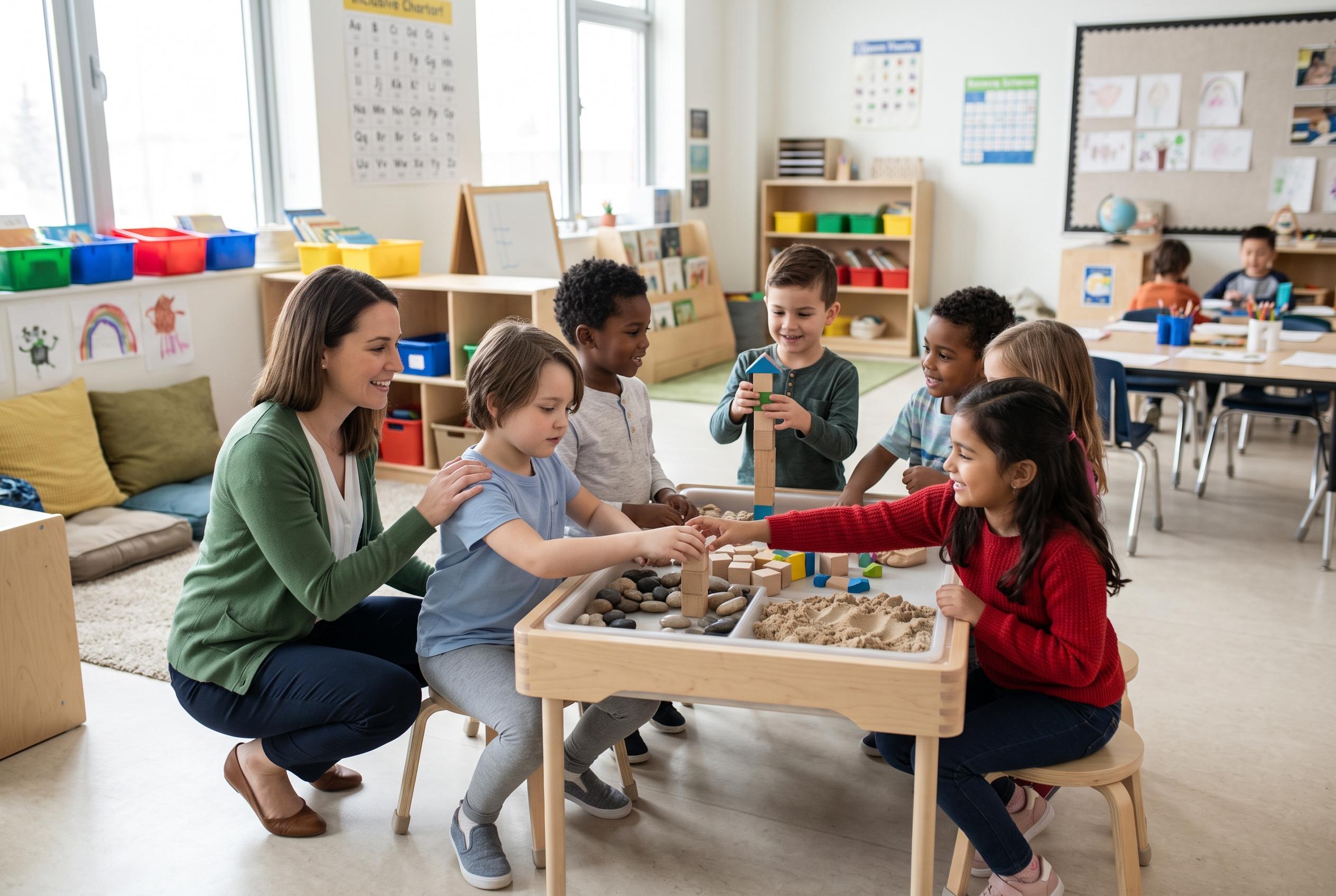

Many children who struggle with social cues are often misunderstood; with targeted support and recognition, they can learn to navigate friendships and foster confidence, challenging the view that social awkwardness is fixed.
Children who seem awkward in groups are often seen as difficult or odd, but the problem is frequently simpler than that: they may never have learned how much social life depends on reading the signals people send without speaking. The Jewish Press article describes a child who is bright and capable yet misses the unwritten rules of interaction, from personal space to tone of voice, and is then edged out by peers who feel uncomfortable around him.
That pattern is well recognised in developmental and therapeutic settings. DIR Floortime, for example, is designed around relationships, play and individual differences, with the aim of strengthening social communication, emotional reasoning and cooperation. Specialists in nonverbal learning disorder also note that some children can have strong language skills while still struggling to interpret facial expressions, gestures and other nonverbal cues, which can complicate friendships and daily life.
The point is not that these children are lazy, rude or unintelligent. Rather, they may be missing a set of social skills that others absorb almost automatically. Child Mind Institute describes nonverbal learning disability as a condition linked to visual-spatial processing difficulties, motor issues and social problems, while social-cognitive therapy is often used to help children build confidence, solve problems and navigate relationships more effectively.
For parents and educators, the first step is noticing the pattern: whether a child speaks too loudly, stands too close, reacts too slowly or too quickly, or dresses in a way that suggests they do not read the setting. Once the issue is identified, structured help can make a meaningful difference. The article’s central message is that social awkwardness is not always a fixed trait; with guidance, practice and the right support, many children can learn the language of friendship and find a place among their peers.
Disclaimer: This content is for informational purposes only and is not intended to be a substitute for professional medical judgment, advice, diagnosis, or treatment.