

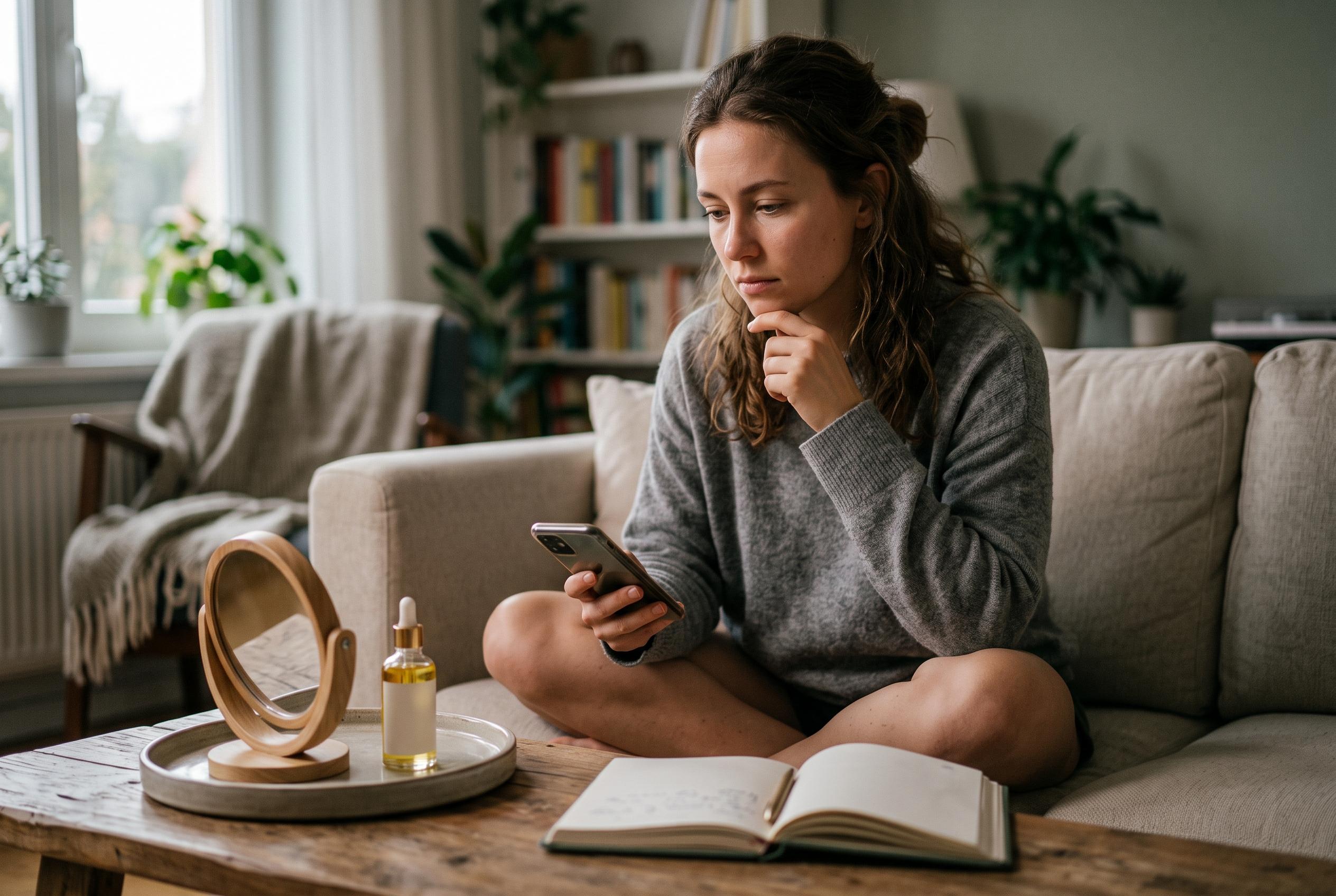

A new letter in the Journal of Eating Disorders urges researchers to focus on specific online experiences and communication patterns that influence body dissatisfaction, moving beyond mere screen time metrics and considering the role of self-compassion and platform algorithms.
Researchers studying social media and body image are being urged to stop treating online life as a single, blunt exposure and to look instead at the specific experiences that shape how people feel about their bodies. In a letter published in the Journal of Eating Disorders in August 2026, Dwi Prasetyo of Universitas Negeri Surabaya and Tia Saraswati of Universitas Airlangga argue that the field needs a more precise, communication-focused framework for understanding when social media may contribute to self-objectification and body dissatisfaction. Their comments respond to a 2025 systematic review that found social media use was linked to greater self-objectification, particularly body surveillance, alongside body shame and lower body esteem, while also highlighting self-compassion as a potential protective factor.
At the centre of their critique is a simple but important point: social media is not one thing. The authors say studies have often lumped together very different behaviours, from scrolling through appearance-driven feeds to posting edited selfies, comparing bodies, reading comments, or taking a break from an app altogether. They propose breaking online engagement into distinct communicative experiences, including the type of content a person sees, what they do with it, the feedback they receive, the social comparisons it invites, and the way platform algorithms shape what keeps appearing on screen. That approach, they argue, would better reflect how digital spaces work in practice and could help explain why some users experience more body pressure than others.
The letter also tries to sharpen how researchers think about self-compassion. Prasetyo and Saraswati do not want it recast as a collective or social quality; they say it remains an individual psychological resource. What changes, in their view, is the environment around it. Supportive responses, body-accepting norms and lower levels of appearance-based criticism may help people maintain self-kindness, while cyberbullying, appearance comparison and other forms of pressure may undermine it. The 2025 review had already suggested that self-compassion could moderate or mediate the link between social media use and body image concerns, and the new letter builds on that by arguing that researchers should examine when and how communication settings make that protection stronger or weaker.
The practical implication is that prevention efforts may need to move beyond screen-time advice. Rather than focusing only on how long people spend online, the authors suggest interventions should teach users to recognise the mechanisms that create body pressure: comparison traps, appearance editing, visible popularity cues, and repeated algorithmic promotion of idealised images. The letter says future research should combine methods such as ecological momentary assessment, which asks people about experiences in real time, with longitudinal tracking, content analysis and digital trace data. In that way, scholars could identify not just whether social media affects body image, but which online experiences are harmful, for whom, and under what conditions self-compassion can help.
Disclaimer: This content is for informational purposes only and is not intended to be a substitute for professional medical judgment, advice, diagnosis, or treatment.



