

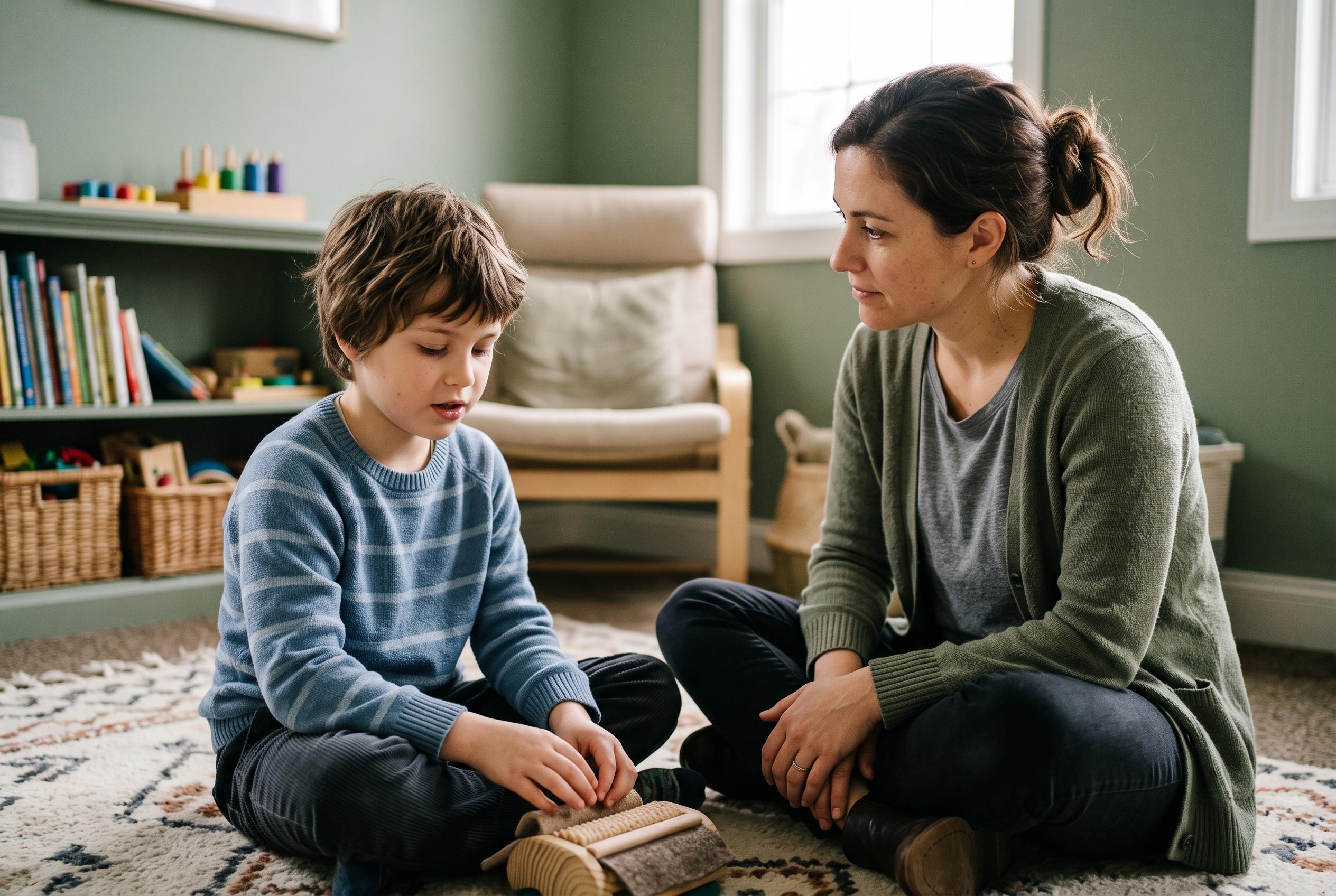

A UCLA study suggests asking autistic children to describe uncomfortable sensations objectively can alter brain activity, although it does not immediately make the experience feel less unpleasant.
A simple mental exercise that asks autistic children to describe a sensation like a reporter may help dampen the brain’s reaction to uncomfortable touch, according to a UCLA study published in the Journal of Child Psychology and Psychiatry. The technique, which researchers call cognitive reappraisal, encouraged children to focus on the facts of a sensation rather than on how unpleasant it felt.
The study involved 47 children with autism and 45 typically developing children aged eight to 15. While participants were in an MRI scanner, researchers rubbed mildly unpleasant materials, including artificial grass and scratchy wool, on their forearms. Before the scan, the children were taught the so-called reporter game: one approach asked them to describe the texture objectively, while another prompted them to pay attention to their emotional reaction.
UCLA researchers found that autistic children who used the reporter approach showed reduced activity in sensory areas of the brain compared with when they concentrated on their feelings. The scan results also showed activity in regions linked to emotional regulation in both groups, with older autistic children appearing to recruit those areas more strongly. However, the strategy did not immediately make the textures feel less unpleasant to autistic participants, even though it changed their brain activity.
That distinction matters, because sensory over-responsivity can make everyday experiences, such as scratchy clothing, loud alarms or crowded environments, deeply distressing for autistic children. The lead author, Shulamite Green, said the work marks a shift from describing brain differences to testing possible treatments. She added that cognitive behavioural therapy already uses similar techniques, suggesting the method could be folded into existing care rather than requiring a brand-new approach.
The findings do not mean the reporter game is a stand-alone fix. The authors and other coverage of the study note that longer-term intervention may be needed before changes in brain activity translate into a clear change in how sensations are experienced. Still, the research points to a potentially practical tool for parents, carers and therapists, especially because it may fit alongside occupational therapy, sensory integration and other established supports. Environmental adjustments such as quieter spaces, dimmer lighting, noise-cancelling headphones and weighted blankets may also help children manage sensory overload.
Disclaimer: This content is for informational purposes only and is not intended to be a substitute for professional medical judgment, advice, diagnosis, or treatment.



