

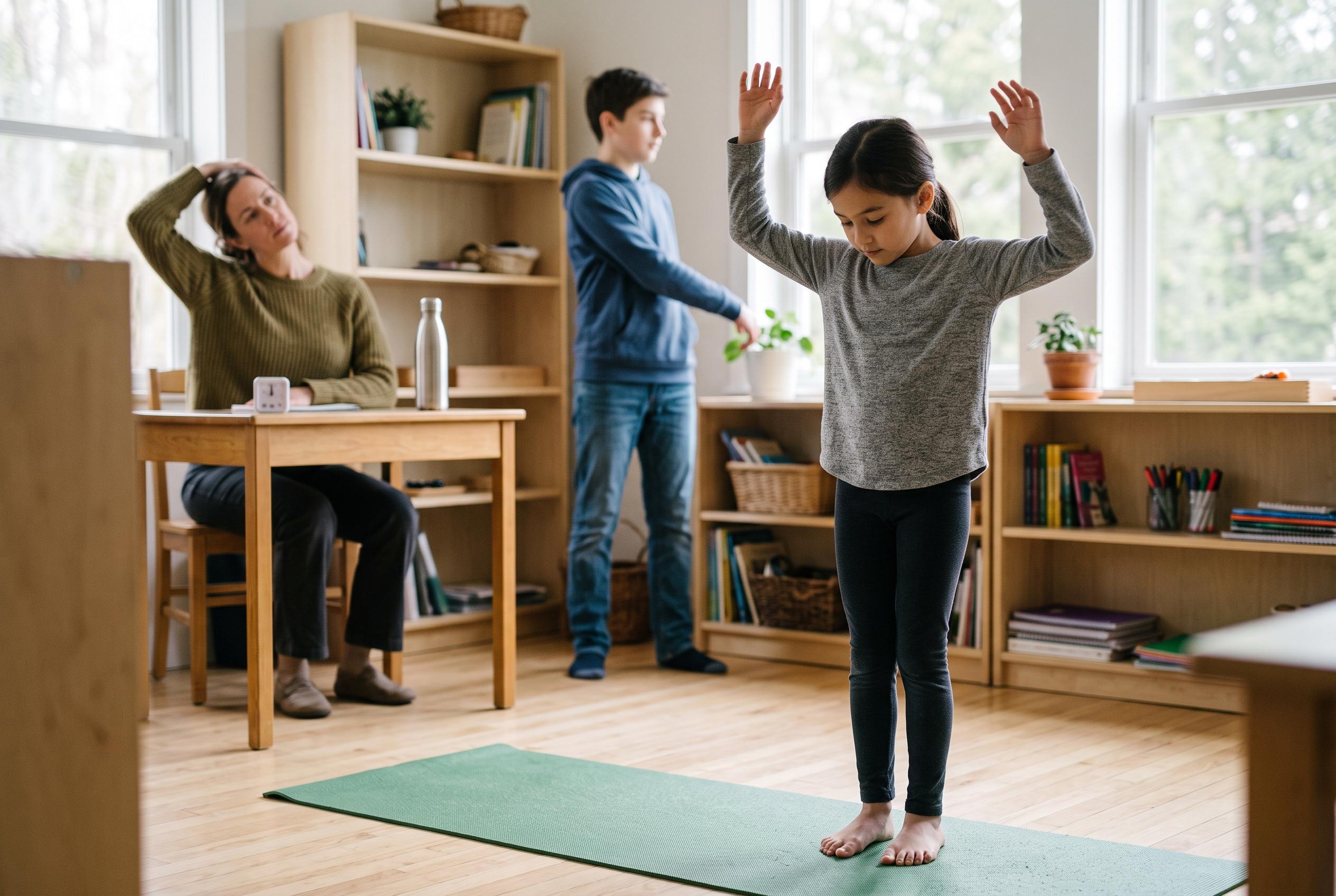

New research highlights how adapting mindfulness practices, making them brief, movement-oriented, and age-appropriate, can enhance attention and reduce impulsivity in children, teenagers, and adults with ADHD, challenging traditional methods that favour stillness and silence.
For children, teenagers and adults with ADHD, mindfulness can work best when it is stripped of the assumption that stillness equals success. The point is not to force a restless mind into silence, but to help people notice where attention has gone and practise bringing it back without shame. That makes the teaching itself as important as the exercise, especially for learners who have spent years hearing that their attention is a problem rather than a skill they can develop.
Research suggests there is a real, though modest, case for using mindfulness as part of ADHD support. A recent meta-analysis of meditation-based mind-body approaches, including mindfulness, yoga, tai chi and qigong, found small to moderate gains in inattention, hyperactivity and executive function, the mental skills that help people plan, organise and regulate behaviour. A separate body of work on young people has also found the clearest benefits in hyperactivity and impulsivity, with smaller effects on attention itself. The evidence does not support mindfulness as a cure, but it does suggest it can be a useful tool when it is taught in the right way.
That matters because standard meditation classes often ask for precisely the things ADHD can make hardest: sustained focus, prolonged stillness and a quiet room full of patience. For many people with ADHD, movement actually helps attention rather than disrupting it, and a short, concrete practice is far more workable than a long, open-ended sit. The most effective approach is usually to make the practice brief, predictable and physically grounded, so that it feels achievable from the first minute.
With children, the best exercises are often game-like and brief enough to finish before frustration sets in. Simple activities such as noticing a sound, blowing on a pinwheel, feeling the breath in the hands or feet, or doing a quick freeze-and-move game can all turn mindfulness into something tangible. The guidance from childcare-focused programmes is consistent on one point: keep the practice short, keep it specific, and let movement be part of the exercise rather than something to be managed away.
Teenagers need a different tone, because they are often more self-conscious and may already feel singled out by ADHD. A low-pressure, plainspoken approach works better than anything that sounds therapeutic or overly spiritual. Framing mindfulness as attention training, rather than as a personality change, can make it easier for teenagers to engage without feeling exposed.
Adults, meanwhile, often arrive with a longer history of failed attempts at organisation and focus. They may be more willing to experiment with the practice, but they are also likely to know, from experience, that a one-size-fits-all method will not suit them. The most useful teaching tends to involve choice: different anchors for attention, permission to fidget or move, and a clear explanation that the goal is not to eliminate wandering thoughts but to notice them and return.
A steady emphasis on language is crucial. A teacher who says “stay still and concentrate” may unintentionally reinforce the very message many people with ADHD already carry: that they are not trying hard enough. In contrast, language that names wandering as normal and returning as the actual practice can lower the shame that often shuts people down. That reframing is more than a comfort; it is part of what makes the exercise possible in the first place.
Parents and caregivers also matter, especially when children are involved. Some ADHD mindfulness programmes include families, and that appears to help both practice at home and, in some cases, parental stress. The most practical home version is usually a single short exercise repeated often, not a new routine that becomes another source of pressure. If adults model the behaviour themselves, children are more likely to treat it as a shared habit rather than a chore imposed on them.
The limits of mindfulness should also be stated plainly. It is best understood as a support, not a replacement for medication, therapy, coaching or school accommodations. For people with ADHD, the most realistic promise is not perfect focus, but a little more pause before reacting, a little more ease in returning to the task, and a little less self-criticism when attention drifts. For many learners, that is enough to make the practice worth keeping. A careful teacher, backed by sound preparation, can turn that small gain into something that lasts.
Disclaimer: This content is for informational purposes only and is not intended to be a substitute for professional medical judgment, advice, diagnosis, or treatment.



