

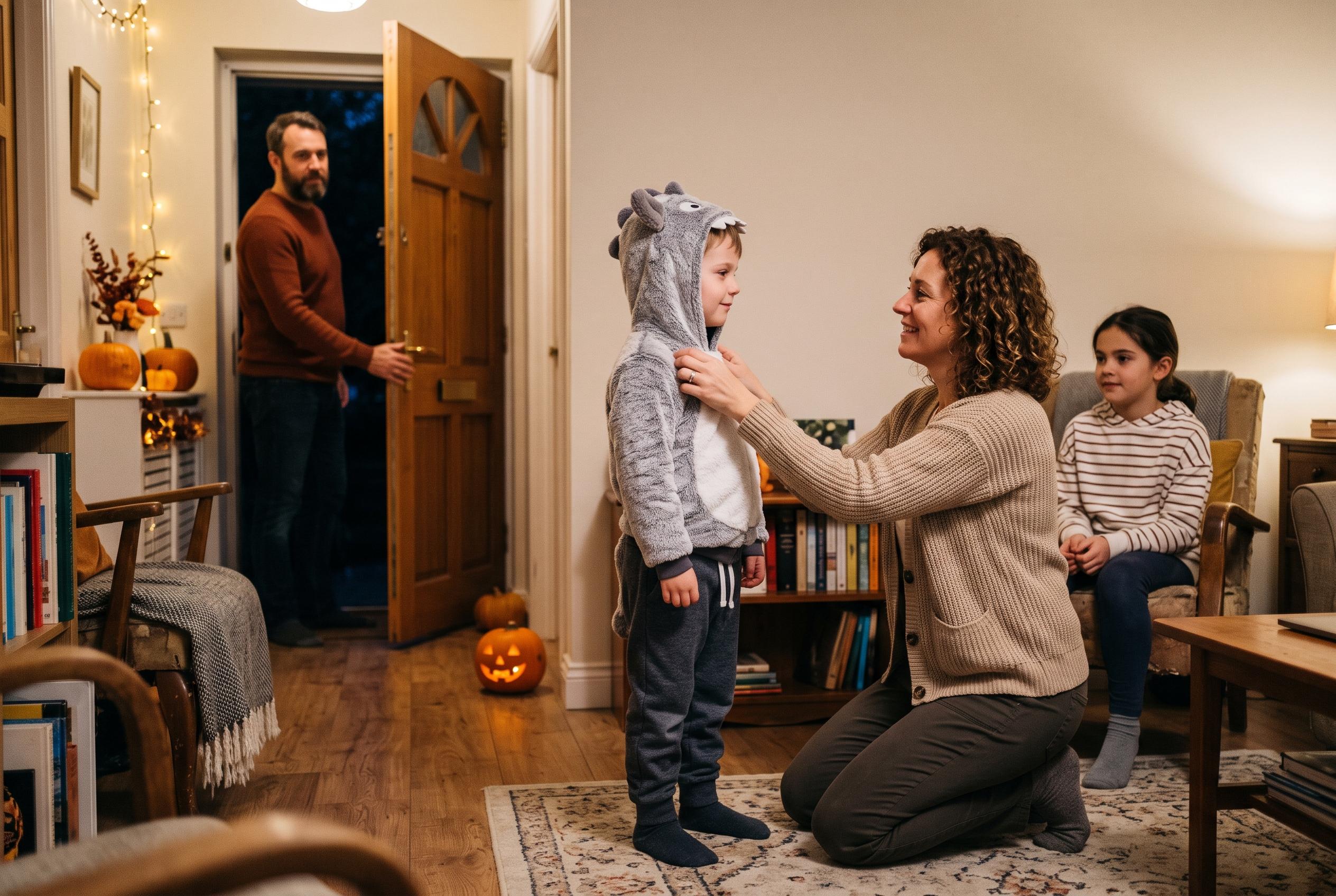

Families are being urged to practise costumes, door-to-door routines and escape plans before Halloween, while treating a short outing or staying home as a successful celebration.
Parents of children with autism, ADHD or other sensory differences are being urged to prepare for Halloween well before October 31, with behaviour specialist Meaghan Timko recommending that families rehearse the most difficult moments at home rather than hoping a child will cope on the night. According to Disabled World, Timko, an advisor on behaviour analysis at the Special Needs Care Network, says the aim is to make the evening predictable, brief and optional enough that a child can succeed even if they only visit a few houses or do not go out at all.
The first step is to test the costume early. Timko advises a short trial at home, with the child wearing the full outfit, including shoes, while watching television or having a snack, so families can spot itching seams, tight footwear, overheated fabric or other problems before the crowds arrive. Other organisations offering sensory-friendly Halloween guidance make the same point: familiarise children with the holiday in advance, use visual supports such as a schedule or social story, and give them a chance to try the costume before the big night.
Rehearsal should also include the front door. Timko recommends practising the entire sequence at home: approach the door, knock or ring, wait, take one sweet, step back and leave. She says the practice should continue until it feels routine, then be made slightly harder by adding a masked family member, a spooky sound or a darkened porch. Disabled World reports that Timko also suggests a second rehearsal in a real-world setting, such as a doorstep or front step, because skills learned only in a clinic or classroom do not always transfer when a child is tired, excited or overwhelmed.
Planning the route matters just as much. Families are advised to walk the path in daylight, choose a point where they will turn back and agree a stop signal that means the outing is over. For children who may run when distressed, caregivers can set a visible meeting point, place a phone number inside the costume and add reflective tape or a glow stick for visibility. Other guides on sensory-friendly Halloween celebrations recommend going out early, before streets become crowded, and accepting alternatives such as trunk-or-treat events, daylight walks to see decorations or a quiet evening at home.
Timko also wants parents to remove pressure around speaking. According to Disabled World, she says a child who simply holds out a bag is already taking part, and a printed card or communication device can stand in for “trick or treat”. Behaviour-focused guidance from other autism support groups likewise encourages families to lower sensory demands, offer non-food options and choose activities that match the child’s tolerance. The broader message is that a successful Halloween is not measured by how much candy is collected, but by whether the child feels safe enough to want to try again next year.
Disclaimer: This content is for informational purposes only and is not intended to be a substitute for professional medical judgment, advice, diagnosis, or treatment.



