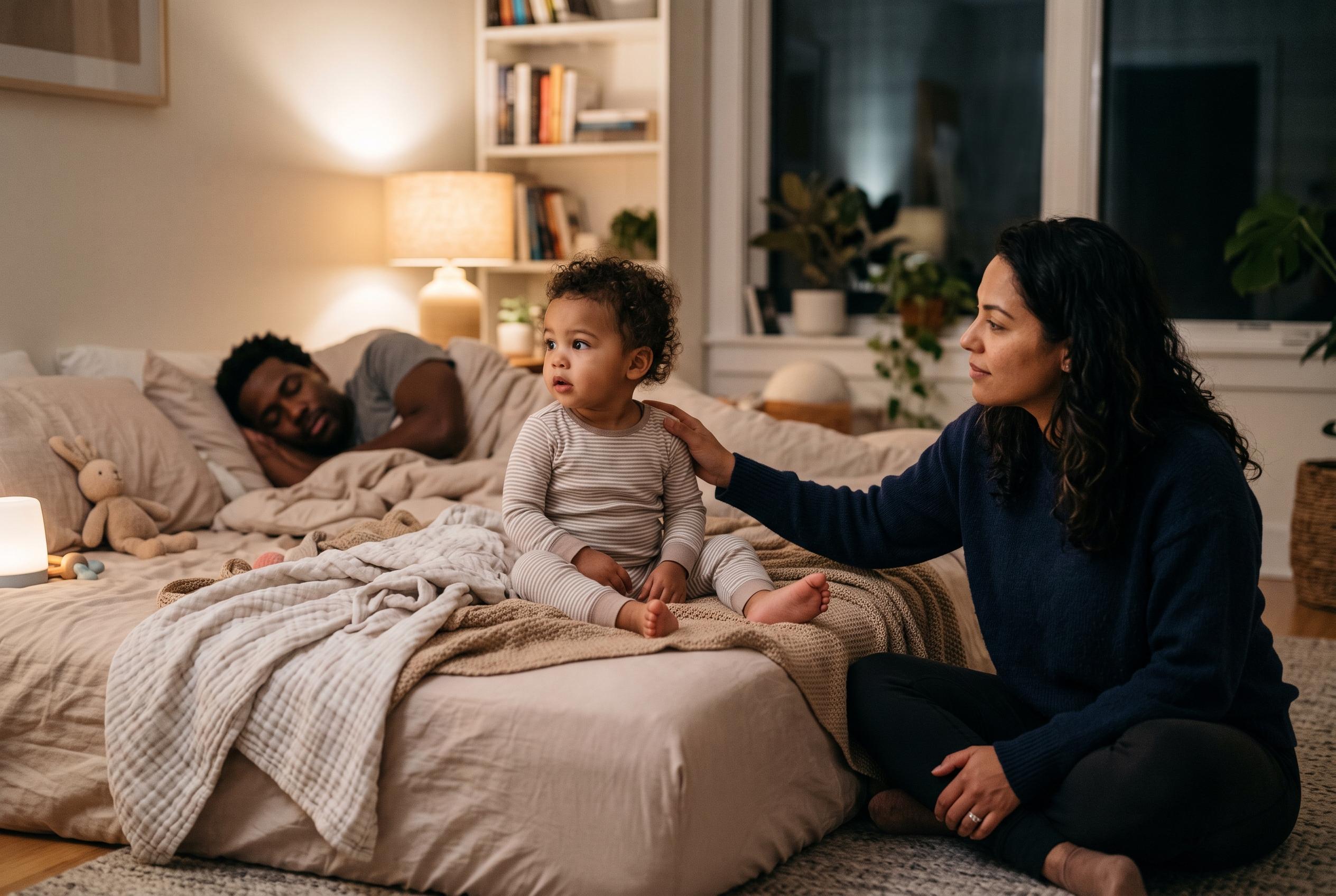

New research suggests that some children’s sleep difficulties are rooted in their temperament, prompting a shift towards tailored approaches that focus on regulation rather than compliance.
Many parents exhaust the usual sleep advice only to find that nothing changes. The routine tweaks, the wake-window adjustments, the gentle settling methods and the later bedtimes may all fail to make much difference, leaving bedtime a nightly ordeal. The deeper issue, according to Psychology Today, may be that some children are simply built to be more alert, more reactive and harder to settle than others.
That idea is supported by research showing that temperament can shape sleep in meaningful ways. A review published by Psychology Today argued that traits such as reactivity, sensory sensitivity and adaptability are often left out of standard sleep guidance, even though they can affect how easily a child drifts off and stays asleep. Older studies indexed on PubMed found links between emotional intensity, negative temperament and more serious behavioural sleep disturbance, while another study suggested that preschool sleep patterns can vary according to temperamental differences and related biological factors.
The practical implication is that some children are not failing to learn sleep; they are encountering sleep with a nervous system that runs hot. Children who seem switched on from birth, who push back hard against change, or who experience sleep as a loss rather than a relief may need more help with downshifting. Parents of children like this are often told to be firmer or more consistent, but the article argues that this can miss the point if the child’s underlying temperament is driving the struggle.
That does not mean children with these traits need less sleep. On the contrary, sleep remains central to brain development, memory and growth, and children generally need far more sleep than adults, according to guidance summarised by Tom’s Guide. But it does mean parents may need to think less about forcing compliance and more about regulation: earlier bedtimes, protected naps, a quieter environment and transitions that give the child time to shift gears.
Researchers and clinicians are increasingly recognising that behavioural sleep interventions do help many children, but not all of them. The Psychology Today piece notes that a sizeable minority of children do not respond well to conventional sleep training, which overlaps with the share of children thought to have more spirited temperaments. The message for parents is less about blame and more about fit: when sleep is hard-wired into temperament, the answer is often not to fight the child you have, but to build a calmer path towards sleep around them.
Disclaimer: This content is for informational purposes only and is not intended to be a substitute for professional medical judgment, advice, diagnosis, or treatment.