

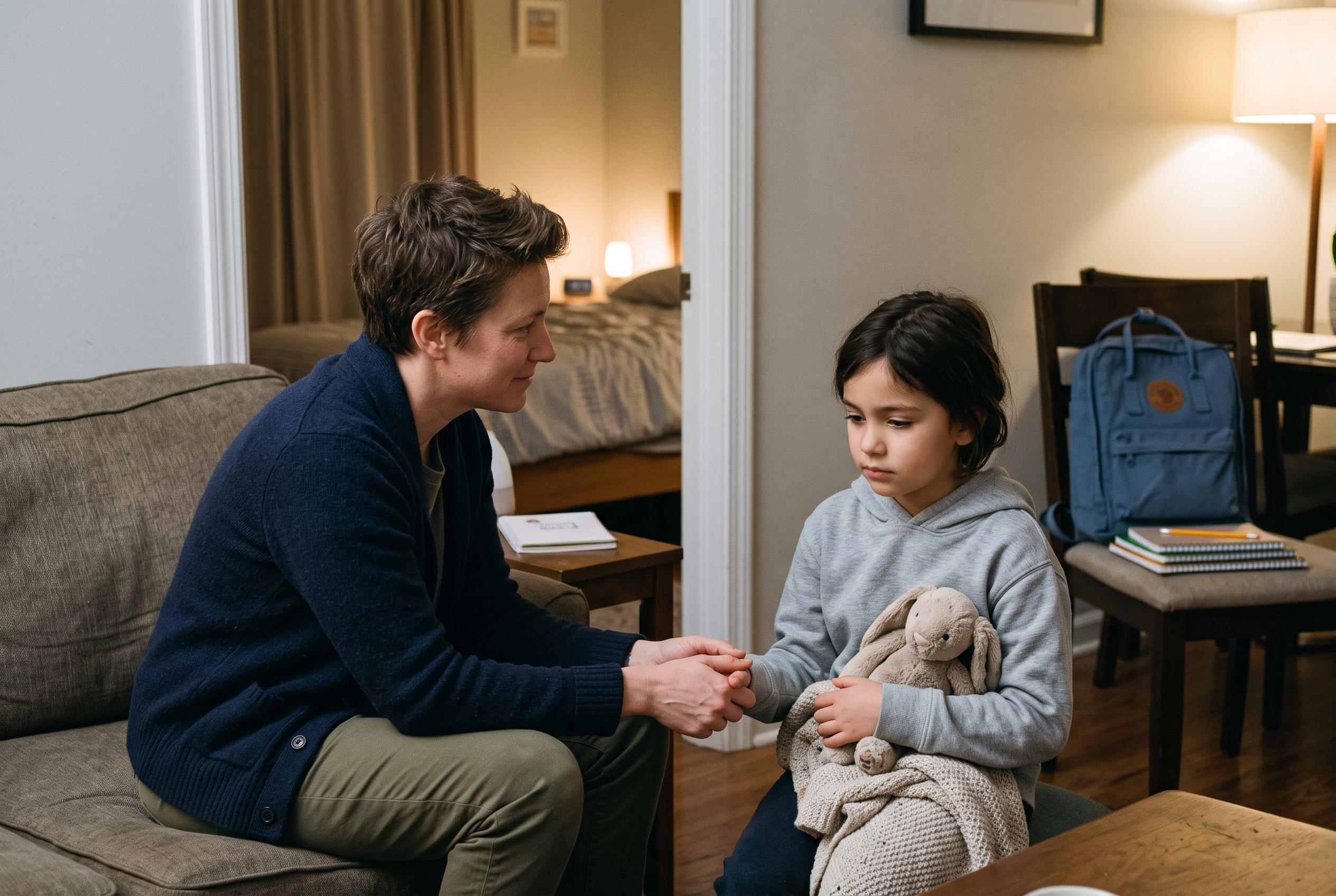

While occasional worry is part of growing up, persistent anxiety in children can affect their sleep, friendships, and school life. Experts emphasise early recognition and support to prevent long-term effects.
Childhood anxiety is a normal part of growing up, but it can become a problem when worry starts to dominate a child’s day. A child may feel tense before school, a test or a new experience, yet that reaction usually passes. When fears linger, are hard to manage or begin to affect sleep, friendships or school attendance, parents may need to look more closely at what is going on.
Anxiety in children does not always sound like anxiety. According to Cleveland Clinic, it can show up as irritability, restlessness, clinginess or repeated requests for reassurance. Some children try to avoid school, clubs, sleepovers or other situations that make them uncomfortable. Physical complaints can also be a clue, with headaches, stomachaches, fatigue and sleep problems sometimes linked to anxiety. Simply Psychology notes that the way anxiety appears can vary with age, from separation worries in younger children to social fears in teenagers.
Parents are often advised not to dismiss the feeling, even when the fear seems small. UNICEF says it can help to explore the worry with a child rather than brushing it aside, while the Mayo Clinic Health System recommends keeping routines steady, supporting healthy sleep and exercise, and helping children face feared situations gradually. Some families also find breathing exercises, sensory techniques or shifting attention to a pleasant activity useful in the moment.
Experts also stress the value of early support. A paediatrician can help judge whether a child’s symptoms reflect ordinary development, an anxiety disorder or another issue, and may suggest counselling or other treatment if needed. Cleveland Clinic warns that untreated anxiety can have wider effects later on, which is why persistent symptoms should not be ignored. For parents, the key signal is not whether a child worries at all, but whether the worry is taking over normal life.
Disclaimer: This content is for informational purposes only and is not intended to be a substitute for professional medical judgment, advice, diagnosis, or treatment.



