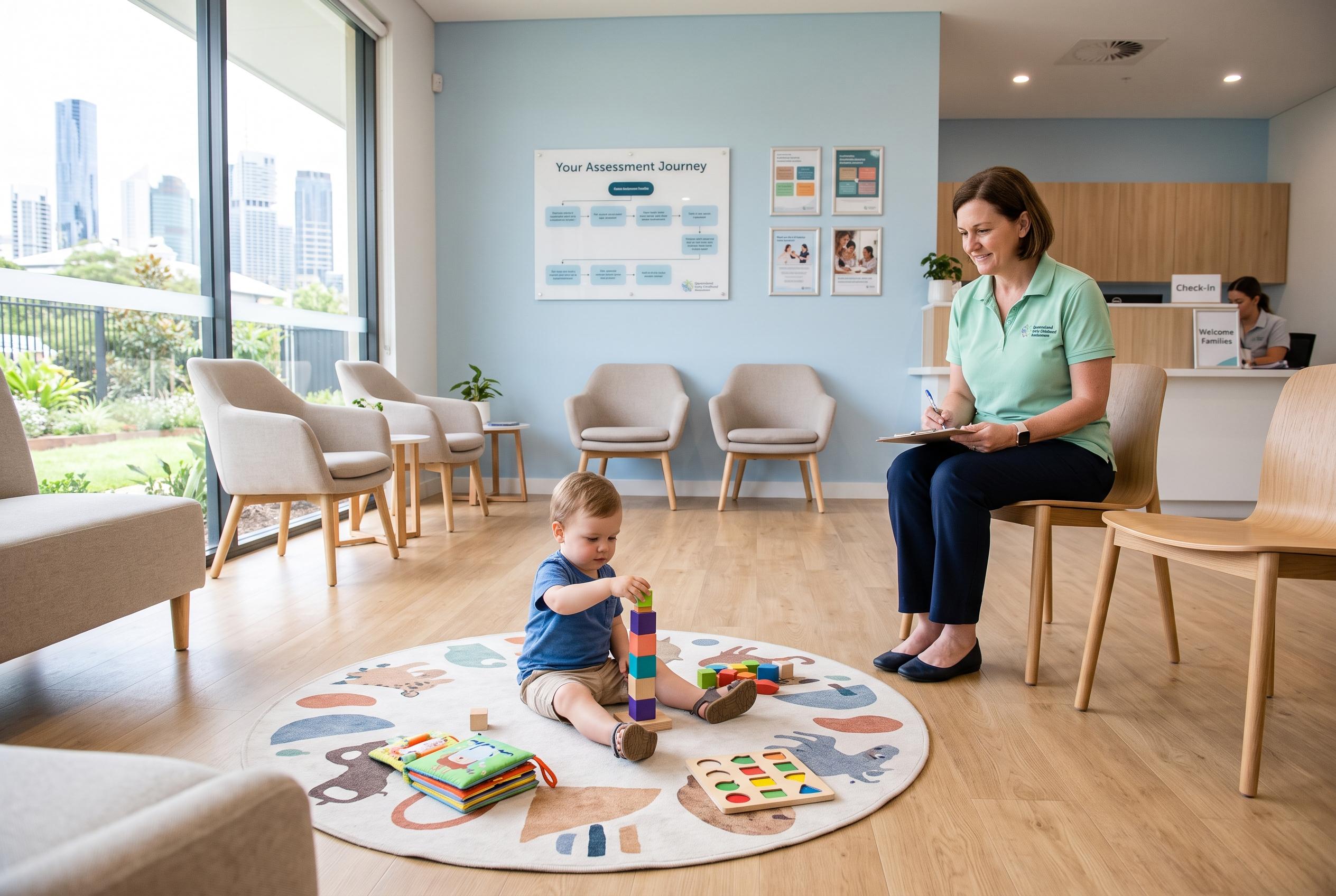

A Queensland service has significantly reduced wait times for toddler developmental assessments by redesigning its care pathway, demonstrating that faster access can be achieved through system reform rather than increased demand.
A Queensland developmental assessment service has cut waiting times sharply after introducing a new toddler pathway designed to triage children sooner and direct them into faster, tailored assessments.
The Toddler Track Model was built for children aged 18 months to three years and 11 months who were referred with developmental concerns. Using a Plan-Do-Study-Act quality improvement approach, the service sorted children into four streams according to the clinical information available at referral, then matched them with the right mix of allied health and paediatric review. The aim was not only to speed access, but also to preserve the quality of clinical formulation.
According to the journal report, the average time from first clinical session to diagnostic formulation fell from 116 days to 63 days, with significant improvements at every measured step in the pathway. The number of children assessed in 2024 rose to 132, yet diagnostic outcomes did not change between cohorts, suggesting the faster process did not alter clinical judgements. Service-wide waiting times declined by 61.5%, and the model was credited with about 68% of that improvement.
The findings matter because long waits for developmental and neurodevelopmental assessment are common. Research published in Autism Research found median waiting times of 525 days for children and adolescents referred for autism, attention-deficit hyperactivity disorder and related concerns, with only a minority meeting a proposed 252-day target. A separate study in metropolitan Sydney reported a median wait of 302.5 days for child developmental assessment, with around a third of children waiting more than a year. In that context, the Queensland results suggest that reworking the care pathway, rather than simply adding pressure to an overloaded system, can make a meaningful difference.
Other services have reached similar conclusions. A quality improvement project at an American paediatric academic health centre cut the wait for a first neuropsychology appointment by 65% after changing scheduling and the clinical model, while a Texas Children’s Hospital explainer has pointed to persistent provider shortages, insurance barriers and transport problems as reasons families still wait months for evaluations. Together, the evidence points to a clear lesson: faster access is possible, but it usually requires redesigning how care is delivered rather than relying on existing systems to absorb more demand.
Disclaimer: This content is for informational purposes only and is not intended to be a substitute for professional medical judgment, advice, diagnosis, or treatment.