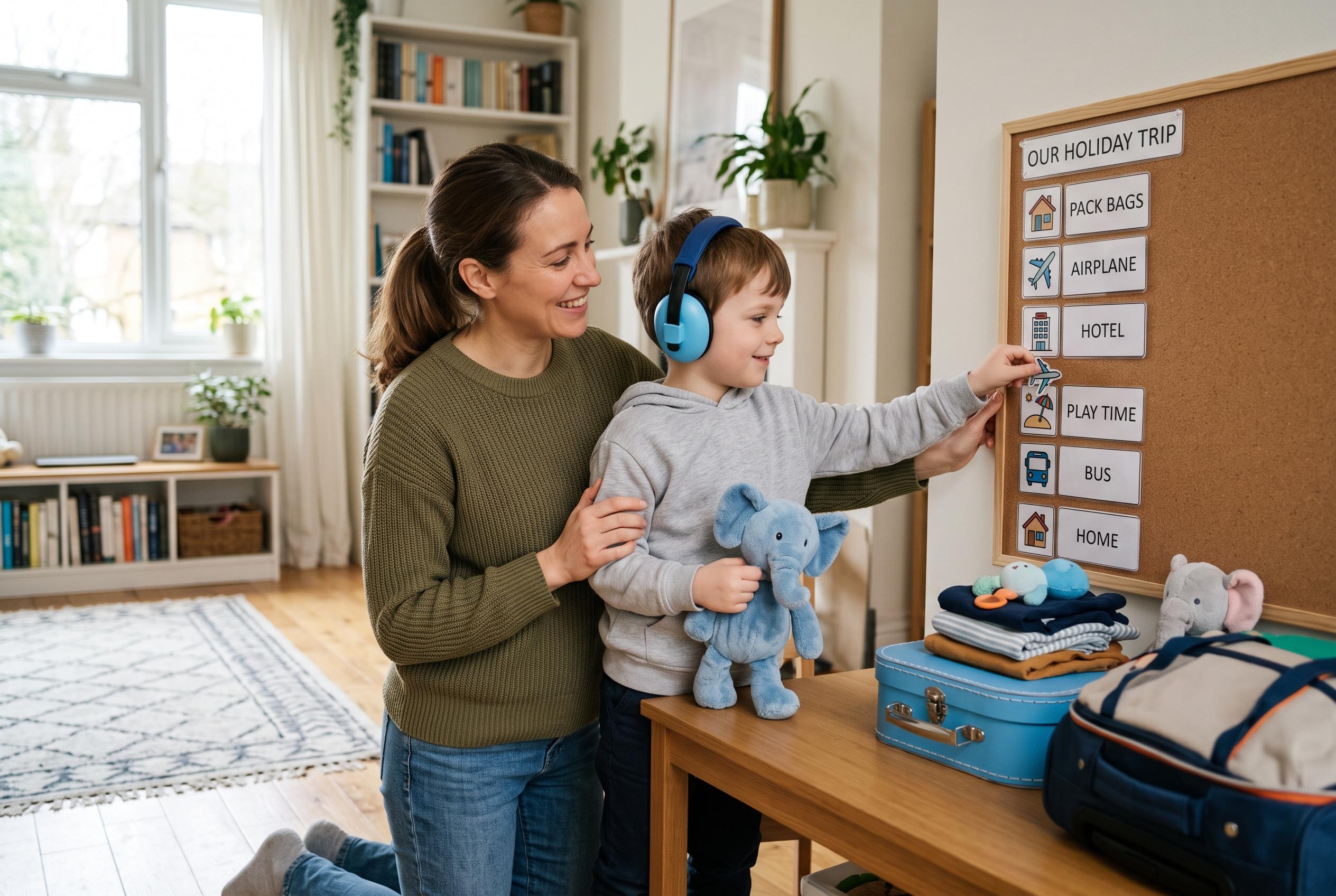

Parents of children with autism share strategies for enjoyable holidays that accommodate sensory needs and routine, highlighting the importance of planning, familiar environments, and understanding from leisure providers.
Families of children with autism often face the same challenge when the school term ends: how to make holidays enjoyable without overwhelming a child who relies on routine, predictability and a careful balance of sensory input. Parents interviewed by Emarat Al Youm said the most successful breaks are usually those planned well in advance, with quiet spaces, familiar foods, and activities that match a child’s interests and tolerance for noise, crowds and change.
Mariam Al Mehri, the mother of Rashed Al Asli, said scheduled summer programmes and pre-planned workshops help children adapt more easily to change. She enrolled her son in a summer centre and in craft sessions so that the holiday would still build skills, widen his experience and give him regular contact with other children. Sarah Al Muhairbi, the mother of Hamdan Al Marri, said her son becomes unsettled when his school routine is disrupted, so she prefers a lighter summer programme with fewer hours than the normal school day. Other parents described choosing less crowded places, booking visits ahead of time and carrying familiar food, all to reduce stress and avoid unpleasant surprises.
Shamsa Saif, the mother of Rashed Al مسافري, said she avoids busy events where possible and prefers domestic trips that can be organised around her son’s needs. She looks for places with movement-based play, such as jumping, running and sand play, and says the child’s ability to cope always comes before any other consideration. Huda Mohammed, the mother of Nasser Al Baloushi, said she keeps therapy sessions going during the holiday, while also building in home activities such as a trampoline and a pool, plus short outings and time in play areas where he can move freely and enjoy music. She said one interactive museum in Abu Dhabi did not suit him because of its dark and unfamiliar atmosphere.
The parents also called for greater awareness in leisure venues and accommodation, especially among staff who may not understand why a child with autism might become upset, vocal or resistant in an unfamiliar setting. Several said they want venues to be better prepared for families like theirs, with clearer information, more flexibility and support for people with additional needs. One mother said sports clubs should offer specialist occupational-therapy-led sessions, including swimming and football, though she said lack of trained staff can still block access.
Dr Amer Jamal, a special education specialist, said the best holiday for a child with autism is one that fits the child’s needs and ability to adapt. He said families should plan ahead, understand what triggers anxiety, and avoid filling the schedule with too many places, too much noise or sudden changes. He recommended using pictures or video clips to prepare a child for a new destination, keeping some parts of the daily routine in place, and choosing activities that are soothing rather than demanding. Jamal said sensory play such as water, sand, clay and textured materials can help a child settle, while movement-based activities like swimming, cycling, jumping and swinging can also be beneficial. He added that tourism and leisure operators have a role to play through quieter spaces, clearer organisation and staff training so that holidays are more inclusive and less stressful for families.
Disclaimer: This content is for informational purposes only and is not intended to be a substitute for professional medical judgment, advice, diagnosis, or treatment.