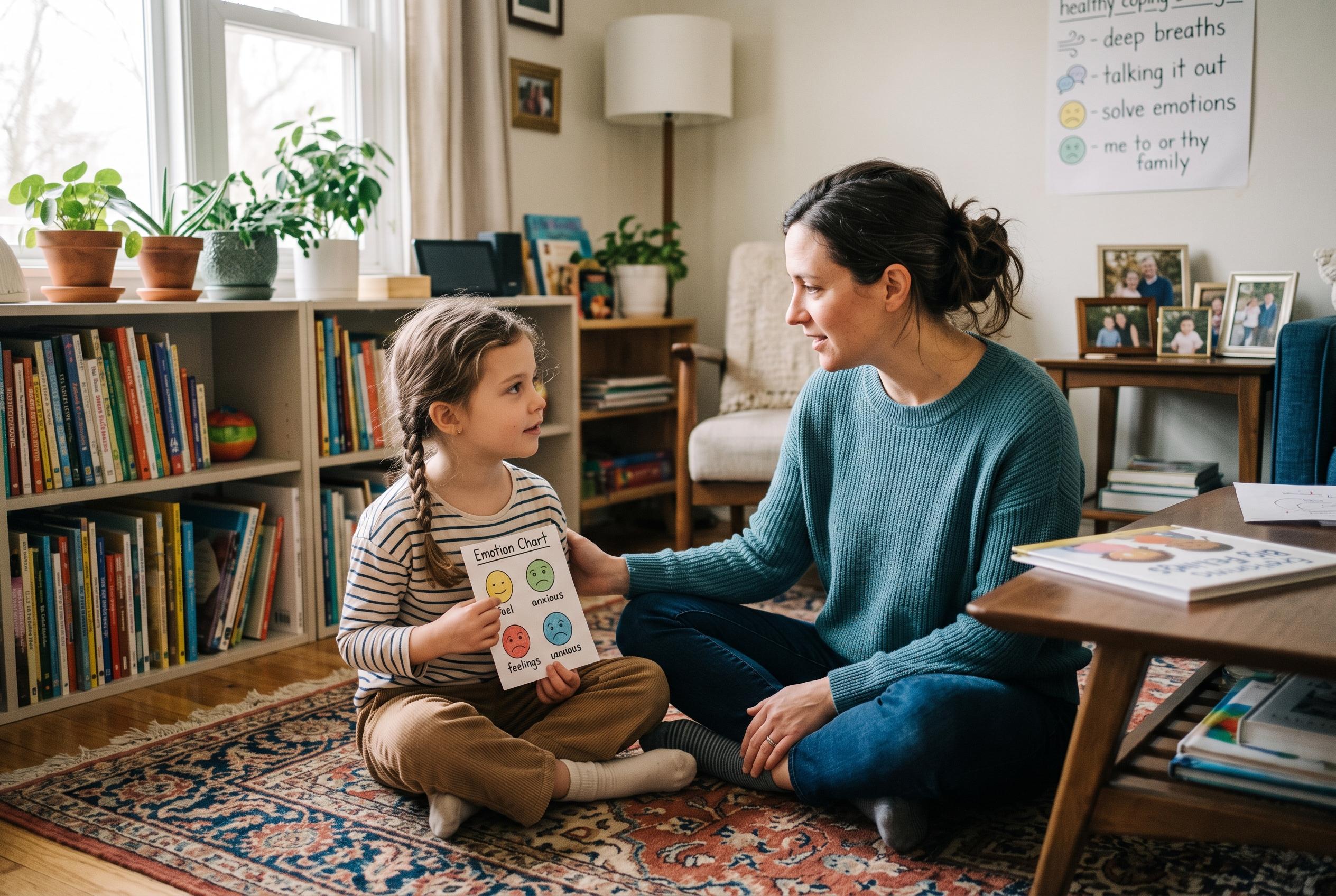

Experts reveal how everyday parenting behaviours, from overprotection to modelling anxiety, can contribute to increasing distress in children and offer strategies to foster resilience and open emotional dialogue.
Parents can unintentionally feed a child’s anxiety in everyday moments, from stepping in too quickly to praising outcomes more than effort. Mental health specialists say the result can be a cycle in which a child learns that worry is something to avoid rather than manage.
Anxiety is not confined to adults. Clinical research suggests millions of children live with symptoms, and a recent analysis put the global figure at 20.5% of children and adolescents. Khadija Bouta, deputy director of the Clay Centre for Young Healthy Minds at Massachusetts General Hospital, told HuffPost that anxiety can be difficult to spot because children show it in different ways, depending on age, language and the type of fear they are experiencing.
Some children complain of stomach aches, headaches or a racing heart. Others become tearful, clingy or prone to tantrums. A third group withdraws, avoiding friends, activities or schoolwork. That variety can make it easy for parents to miss the warning signs, especially when their own instinct is simply to help a child feel better as quickly as possible.
One common mistake is allowing avoidance to grow. Laura Linn Knight, a parenting expert, told HuffPost that anxious children often begin by dodging one uncomfortable situation and then widen the list over time. A child who fears separating from a parent may want a school drop-off, then a walk to the classroom door, then more and more reassurance. Knight said the goal should be to build resilience, not remove every discomfort, because children need support in facing fear rather than sidestepping it.
Another issue is parental anxiety itself. Bouta said children pay close attention not only to what caregivers say but also to body language and tone. If parents are visibly overwhelmed, children may absorb the message that the world is dangerous or that certain situations should be feared. Experts say adults do not need to pretend they are never worried, but they should model coping skills, such as taking a breath, naming the feeling and showing how they calm themselves down.
Experts also warn against shutting down conversations about emotions. Anne-Louise Lockhart, a child psychologist and parenting coach, told HuffPost that children often need help naming what they are feeling before they can manage it. She suggested describing the behaviour, acknowledging the feeling and then working together on a response, instead of solving the problem for the child. That approach gives children both language and reassurance, while making clear that they are not alone.
Overcaution can also backfire. Jenny Yip, a clinical psychologist and author, told HuffPost that repeated warnings such as “be careful” can leave children feeling that danger is everywhere. She said parents should explain why something is unsafe, rather than relying on fear-based language. Kristin Geering, director of education at Parent Lab, made a similar point, arguing that scare tactics about smoking or other risks can be less effective than calm, factual explanations that help children understand the consequences and make their own choices.
Praise matters too. Sinclair-McBride told HuffPost that some children become anxious about disappointing their parents if they are not the best at everything. She said recognition should include effort, not just results, because that lowers pressure and helps children see that their worth does not depend on constant success. She also advised parents not to overload children with questions that plant new fears, but instead to focus on practical problem-solving. Parenting style matters as well: psychologists often note that overly strict, highly controlling homes can leave children feeling unsafe about making mistakes, while mixed messages from parents can deepen uncertainty.
Disclaimer: This content is for informational purposes only and is not intended to be a substitute for professional medical judgment, advice, diagnosis, or treatment.