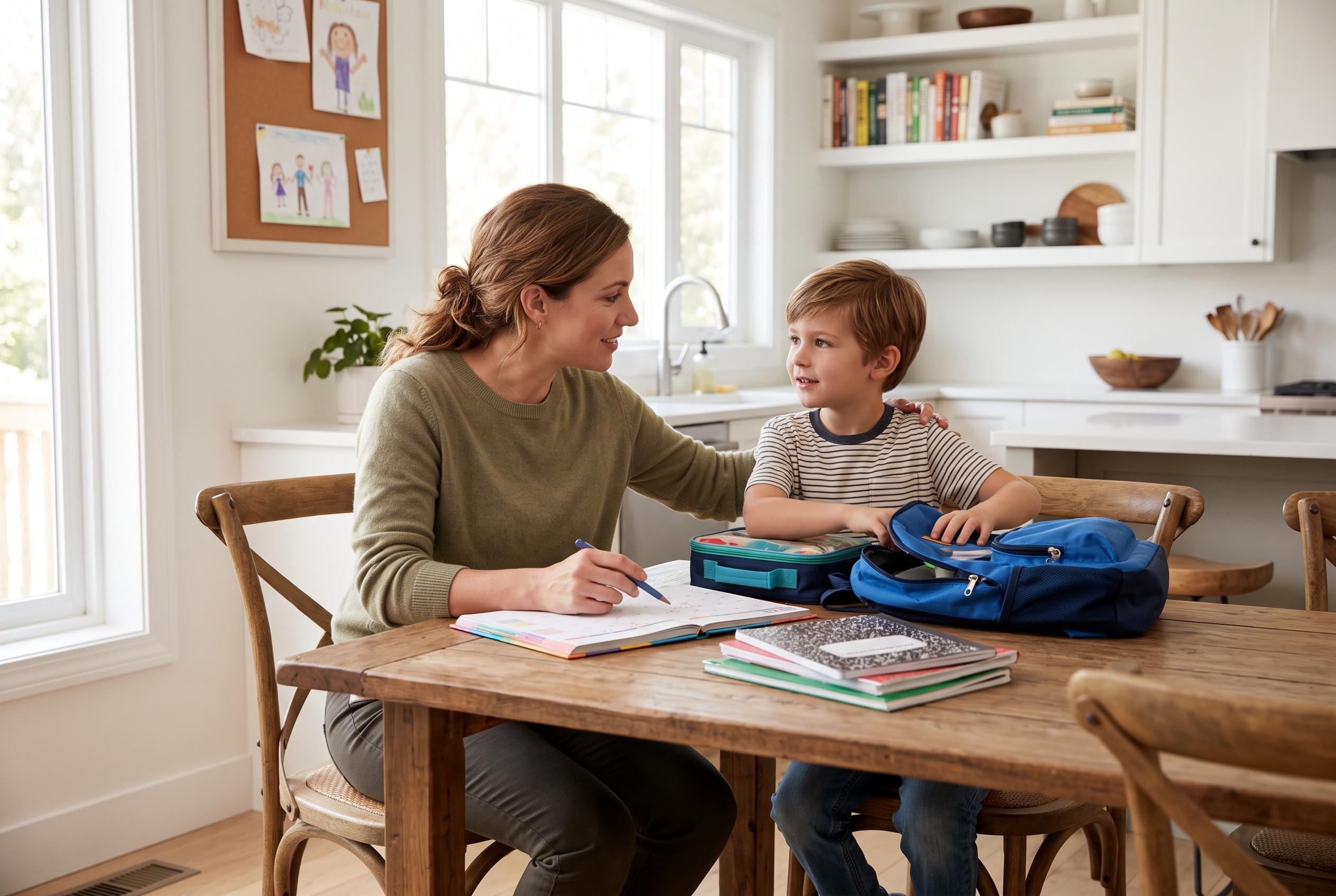

As the new school year looms, expert advice highlights practical steps parents can take to help children manage anxiety, from establishing routines to validating emotions, ensuring a smoother transition back to classroom life.
As the new school year approaches, many children feel a familiar knot of worry. New teachers, unfamiliar routines, shifting friendships, homework and after-school commitments can all make the return to class feel overwhelming. Child health experts say that is usually a normal reaction to change rather than a sign that something is seriously wrong.
Those feelings often show up in the body as well as in behaviour. According to Johns Hopkins Medicine, Harvard Health and UTMB Health, common signs include stomach aches, headaches, sleep problems, clinginess, irritability, withdrawal or resistance in the morning. Some children seek constant reassurance, while others become unusually angry or flat. In more noticeable cases, a child may refuse to get ready for school or struggle to separate at drop-off.
The first step for parents is often to steady themselves. Harvard Health and Johns Hopkins Medicine both note that children quickly pick up on a parent’s anxiety, so calm, reassuring behaviour can help set the tone. Experts also recommend listening without dismissing fears, validating what a child is feeling and using practical preparation to reduce uncertainty. That can mean visiting the school before term starts, walking through the day’s routine, arranging a friendly hand-off on the first morning or practising social contact with classmates before lessons begin.
A gradual return to school habits can also help. Johns Hopkins Medicine and Loyola Medicine advise easing bedtimes and wake-up times back into shape before term starts, while maintaining predictable routines around meals, sleep and mornings. If anxiety does not ease after the first few weeks of school, or if it begins to interfere with attendance or everyday life, Harvard Health, UTMB Health and other medical sources say it may be time to seek help from a mental health professional.
Disclaimer: This content is for informational purposes only and is not intended to be a substitute for professional medical judgment, advice, diagnosis, or treatment.