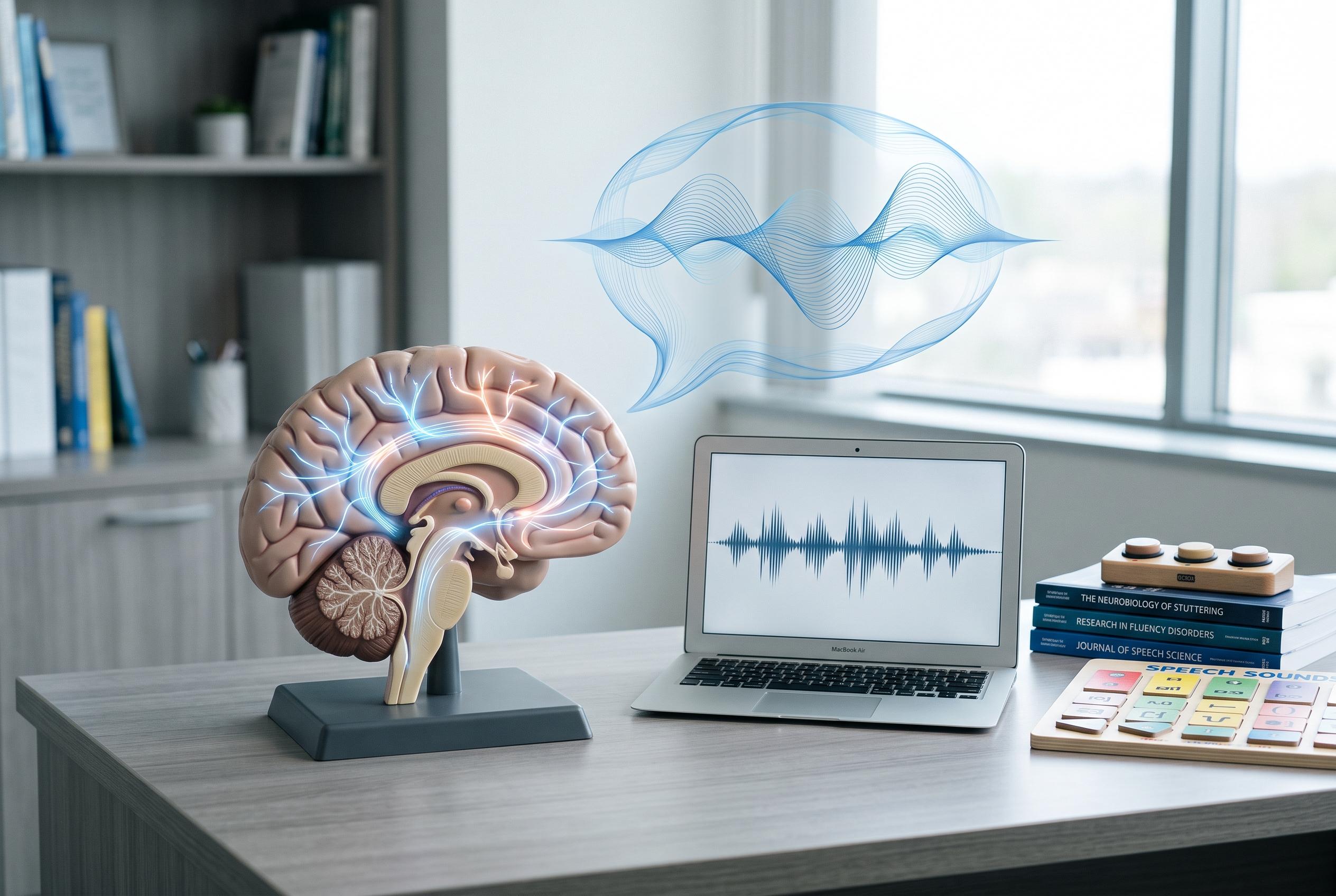

A new expert consensus urges recognising stuttering as a neurobiological condition rather than solely an anxiety-driven problem, calling for revised treatment approaches and increased research collaboration.
A panel of clinicians and people who stutter has urged a new way of thinking about the condition, arguing that it should be recognised primarily as a brain-based disorder rather than treated as a problem driven by anxiety alone. Psychiatric Times reported that the group reached near-unanimous agreement that stuttering is a heterogeneous disorder and is most often neurological or neuropsychiatric in origin, even though anxiety and attention-deficit/hyperactivity disorder can worsen symptoms.
That view is consistent with wider medical literature. An overview in the NCBI Bookshelf says stuttering can be developmental or acquired, with acquired cases sometimes linked to neurological injury, psychological causes or drugs. The same review notes that the basal ganglia, thalamus and brainstem are frequently implicated, although no single brain region fully explains the condition. A separate review in PubMed also points to the basal ganglia circuits as central to speech initiation and stopping, while studies of singing, rhythm and chorus speech have long suggested that altering speech timing can ease dysfluency.
The genetics argument is also substantial. A review published by Springer describes decades of evidence showing a hereditary component in stuttering, with linkage studies identifying likely chromosomal regions. More recently, NIH researchers reported that mouse studies have linked gene mutations associated with human stuttering to vocalisation problems and a loss of astrocytes, a type of brain cell, offering further support for a neurological basis.
The practical stakes are high. According to Psychiatric Times, the panel said the current treatment landscape remains poor, with limited controlled evidence for speech therapy, psychotherapy or medication. The disorder affects more than 1% of adults and about 4% of children worldwide, yet it continues to carry social stigma and can affect employment prospects despite having no link to intelligence. The article quoted panel member Cargill Maguire saying the problem is often misunderstood in psychiatric settings.
Maguire said the first step for psychiatrists is to review medication, because stimulants and bupropion can aggravate symptoms in some patients. He also said clinicians should consider the timing of onset, family history and whether previous medicines worsened the condition. While anxiety can intensify stuttering, he argued it should not be treated as the core diagnosis. The panel wants greater collaboration between psychiatrists, neurologists, paediatricians, primary care doctors and speech-language pathologists, alongside better education and research. Psychiatric Times reported that STARS will hold an educational conference in Laguna Niguel, California, in September.
Disclaimer: This content is for informational purposes only and is not intended to be a substitute for professional medical judgment, advice, diagnosis, or treatment.