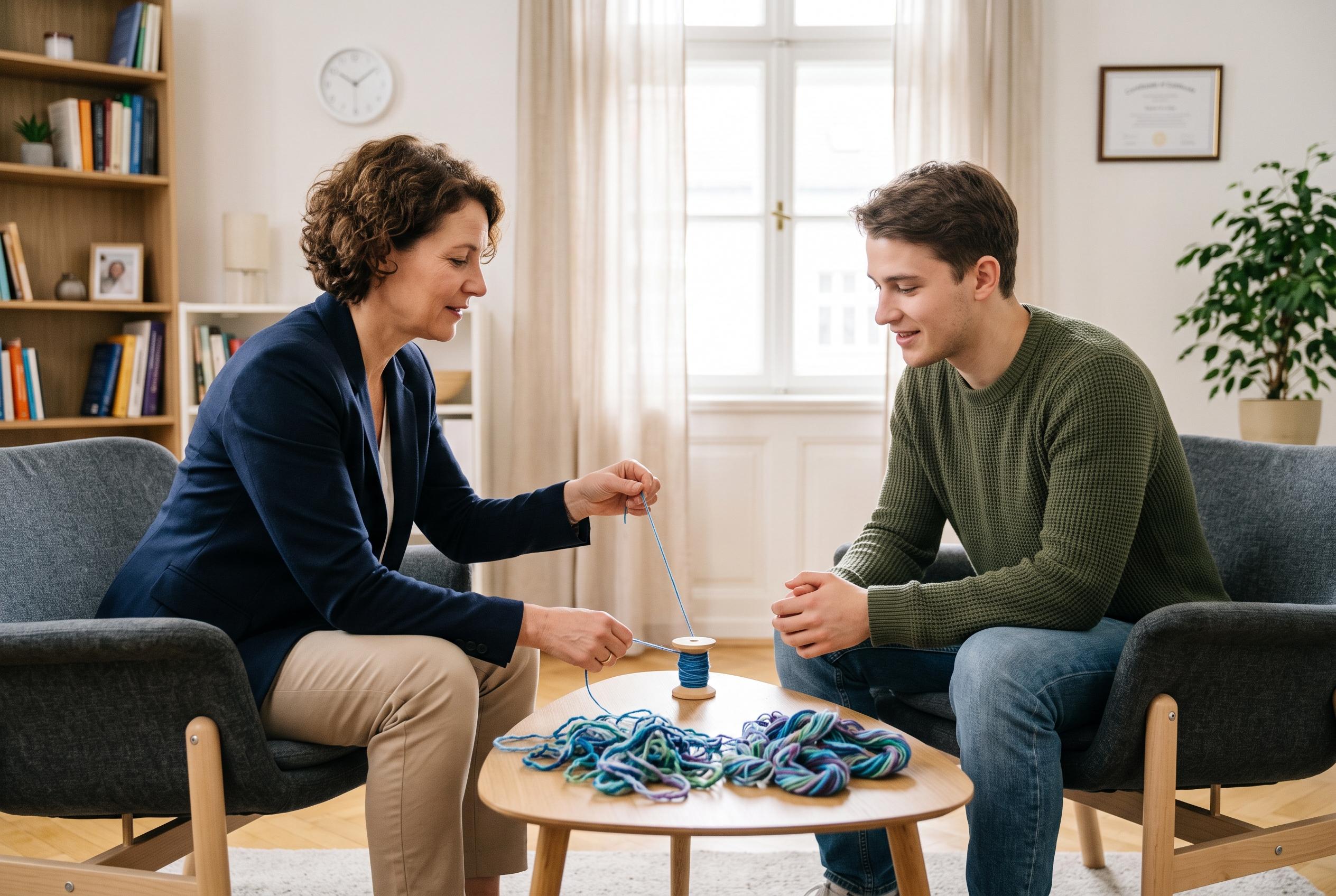

A focus on exposure and response prevention (ERP) reveals that confronting fears directly, rather than seeking certainty, is the key to breaking obsessive-compulsive patterns, backed by years of clinical evidence.
People searching at 2 a.m. for a way to stop obsessing are often asking the wrong question, according to the Good Men Project article adapted from The Anxious Truth. In the context of OCD and anxiety disorders, the problem is not a passing interest or ordinary worry but a threat response that latches on to things that matter deeply, such as health, relationships, safety and morality. The intensity, not the subject, is what keeps the loop alive.
The article argues that the real issue is usually the compulsion that follows the obsession. Cleveland Clinic says exposure and response prevention, or ERP, is a form of cognitive behavioural therapy and is widely regarded as the gold-standard treatment for OCD. Healthline and Psychology Tools describe the same cycle: an obsession sparks anxiety, a ritual or mental check offers brief relief, and that relief teaches the brain to treat the fear as important again.
That is why ERP asks people to face the trigger without carrying out the safety behaviour, even though the first wave of fear can feel overwhelming. According to Psychology Today, repeated and safe exposure can reduce the physiological arousal that feeds obsessions and compulsions. Simply Psychology says the approach is designed to break the obsession-compulsion pattern and reports response rates of 60% to 80%, though results depend on the person and the quality of treatment.
The broader point is that recovery is not about forcing certainty or trying to think the fear away. It is about learning, through repeated experience and usually with professional support, that distress can be tolerated without performing the ritual meant to neutralise it. The article’s central message is that this work is uncomfortable, but it is also the approach backed by years of evidence.
Disclaimer: This content is for informational purposes only and is not intended to be a substitute for professional medical judgment, advice, diagnosis, or treatment.