

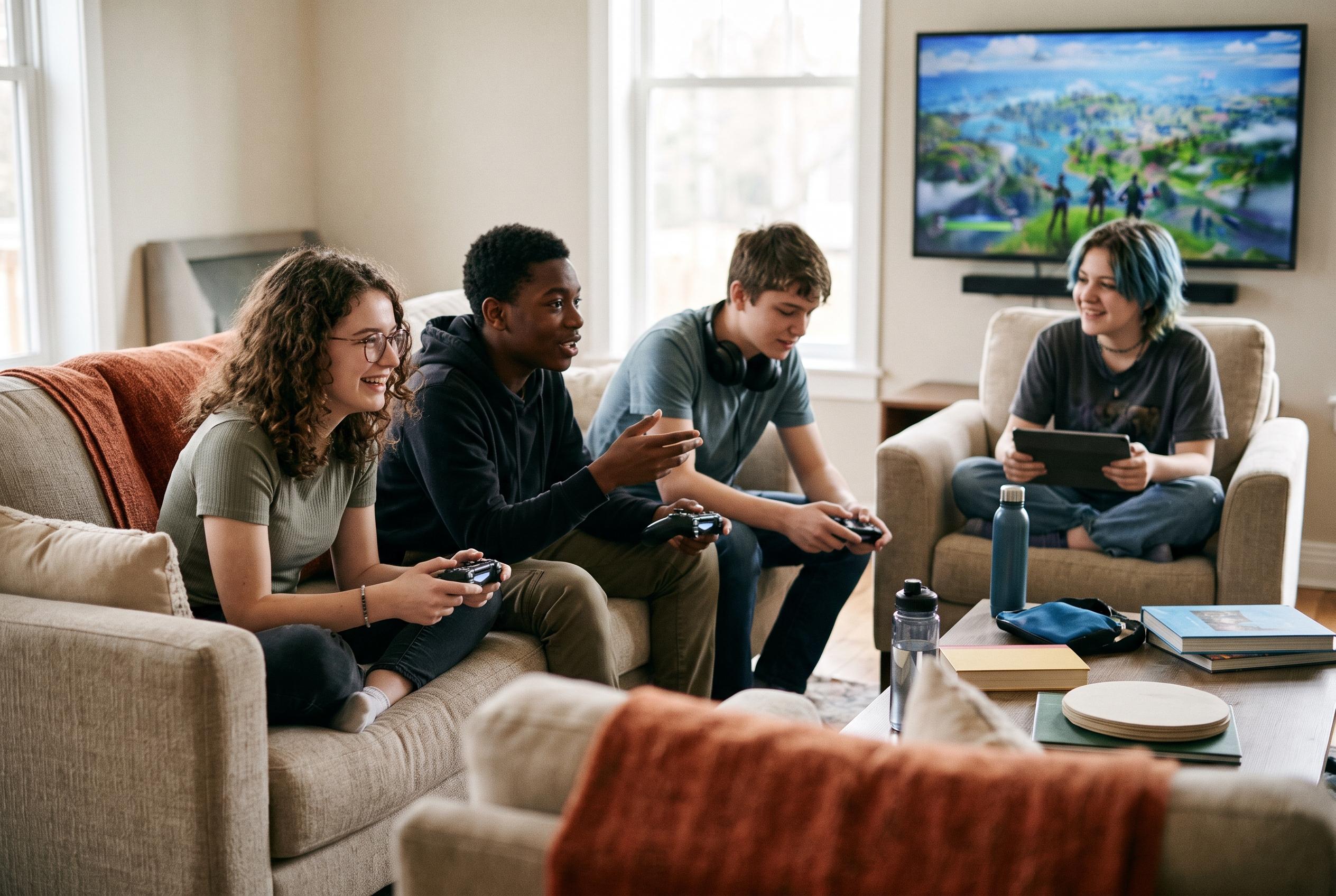

A Western Australian study suggests online gaming can support social connection, confidence and practical skills for autistic teenagers, while highlighting continuing concerns over safety and screen time.
Online gaming may offer more than entertainment for autistic teenagers: it can also open a route to friendship, confidence and practical skill-building, according to a study published in the journal Australian Occupational Therapy. Researchers surveyed 22 autistic adolescents and 23 caregivers to better understand how gaming fits into daily life, and found that many families saw clear benefits alongside persistent concerns about safety and screen time.
The mixed-methods study, carried out in Western Australia, used online surveys with both Likert-scale and open-ended questions. The researchers said the survey was reviewed for readability and accessibility by volunteer staff from a local autistic coding club, including autistic members, before it was sent to participants. In all, 45 people responded, and the findings were analysed descriptively and thematically. Most of the teenagers in the study were boys aged between 10 and 15, while most caregivers were mothers.
The adolescents’ responses were largely positive. Most said they felt happy when gaming online, and many reported feeling excited rather than anxious. More than half said gaming boosted their confidence in social situations, and many also described enjoying the social side of play. Caregivers broadly agreed that online gaming could help their child build better relationships, with many also saying it supported self-esteem and confidence. The study also found that a sizeable proportion of autistic teenagers played with school friends, although some also played with strangers online.
Five main themes emerged from the open responses: online safety, social communication, emotion regulation, skill development and strength-based interests. Families raised concerns about bullying, predators and the challenge of knowing who children were interacting with online. Some caregivers also described difficulties when setting limits on play time, particularly when transitions away from gaming triggered frustration or anger. At the same time, many autistic teenagers showed an awareness of online risks, including the need not to share personal details and not to trust every profile they encounter.
The study also pointed to possible therapeutic value. Participants described gaming as a way to practise communication, work with peers and develop problem-solving skills, hand-eye coordination and typing ability. The researchers said occupational therapists and other allied health professionals could use online gaming in a strength-based way, building on autistic young people’s interests while also addressing safety, emotional regulation and screen-use boundaries. They noted that online gaming should not be treated as a cure-all, but as one possible tool within broader support for social participation and wellbeing.
Disclaimer: This content is for informational purposes only and is not intended to be a substitute for professional medical judgment, advice, diagnosis, or treatment.



