

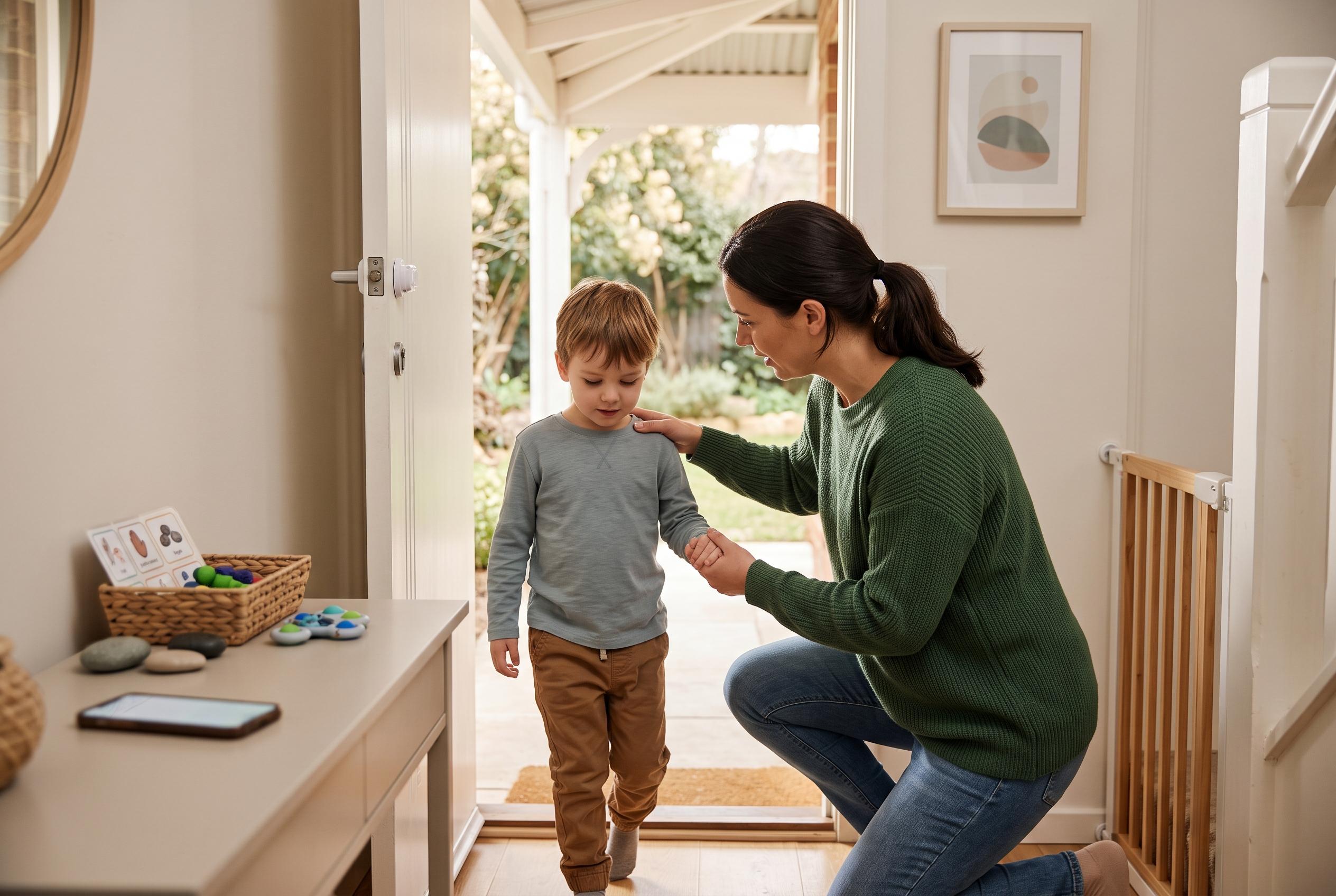

Experts advocate a comprehensive, system-based strategy combining observation, environmental barriers, routines, technology, and community awareness to protect autistic children from wandering, a serious safety concern linked to drowning and other hazards.
Wandering, sometimes called elopement, is one of the most urgent safety concerns facing autistic children and the adults who care for them. It describes a child leaving a supervised place without permission and without a clear sense of the danger involved. The scale of the problem is substantial: the Centres for Disease Control and Prevention says about half of children with autism spectrum disorder are reported to wander, and a quarter of those episodes are serious enough to cause concern. The CDC also identifies drowning as the leading cause of death after wandering incidents, which is why water is treated as the first place to check in an emergency. According to the American Academy of Paediatrics, the behaviour is often linked to seeking something enjoyable, escaping stress, or avoiding sensory overload.
That pattern matters because wandering is usually not random. For many families, the child is trying to get somewhere specific, whether that is a favourite object, a preferred activity, or a place that feels calmer than the one they have just left. Cleveland Clinic says that understanding those motives can help parents move from reacting to prevention. The most useful first step is often observation: keep a short log of when episodes happen, what occurred just before them, where the child went, and how quickly they moved. The Marcus Autism Center advises parents to record these details so patterns become easier to recognise and responses can be tailored to the child’s behaviour.
Once a pattern is visible, the next task is to reduce the chances of a successful escape. The CDC and the American Academy of Paediatrics both recommend securing the home with locks, alarms and other barriers, while also teaching safety skills rather than relying on warnings alone. A layered approach is usually most effective. That can include door alarms, high locks, window stops, self-latching gates and careful supervision around vehicles. Water deserves special attention: fences, covers and locked access points can make an enormous difference, particularly because many wandering deaths involve drowning. Families are often told to think in terms of multiple barriers rather than a single protective measure, since no one device can do the whole job.
Routine also plays a large part. Many children are most likely to wander during transitions, such as waking up, leaving the house, arriving at school, changing caregivers or recovering from an upset. The American Academy of Paediatrics recommends setting clear expectations before outings, while CDC guidance stresses the value of teaching safety behaviours in advance. Visual schedules, countdowns, social stories and calm rehearsal can all help reduce the uncertainty that triggers bolting. A simple replacement behaviour is usually more effective than a long list of rules. For some children, that may mean staying with an adult, waiting at a door, or handing over a card that signals a need for help or a break.
Identification and technology can add another layer of protection. The American Academy of Paediatrics recommends considering GPS devices and medical alert tags, and the Marcus Autism Center advises keeping current identifying information close at hand. A medical ID bracelet, shoe label, backpack card or temporary tag may help if a child is found by someone who does not know them. Tracking devices can shorten a search, but they do not prevent the child from leaving in the first place, and they are only useful if the child will tolerate wearing or carrying them. Families are usually better served when technology is introduced gradually and treated as a normal safety aid rather than a punishment or threat.
Other adults need to be part of the plan as well. Cleveland Clinic recommends preparing neighbours, and the CDC says clinicians should assess wandering risk, plan safety steps and document them. That advice reflects a practical truth: emergencies are easier to manage when the school office, bus driver, grandparents, respite carers and nearby neighbours already know what to do. A one-page written plan is often enough if it includes a recent photo, the child’s name, diagnosis, key contact numbers and a short description of likely routes or triggers. Schools may also need to build wandering risk into the individual education plan or behaviour support plan so that recess, dismissal and fire drills are covered.
If a child goes missing, speed matters. The CDC advises families to call emergency services immediately and to tell responders about autism, communication differences and any known risks. Water should be the first search area because of the strong link between wandering and drowning. Families are also encouraged to teach a child what to do if they become separated, but the teaching should be simple and repeated often. For many children, the most realistic goal is to stop, stay put and look for a clearly identifiable adult, rather than trying to navigate a complex set of instructions in a stressful moment.
The wider lesson is that wandering prevention works best when it is treated as a system, not a single fix. Logs reveal triggers, barriers buy time, routines reduce surprises, identification helps if a child is found, and neighbours and schools extend the circle of protection. The problem can feel frightening, but it is also manageable when families build a plan around the child’s real behaviour instead of hoping one warning will be enough. For parents and carers, the most useful steps are often the simplest ones: know the pattern, secure the environment, practise the response and make sure other adults know the plan before it is needed.
Disclaimer: This content is for informational purposes only and is not intended to be a substitute for professional medical judgment, advice, diagnosis, or treatment.



