


A perspective paper advocates for a new approach to supporting children with acquired brain injury, emphasising ongoing care that adapts to developmental and environmental changes, exemplified by the Dutch Pediatric ABI Network.
Children with acquired brain injury can appear to recover well in hospital, only to run into new problems months or years later as school, friendships and independence become more demanding. A perspective paper in Frontiers in Rehabilitation Sciences argues that this is because childhood brain injury does not unfold as a one-time event, but as a changing condition that interacts with development, family life and the wider environment. The authors propose a new way of describing this group: “pediatric acquired brain injury with complex consequences”, or ABI+, to identify children and young people whose needs continue long after the usual rehabilitation window has closed.
The paper says the label is not meant to create a new diagnosis. Instead, it is intended to spotlight a vulnerable population whose difficulties can be missed when care is organised around short-term, phase-based treatment. The authors note that some children with apparently mild injury later develop major learning, behavioural or emotional problems, while others with more severe injury may cope better if their surroundings are supportive. That variability, they argue, shows why acute injury severity alone does not capture the full picture. The long-term consequences can include physical limitations, cognitive difficulties, mental health concerns, reduced participation at school and at home, and strain on parents and siblings.
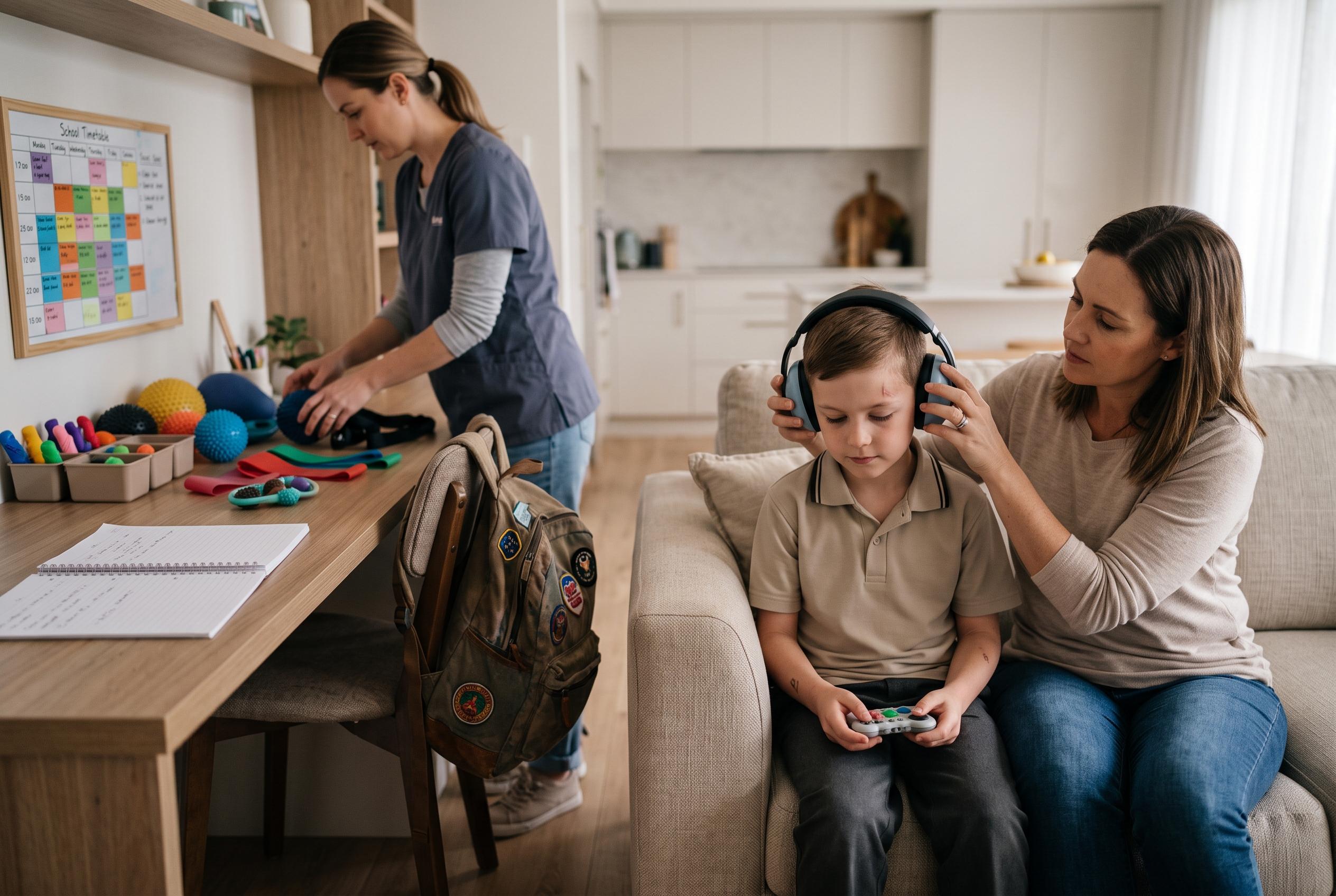
This gap between clinical care and everyday life becomes especially clear during transitions, such as moving schools, entering adolescence or changing support arrangements. The paper says families are often left to coordinate help across healthcare, education and social services themselves, even though no single service has the full picture. Professionals in one setting may not recognise that a child’s behavioural changes, learning struggles or social withdrawal are linked to earlier brain injury. As a result, support can become fragmented just when children and young people need continuity most.
To illustrate a different approach, the authors describe the Dutch Pediatric ABI Network, a national model built to connect community-based support with specialist expertise, research and lived experience. At the local level, regional expertise centres provide family-centred guidance and case management in the child’s own environment. At the national level, diagnostic expertise centres bring together rehabilitation medicine, psychiatry, neurology, neuropsychology and psychosocial expertise for more complex cases. The network also includes a research and knowledge hub and a parent and lived-experience advisory group, which the authors say helps keep the system grounded in the realities of daily family life. The network is still developing, and the paper says its impact and cost effectiveness have not yet been formally evaluated.
The authors argue that this kind of network points towards a broader shift in how services are designed. Rather than treating brain injury as a pathway that ends with discharge from rehabilitation, they say care should follow the child across childhood, adolescence and the move into adult roles such as further education, work and independent living. They also say future evaluation should look not just at process measures such as referral patterns and waiting times, but at outcomes that matter to families, including school functioning, participation, caregiver burden and continuity of support. For children with ABI+, the paper concludes, the goal should be a learning system that keeps expertise moving across sectors instead of leaving families to bridge the gaps alone.
Disclaimer: This content is for informational purposes only and is not intended to be a substitute for professional medical judgment, advice, diagnosis, or treatment.



