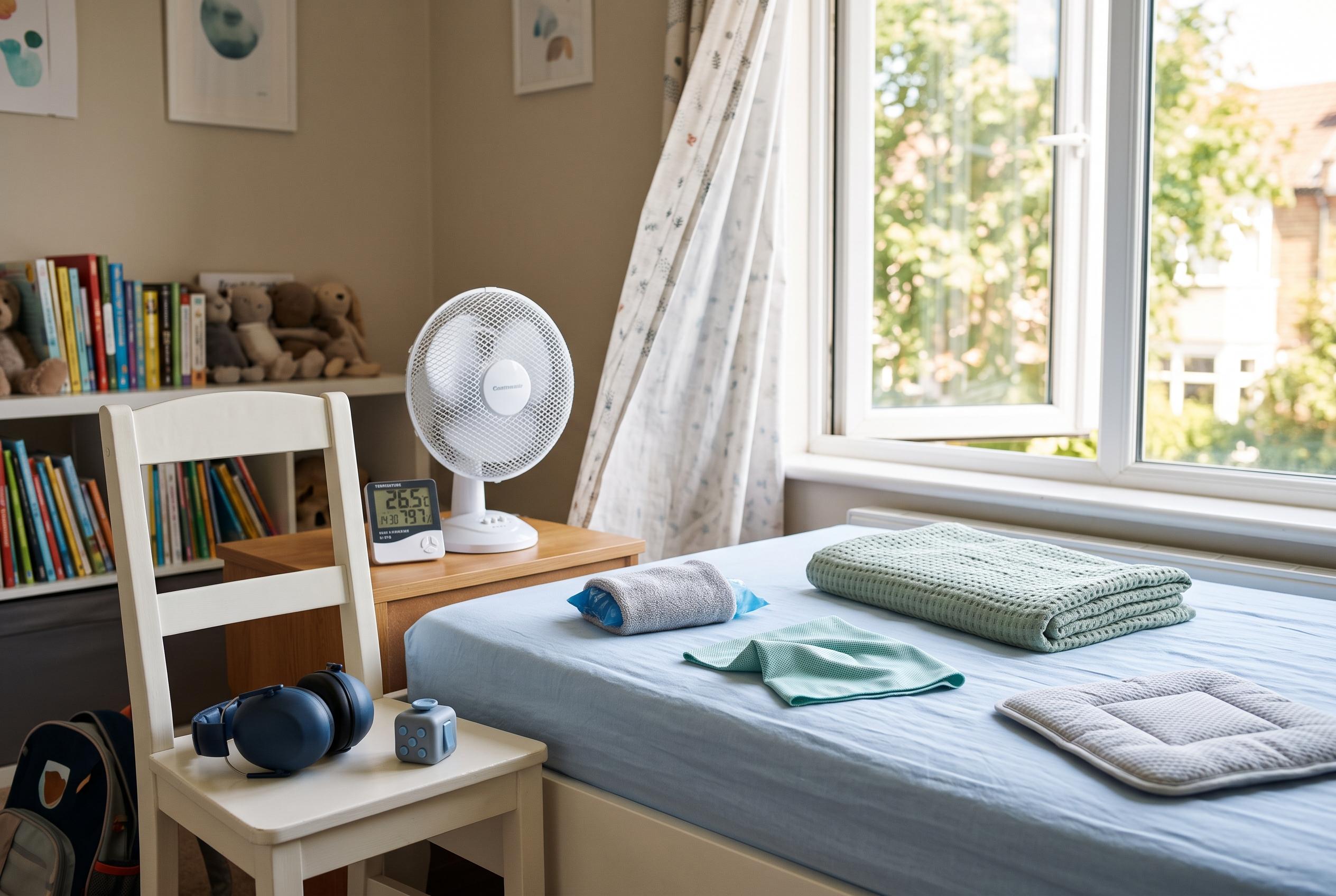

Recent research highlights significant variability in how autistic individuals perceive and respond to temperature changes, raising new considerations for managing sensory sensitivities during hot summers.
Autistic children and adults can experience heat, cold and other temperature changes very differently from people around them, and that difference can become more obvious in summer. Researchers writing in The Conversation say temperature perception is part of the body’s sensory system and is essential to staying safe, but in autism it can be disrupted by either over-sensitivity or under-sensitivity to sensory input.
The piece says sensory difficulties are common in autism and may affect almost all autistic children, with temperature discomfort sometimes appearing alongside pain from bright lights, loud noise or clothing textures. A 2019 Scientific Reports study found that thermal detection thresholds in people with autism were broadly typical, but responses varied widely from person to person, underlining how uneven sensory experiences can be. Another study in Scientific Reports in 2017 found evidence that both autonomic dysregulation and altered sensory processing may contribute to tactile hypersensitivity.
That complexity matters for families because temperature problems do not always look like illness. Some autistic people may seem unusually upset in heat, sweat heavily or struggle with changes in core temperature, while others may not recognise when they are too hot or too cold. The Conversation says some children may even seem to run a temperature without showing other signs of being unwell. A 2020 study in Autism Research also found distinct sensory subgroups within autism, reinforcing the idea that there is no single pattern of sensory response.
Recent reviews have pushed the science further by linking sensory differences with broader biological mechanisms. A 2026 review in the journal Clinical Psychology Review argued that sensory reactivity in autism spans behavioural, emotional, physiological and neural levels, while a 2026 paper in Neuroscience & Biobehavioural Reviews proposed that altered temperature regulation in the hypothalamus could be part of a wider vulnerability pathway in autism. Separately, a 2026 mouse study suggested that fever-like temperatures may affect cognition in an autism model, hinting that body temperature and brain function may interact in ways scientists are still trying to understand.
For parents and carers, the practical advice is straightforward: watch for discomfort, offer light clothing, keep cool spaces available, provide water and talk through preferences where communication allows. The goal, according to The Conversation, is to build an environment that lets autistic people adjust more easily to heat and cold rather than assuming one temperature suits everyone.
Disclaimer: This content is for informational purposes only and is not intended to be a substitute for professional medical judgment, advice, diagnosis, or treatment.