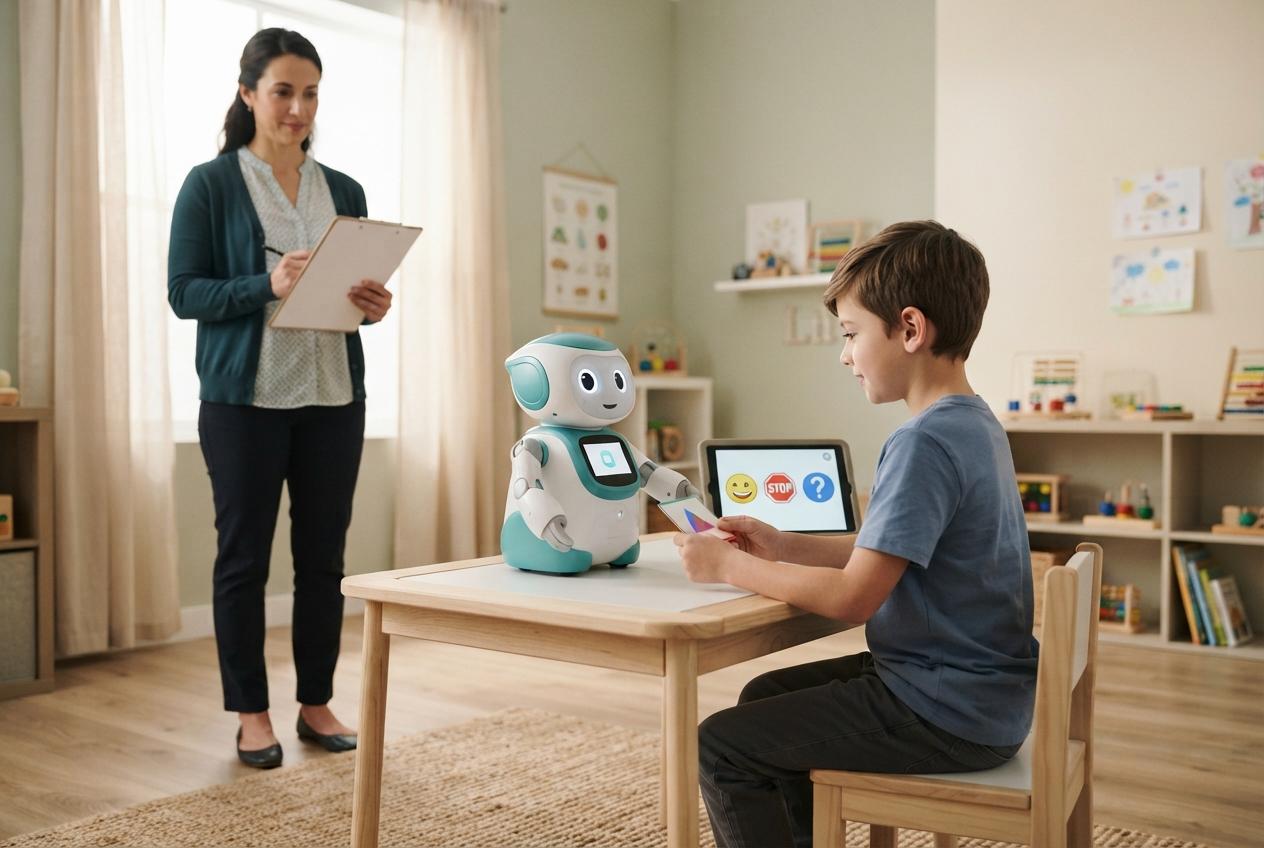

Emerging research underscores the potential of social robots to support autistic children, emphasising personalised approaches and integration with traditional therapies as key to achieving meaningful outcomes.
Robot-assisted therapy for autistic children has moved from an experimental idea to a recognised, if still developing, area of clinical research. Reviews in recent years have found that social robots can help sustain engagement, encourage eye contact and support short, structured learning tasks, but the evidence base remains uneven and many studies are small, short-term and difficult to compare. A 2022 systematic review and meta-analysis concluded that the field shows promise, while also noting the need for more rigorous trials and clearer outcome measures. (pmc.ncbi.nlm.nih.gov)
That picture has been sharpened by newer critical reviews. A 2024 analysis published by Springer said social robots should be seen as a promising support tool rather than a stand-alone treatment, stressing that outcomes depend heavily on the child, the task and the setting. It also highlighted the importance of parental involvement, school context and the practical design of the robot itself, from appearance to predictability of behaviour. Another recent review in the autism literature reached a similar conclusion, arguing that robot-assisted approaches work best when they are tightly integrated with established therapies rather than used in isolation. (link.springer.com)
The broader research base suggests why interest has persisted. Earlier studies and reviews found that autistic children often respond positively to robots because they can be less socially demanding than people, more consistent in their cues and easier to repeat across sessions. But the same literature also warns against overclaiming: gains in a laboratory or clinic do not automatically translate into daily life, and researchers still lack standardised ways to measure engagement, social improvement and long-term benefit. That is why current work is increasingly focused on personalised systems, better assessment tools and longer follow-up, rather than on novelty alone. (pmc.ncbi.nlm.nih.gov)
Disclaimer: This content is for informational purposes only and is not intended to be a substitute for professional medical judgment, advice, diagnosis, or treatment.