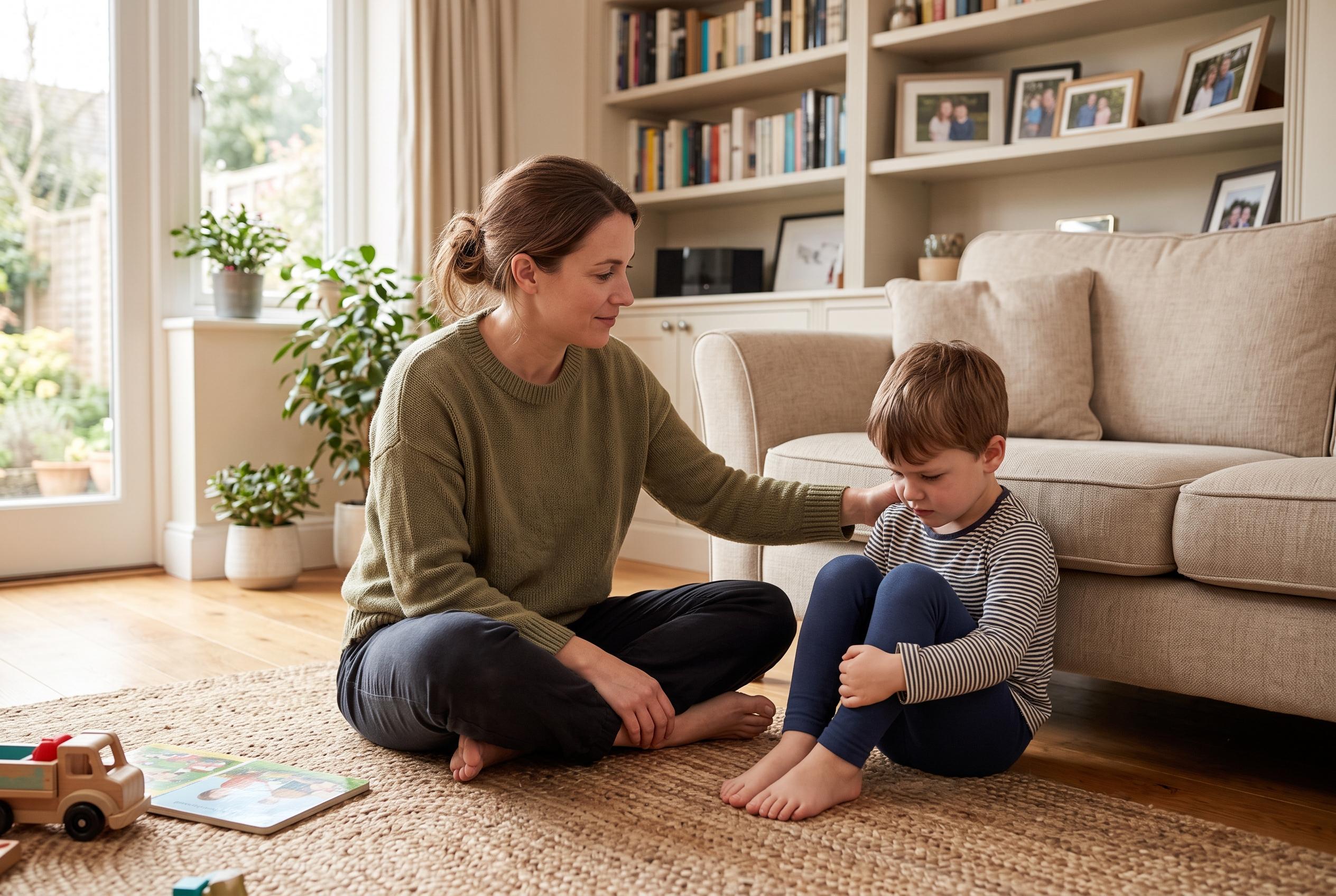

Emerging research underscores how parental calm and presence during distress are crucial for children’s long-term emotional growth, emphasizing that modelling calmness and connection fosters resilience beyond early childhood.
Parents are often told to “stay calm” when a child is falling apart, but that advice can feel almost impossible in the middle of a screaming fit, a slammed door or a refusal to settle. The idea behind it, though, is sound: children borrow stability from the adults around them long before they can reliably find it for themselves. Researchers writing in peer-reviewed journals describe co-regulation as a biological and emotional process in which a child’s developing nervous system takes cues from a calmer caregiver, helping the child move back from distress towards a steadier state.
That matters because self-regulation is not something children simply choose to do on demand. As Child Mind Institute explains, co-regulation is both a relationship and a mechanism: an adult’s tone, posture, facial expression and breathing can all shape how safe a child feels in the moment, and that in turn can influence stress responses. Studies on co-regulation say the process runs through both behaviour and biology, including hormones and the nervous system, and can continue to matter well beyond early childhood.
It is also why parents so often find themselves overwhelmed at exactly the moment they most want to be composed. Research published in the medical literature notes that an adult who is already dysregulated has a harder time helping a child settle, which can create a feedback loop of rising stress on both sides. The original article’s advice is to practise simple resets for the adult first: a longer exhale, relaxed shoulders, a brief pause before answering and a calm phrase repeated silently as a reminder that the moment, however intense, is not an emergency.
In practical terms, co-regulation is less about perfect words than about presence. The article recommends lowering your voice, getting physically close without crowding, and naming the feeling without trying to erase it. That approach is echoed by guidance from Child Mind Institute and other child-development writing, which describes calm, empathetic modelling as a way to teach children what regulation looks like in real time. For younger children especially, that visible calm can matter more than any lecture about behaviour.
The wider research base points in the same direction. Studies on the so-called calming cycle, including work on oxytocin and early parent-infant bonding, suggest that emotional connection and soothing are not just comforting extras but part of how children learn to manage distress over time. That helps explain why the article frames co-regulation as a foundation for emotional growth: when adults stay available through the storm, children get repeated experience of surviving big feelings with support, and that is how self-regulation gradually develops.
Disclaimer: This content is for informational purposes only and is not intended to be a substitute for professional medical judgment, advice, diagnosis, or treatment.