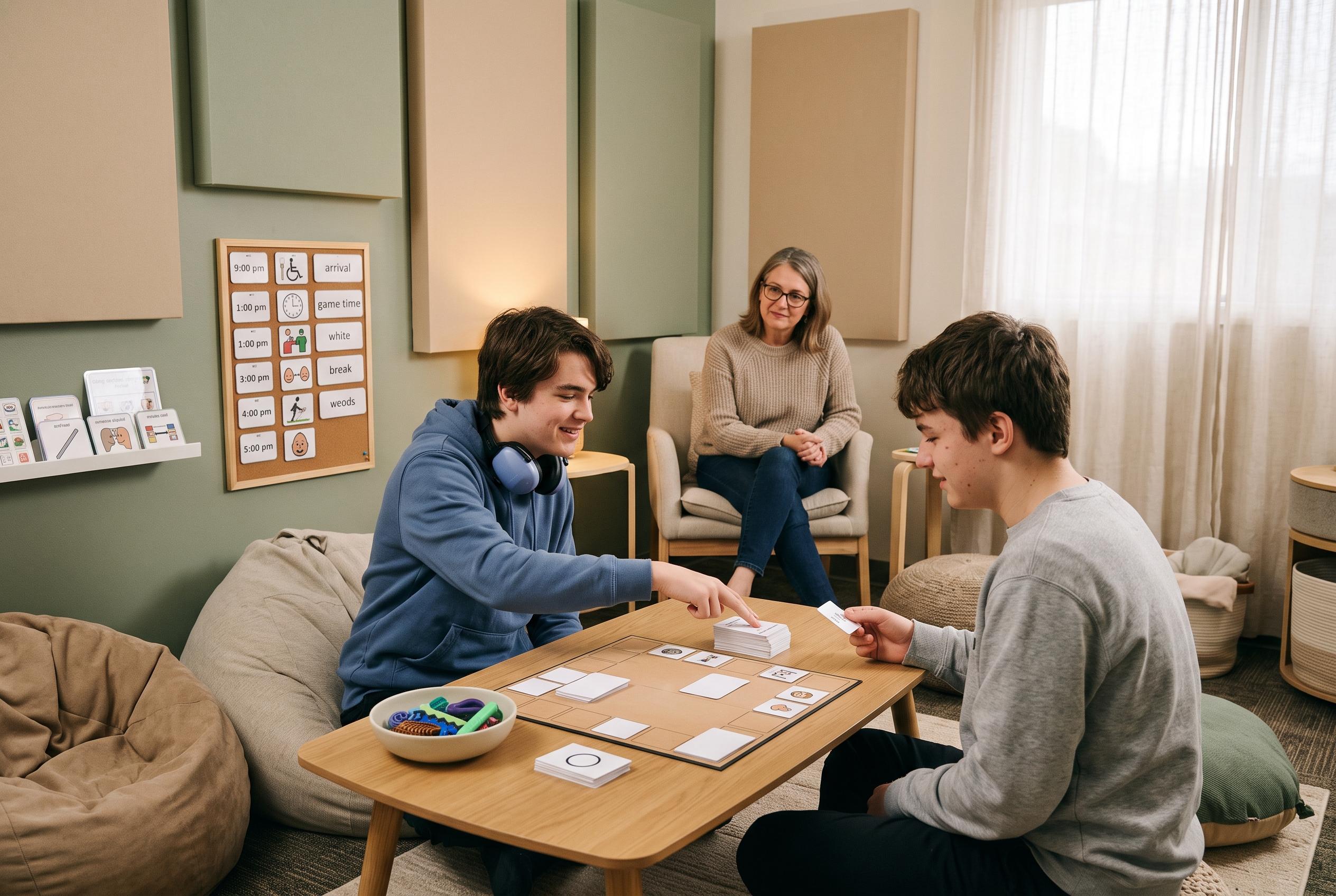

Emerging research underscores the importance of personalised strategies to help autistic adolescents build meaningful and sustainable social connections, emphasising understanding, environment design, and support for sensory and communication needs.
For many autistic teenagers, friendship can be both deeply desired and unexpectedly draining. They may want close companions but find group dynamics hard to follow, or they may have friends yet still feel isolated because the pace and unwritten rules of social life are exhausting. Research summaries and guidance from autism organisations point in the same direction: autistic young people often understand the idea of friendship and care about connection, but can struggle with social cues, non-verbal communication and the pressure of keeping up in real time.
That does not mean autistic teenagers are indifferent to relationships. In fact, the evidence suggests the opposite. They often value loyalty, honesty and shared interests, and many build their strongest connections with people who communicate in ways that feel more predictable and less ambiguous. As one systematic review of autistic adolescents found, peer relationships can be rewarding as well as difficult, especially when support is tailored to the young person’s communication profile and social needs.
The problems often begin with the small but constant uncertainties of teenage social life. A friend moving to another group, a conversation changing direction or a joke that relies on hidden meaning can all be hard to decode. Ambitious About Autism says past negative experiences can make these situations even harder, because a teenager who has been left out or misunderstood may begin to expect rejection again. That can lead to withdrawal, not because the young person does not want friends, but because friendship has started to feel risky.
Shared interests can make a huge difference. A school corridor or noisy lunch hall may be a poor place to build relationships, but a club, hobby or online community built around a specific interest can feel far more manageable. Guidance from autism specialists notes that autistic teenagers often connect best when the setting is structured and the topic is clear, which helps them start conversations and sustain them without the pressure of constant improvisation.
Sensory differences also matter more than many adults realise. Busy rooms, sudden touch, overlapping voices and unpredictable movement can make socialising tiring even when a teenager genuinely wants to join in. That is why some autistic young people appear to prefer being alone after school or before a social event. In many cases, this is not avoidance but recovery. The crucial question is whether the teenager is content with their social world or is stuck on the outside looking in.
Another issue is masking, the effort some autistic teenagers make to seem more typical by copying others, rehearsing conversations or suppressing natural habits. It may help them get through school, but it can leave them exhausted and disconnected from themselves. That pressure can be especially strong in friendships, where a teenager may look socially competent while privately working hard to keep up. The more useful goal, experts say, is not to force a young person to perform normality, but to help them communicate in ways that are effective and sustainable.
That same principle applies to romance. Adolescence often brings new interest in dating, affection and physical closeness, but autistic teenagers may need these ideas explained more directly than their peers do. Consent, boundaries and privacy should be discussed plainly, including the fact that saying no is always allowed and that no one is entitled to touch, pressure or secrecy. Guidance for parents and carers emphasises the value of concrete examples, role-play and discussions based on television, film or everyday situations.
Parents and schools can help by breaking the problem into smaller parts. Is the challenge anxiety, sensory overload, difficulty reading behaviour or simply not finding the right people? Is the young person comfortable online but overwhelmed face to face? Would one trusted friend, a quieter environment or support at unstructured times make a bigger difference than a broad push for more socialising? The strongest support, the available guidance suggests, is individualised and practical rather than generic.
For autistic teenagers, better relationships do not come from becoming someone else. They come from finding settings, people and expectations that match who they are. When adults recognise that friendships, family ties and romantic relationships all work differently for different people, the aim shifts from correction to connection. That is often where the real progress begins.
Disclaimer: This content is for informational purposes only and is not intended to be a substitute for professional medical judgment, advice, diagnosis, or treatment.