

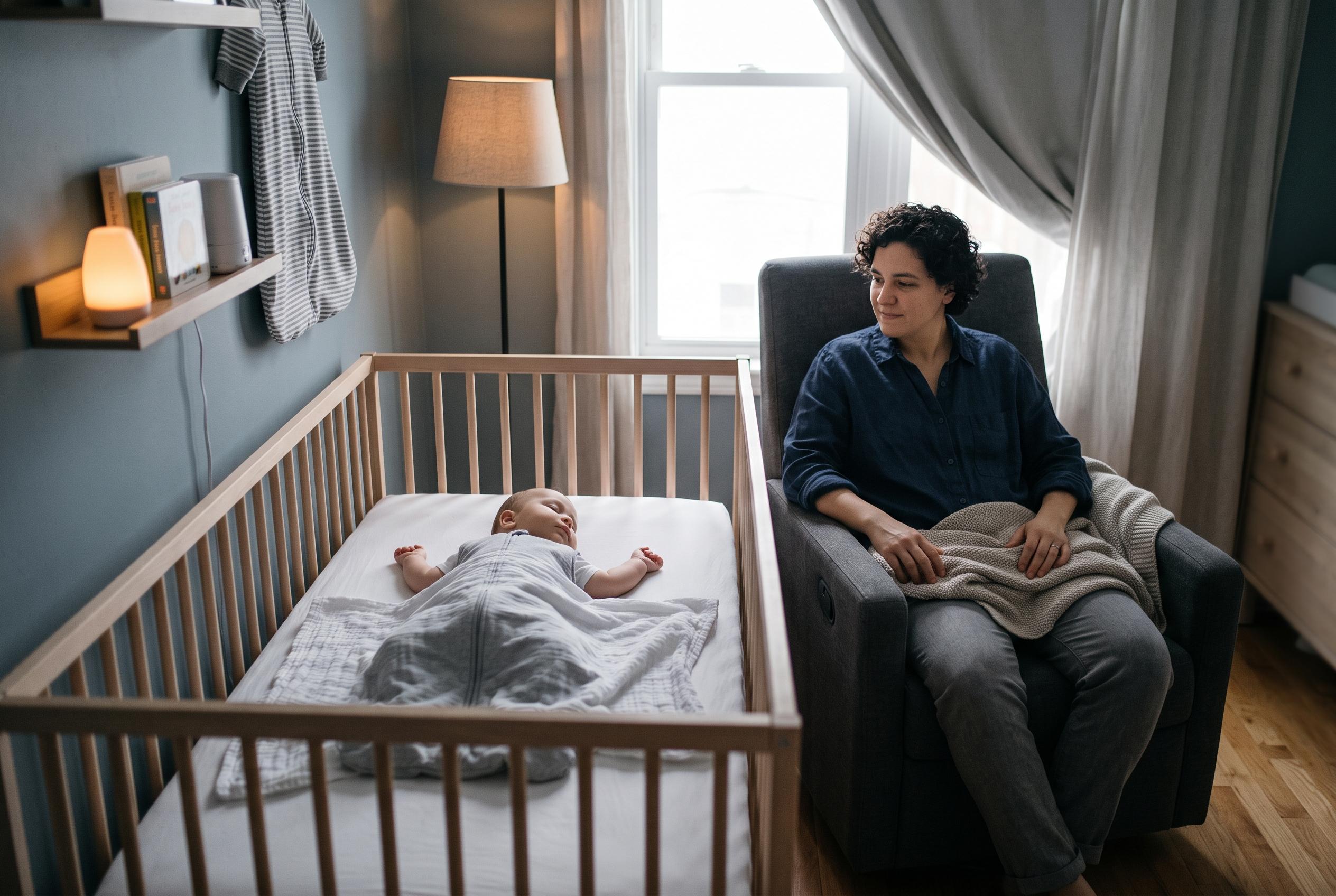

Recent studies and clinical guidance support the use of sleep strategies such as controlled crying to improve sleep for infants and reduce parental stress, challenging past concerns over potential harm.
Many parents spend the early months of a baby’s life awake far more often than they would like, and the strain can quickly affect the whole household. In an article republished from The Conversation, Harriet Hiscock says persistent night waking can disrupt parental sleep and, in turn, damage wellbeing. Hiscock argues that sleep strategies, once commonly called sleep training, can help babies learn to settle on their own without causing long-term harm.
The approach is generally considered most suitable from around six months, when many babies can take enough food during the day to reduce the need for night feeds. Hiscock says it should only be used when sleep is genuinely a problem for the family, not because there is a fixed expectation that every baby should sleep through the night. A steady bedtime routine, such as bath time, pyjamas, a story and a cuddle, is described as an important part of the process because it gives babies a predictable signal that sleep is coming.
One common option is the checking method, sometimes called controlled crying or graduated extinction. Under this approach, parents place the baby in bed while drowsy but awake, then return at set intervals if the baby cries, offering brief reassurance before leaving again. Another approach, often known as camping out, keeps a parent in the room at first and gradually reduces that presence over several nights. Both methods are designed to help the baby fall asleep with less direct help from an adult.
Concerns about harm have often been fuelled by misleading comparisons with children raised in severe deprivation, such as those in Romanian orphanages, but Hiscock says those circumstances bear no resemblance to sleep strategies used in ordinary family settings. She points to a five-year Australian study of 328 babies, begun in 2003, which found better maternal mental health and fewer reported sleep problems in the short term, with no later differences in child emotional or behavioural outcomes, parent-child closeness, harsh parenting or stress markers. A smaller 2016 study in Adelaide reported similar findings, with no sign of weaker attachment a year later.
That evidence is broadly echoed by clinical guidance from the Cleveland Clinic and the Sleep Foundation, both of which say sleep training can improve sleep for babies and parents and that there is no evidence it harms children when used appropriately. The American Academy of Pediatrics’ safe-sleep guidance remains essential alongside any behaviour plan: babies should sleep on their backs, on a firm surface, in a clear sleep space, with room-sharing preferred over bed-sharing. For families considering sleep strategies, the clearest advice is to begin only when a baby is well, be consistent, and seek help from a GP or child health nurse if the problem does not improve.
Disclaimer: This content is for informational purposes only and is not intended to be a substitute for professional medical judgment, advice, diagnosis, or treatment.



