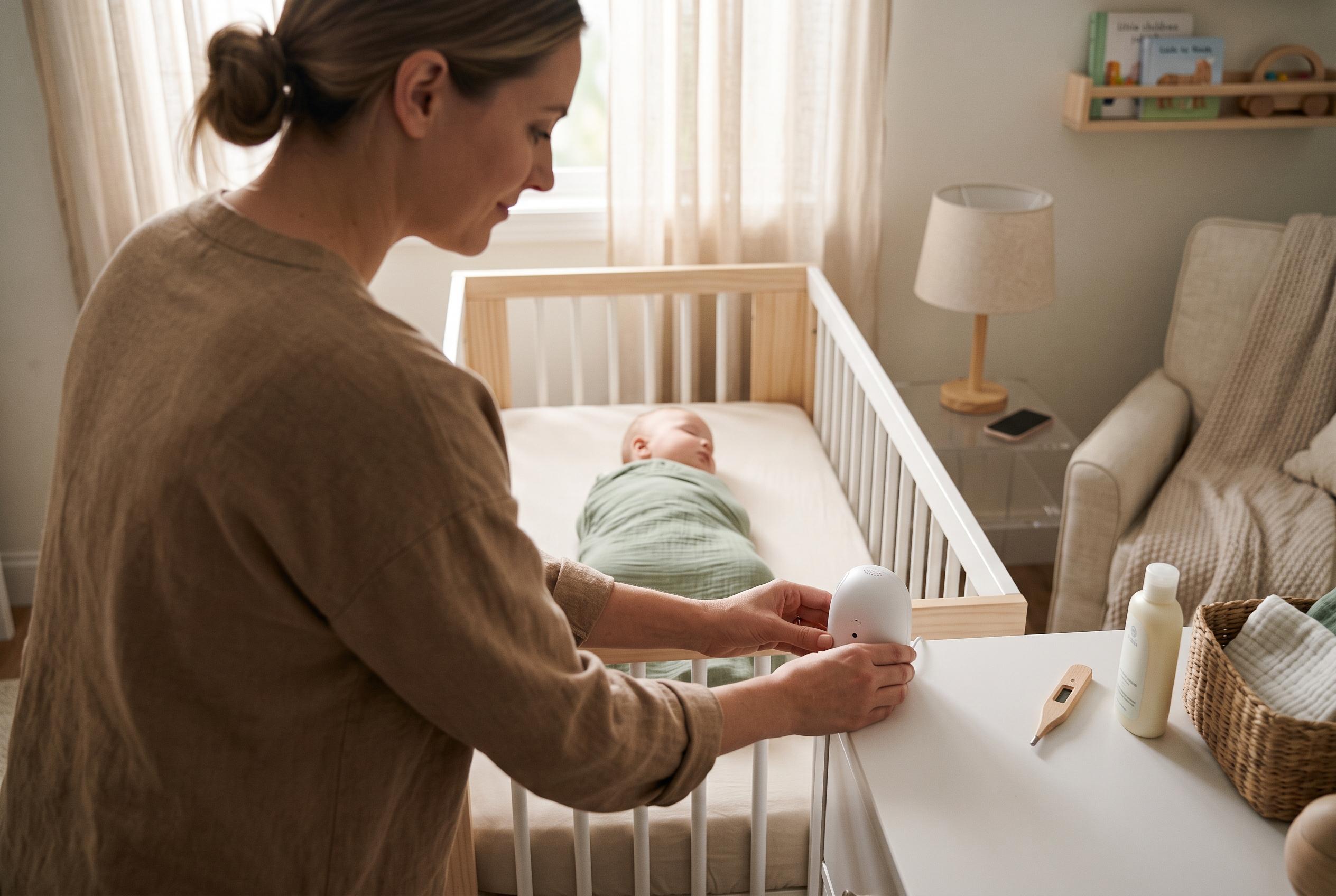

As a surge in contact-free nursery tech emerges, paediatric experts emphasise that safe sleep practices remain the cornerstone of infant safety, cautioning against over-reliance on sensors and digital gadgets.
New parents often find that the quiet hours are the hardest. Fear about sudden infant death syndrome, unexpected breathing changes and the simple fact that newborns look so fragile can keep caregivers hovering over the cot long after they should be asleep. That anxiety has helped fuel a booming market for baby monitors and nursery gadgets promising extra reassurance, yet paediatric experts say the real foundation of infant safety still lies in the sleep set-up itself, not in software or sensors.
The American Academy of Pediatrics, through its HealthyChildren guidance, says babies should be placed on their backs for every sleep, on a firm and flat surface with no loose bedding, pillows, toys or padded bumpers. It also recommends room-sharing without bed-sharing, ideally for the first six months, because keeping a cot or bassinet in the parents’ room can lower risk while making night-time care easier. The academy also warns against products marketed as reducing the risk of sudden infant death syndrome, saying there is no evidence they work and that they can create a false sense of security.
That distinction matters because many consumer monitors are not medical devices. The US Food and Drug Administration draws a line between digital health products and tools that diagnose or treat disease. Under FDA guidance on general wellness products, software or devices aimed at maintaining a healthy lifestyle may fall outside medical-device regulation if they are not intended to diagnose, cure, mitigate, prevent or treat a condition. In practice, that means a baby monitor may offer useful observations, but it is not designed to determine whether an infant is in danger or to replace clinical judgement.
The newer generation of nursery tech is leaning towards contact-free monitoring, with systems that use millimetre-wave sensing and video analysis to pick up movement, breathing-related motion and posture changes from across the room. Some products also include alerts for things such as face covering or a change in position. Supporters say those features can provide extra context for exhausted parents, especially when they are not standing beside the cot. But experts caution that these readings should be treated as informational prompts, not medical warnings.
That is the balance parents are increasingly being asked to strike: using technology as a helper, not a guarantee. A monitor may make it easier to see a baby without disturbing sleep, and secure data handling matters when connected devices are brought into the home. Yet the most important safety measures remain unchanged: a back-to-sleep position, a clear cot, a firm mattress, no overheating and an adult nearby who understands that no consumer device can substitute for safe sleep practice and attentive care.
Disclaimer: This content is for informational purposes only and is not intended to be a substitute for professional medical judgment, advice, diagnosis, or treatment.