

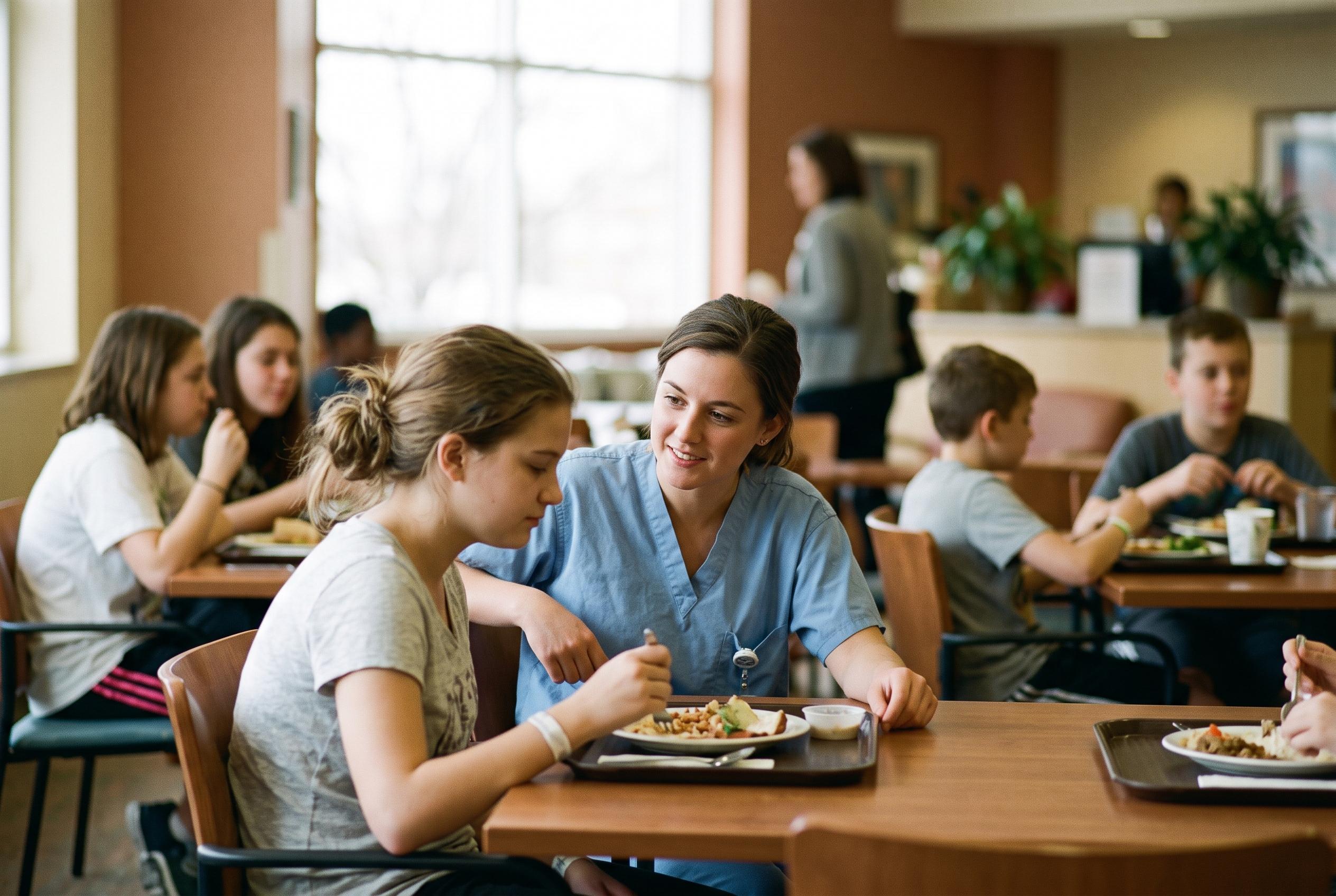

A small pilot at a children’s hospital found that trained medical students could offer feasible, acceptable support to young people during meals while gaining confidence in caring for eating disorders.
A medical-student-led support programme at a tertiary children’s hospital is showing that a little companionship at the bedside may ease one of the hardest parts of inpatient eating disorder care: getting through meals. The initiative, called Meal Partners, paired trained volunteers with young patients admitted for nutritional rehabilitation and found early signs that the approach was feasible, acceptable and helpful both for patients and for the students themselves.
Eating disorder admissions often involve strict meal supervision, close monitoring for medical complications and a great deal of distress at the table. Clinical guidance for inpatient care stresses that renourishment must be medically safe, with careful observation for refeeding syndrome, while also taking place in a supportive environment shaped by dietitians, physicians and mental health professionals. Specialist programmes such as ACUTE and Johns Hopkins Medicine also emphasise that recovery is most effective when treatment is structured, individualised and multidisciplinary. Against that backdrop, the Meal Partners team set out to add a more human layer to routine hospital care.
The study, published in the Journal of Eating Disorders, described how the programme was built in collaboration with the hospital’s eating disorder team and trained students in inpatient protocols, communication and topic boundaries. Volunteers were taught to steer clear of conversations about weight, calories, dieting, appearance and exercise, and instead to focus on neutral subjects such as hobbies, pets, books and travel. Meals were not meant to replace family involvement or clinical supervision. Rather, they were intended to complement the existing family-based approach used on the unit and to offer a calm, encouraging presence when caregivers were unavailable.
Over the six-month pilot, 10 inpatients were approached, six assented and four ultimately received meal support. All four had anorexia nervosa and were admitted for medical instability, including bradycardia, low phosphate levels and orthostatic hypotension. Thirty-two medical students were trained, with most volunteers in the early years of medical school. Among the small group who completed pre- and post-volunteering surveys, confidence improved. Students reported greater comfort interacting with patients with eating disorders, a better grasp of the inpatient experience and less uncertainty in these encounters. Every respondent said the experience would help in future clinical practice.
The feedback from students suggested that the value of the programme went beyond formal teaching. Volunteers described the sessions as natural and meaningful, saying that sharing a meal created a more relaxed atmosphere and made it easier to build rapport. Several said the experience helped them understand how a patient could appear articulate and insightful while still struggling significantly during meals. The main difficulties were practical ones: coordinating meal times, fitting the programme into busy schedules and dealing with room crowding or patients who preferred privacy. Still, the study’s authors concluded that the model is low-cost and adaptable, and that it could be expanded further if more volunteers were recruited and if future work better captured the views of patients and caregivers.
Disclaimer: This content is for informational purposes only and is not intended to be a substitute for professional medical judgment, advice, diagnosis, or treatment.



