
A new emphasis on sensory-friendly methods aims to transform the haircut experience for autistic children, prioritising safety, predictability, and dignity over perfection.
For many autistic children, a haircut is not a minor chore but a sensory event that can feel overwhelming from start to finish. The noise of clippers, the feel of loose hair on skin, strong smells and the uncertainty of what happens next can all build quickly, especially after a full day at school. The aim is not to force tolerance, but to make the experience feel safer, more predictable and more respectful.
Sensory overload is often at the heart of the problem. According to guidance from the National Autistic Society, sounds, touch, smells and visual input can all become harder to process for autistic people. That means a busy salon can combine too many pressures at once: bright lights, unfamiliar chatter, waiting around and tools that vibrate or buzz near the head. What may look like refusal or bad behaviour is often distress signalling that a child has reached their limit.
Preparation can reduce much of that uncertainty. Families can show photos of the salon, use simple visual schedules, or create a short social story that walks through each step, from arriving to leaving. Some children benefit from visiting the salon beforehand, meeting the stylist and practising the experience at home with a towel or cape. Early Autism Services and other autism support resources also recommend breaking the process into small, manageable steps and using positive reinforcement for each one.
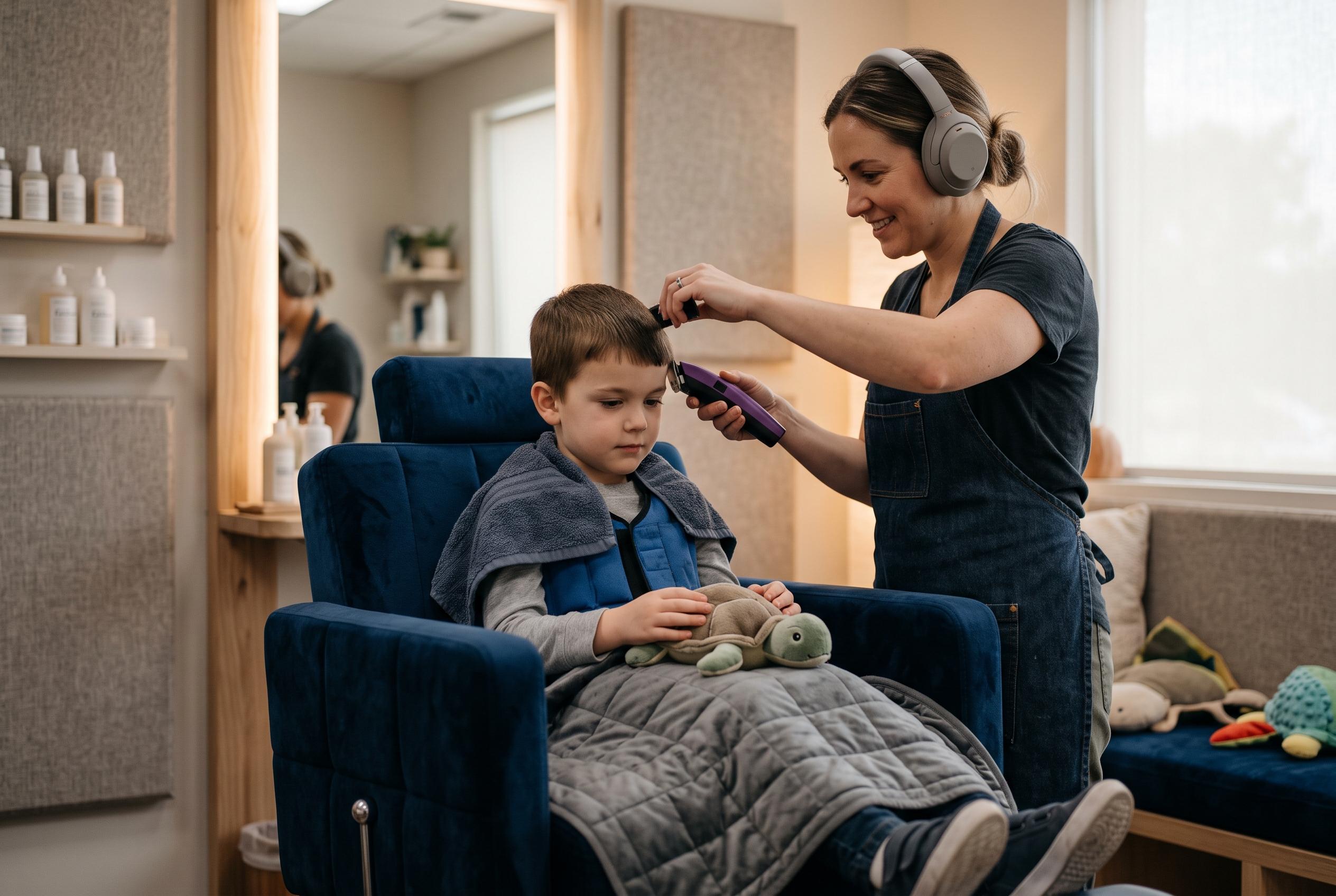
The appointment itself works best when it is built around flexibility. A quiet slot, minimal waiting, a familiar stylist and the option of a private room can all help. Parents can ask for headphones, comfort items, short breaks and the chance to stop at any point. The goal is not a perfect haircut on the first attempt, but a process that protects the child’s sense of control and dignity.
During the cut, small choices can make a big difference. A child may cope better if they can choose between clippers or scissors, sit on a chair or stand beside it, or agree a simple stop signal before the appointment begins. If distress rises, the priority should be to pause rather than push through. Several autism-focused guides, including advice from My Autistic and sensory care organisations, stress that even partial progress counts: a few snips, a short visit or a successful return after a break can be a meaningful win.
If a salon remains too much, families may need to consider alternatives. Home visits, mobile stylists or several short sessions may be easier than one long appointment. What matters most is not how neat the final style looks, but whether the child felt listened to, safe and understood. A haircut that ends early can still be a success if it helps build trust for next time.
Disclaimer: This content is for informational purposes only and is not intended to be a substitute for professional medical judgment, advice, diagnosis, or treatment.