

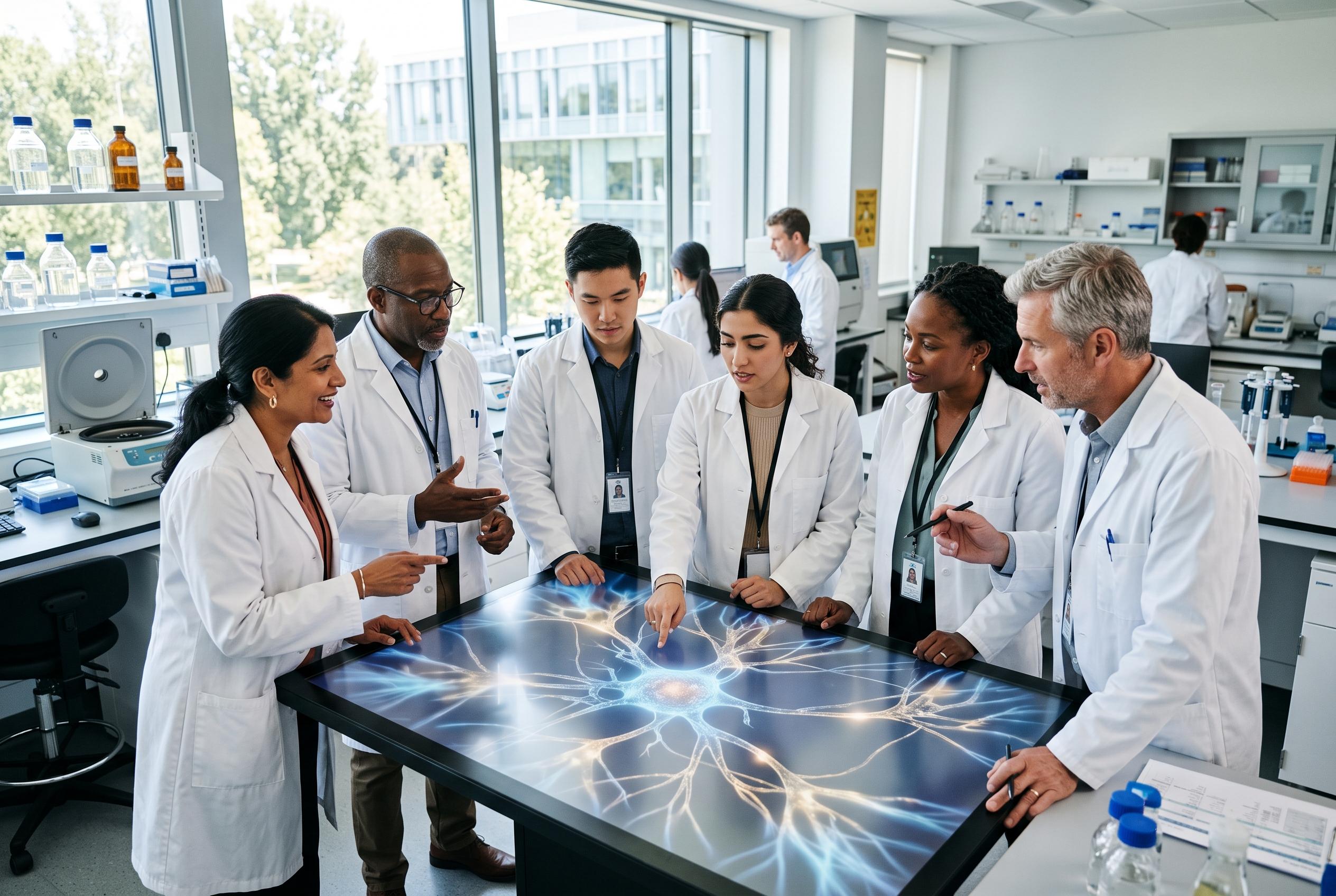

Researchers analysing data from 76 patients worldwide have identified distinctive clinical features and potential new links to type 2 diabetes in TCF7L2-related neurodevelopmental disorder, promising improved diagnosis and research collaboration.
Researchers have carried out the largest study yet of TCF7L2-related neurodevelopmental disorder, a rare genetic condition linked to changes in a gene known to be important in brain development. The team analysed 76 patients from around the world, working with sites in 14 countries and several US cities, including Philadelphia and Boston, and found a pattern of speech delay, autism, broader developmental delay, vision problems such as short-sightedness, and musculoskeletal issues.
The study, led by David Fajgenbaum at the Perelman School of Medicine at the University of Pennsylvania and published in Genetics in Medicine, also found that many patients shared distinctive facial features. That matters because better clinical recognition could help families and doctors reach a diagnosis sooner, particularly for a condition that appears to be both rare and variable.
Sally Nijim, the first author and a resident physician-researcher at Mass General Brigham, said the aim was to define the disorder’s genetic and clinical features across a large international cohort in the hope of improving recognition and speeding up research into long-term outcomes and possible treatments. The findings suggest the condition can look different from one person to another, which may have contributed to it being under-recognised until now.
The researchers also noted a possible association between certain TCF7L2 variants and type 2 diabetes in adults, although they said that needs further study. In response to the work, they helped launch the TRND Network, which is intended to connect patients, families, clinicians and researchers, and a prospective registry is now open for people with the disorder who want to take part in longer-term follow-up.
Disclaimer: This content is for informational purposes only and is not intended to be a substitute for professional medical judgment, advice, diagnosis, or treatment.



