

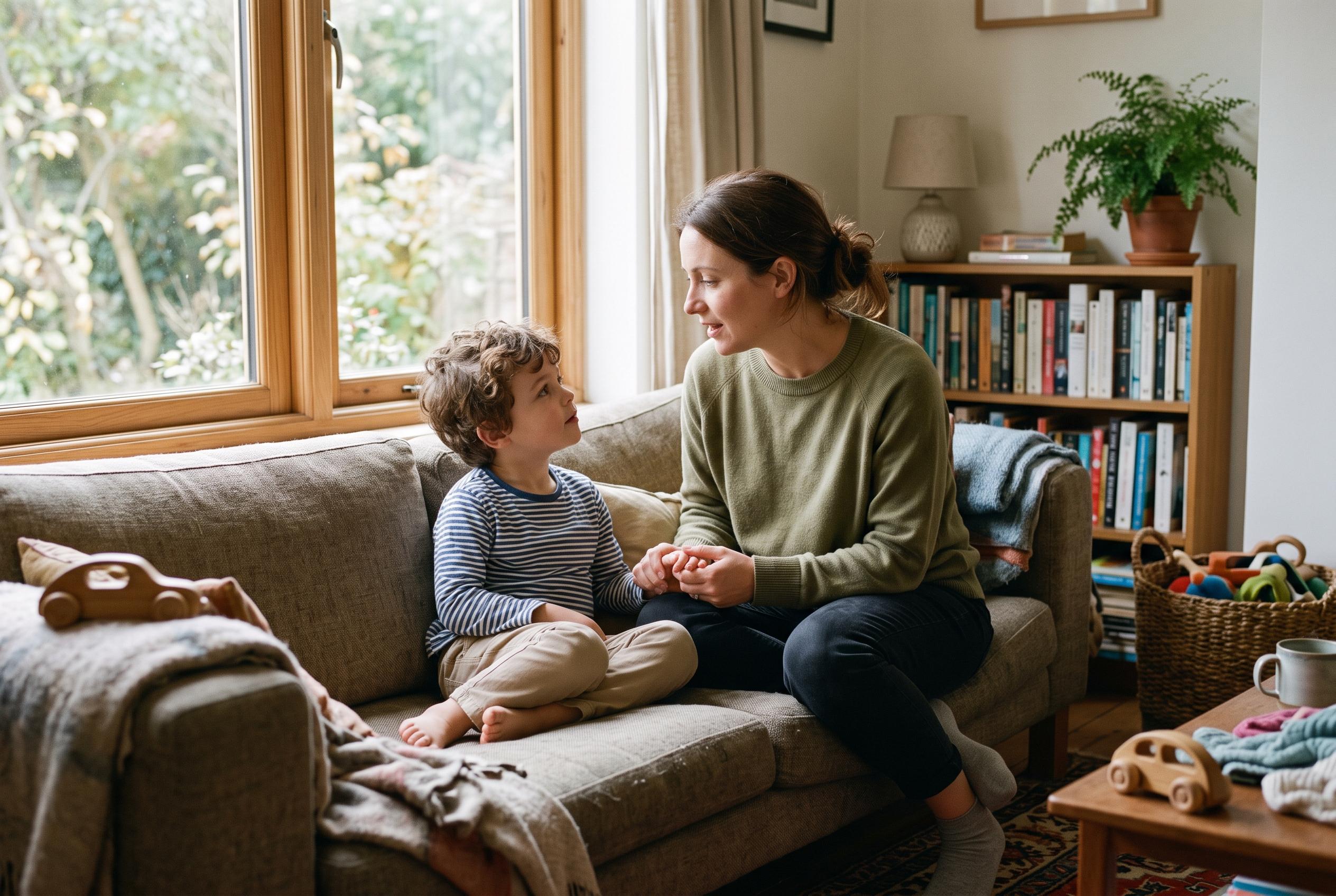

Child specialists urge parents to offer honest, age-appropriate explanations, limit disturbing media and preserve familiar routines when conflict reaches the news or daily life.
Parents confronted with conflict in the news, or with the sharp sounds and disruptions that come with it, face a difficult balance: tell children enough to feel secure, but not so much that they become overwhelmed. In Riyadh, Sara Shahid, a primary school teacher and mother of two, said her pupils had already picked up the vocabulary of war from home and from the media, which meant some understood the meaning of the explosions they heard during the school day. Her experience underlined a wider reality recognised by child specialists: children often absorb distressing information long before adults decide to explain it, and reassurance matters as much as information.
Shahid recalled that her class was able to respond quickly because the school had practised emergency drills. Children were told to take cover under desks and stay away from windows while teachers worked to calm those who were frightened. Some pupils cried, others stayed composed, and parents were contacted soon after. Her view was that very young children do not need detailed discussions about conflict unless there is a direct reason, though she said limited awareness may be appropriate for older age groups.
Hadil Aoloum, a family and systemic psychotherapist, said the first priority is to establish emotional safety. Before adults decide what to say, she advised them to ask what the child already knows and what is worrying them. Children, she said, may piece together scraps from television, adult conversations and friends’ comments, then fill the gaps with imagination, creating a story that may be more frightening than the facts. Her guidance echoes advice from paediatric and mental health organisations that recommend simple, honest explanations, without graphic detail, and a conversation shaped by the child’s age and understanding.
Aoloum also urged parents not to hide all signs of concern. Children look to adults for clues about how serious a situation is, so she said it helps when parents model calm behaviour while still acknowledging fear. She compared this to checking the reactions of airline crew during turbulence: children want to know whether the adults around them are in control. In practical terms, that means explaining that protective steps, such as air defence measures, school closures or temporary remote learning, are meant to keep people safe rather than signal that danger is everywhere.
Other child welfare guidance points in the same direction. Cleveland Clinic advises parents to listen carefully, answer questions in plain language and watch for changes such as sleep disruption or behaviour shifts, while the National PTA recommends that adults process their own feelings first so they can respond steadily. HealthyChildren.org, the parenting resource from the American Academy of Pediatrics, similarly says parents should ask what children have heard, correct inaccuracies and limit exposure to disturbing media. The common thread is that children cope better when adults offer routine, clarity and reassurance.
That sense of predictability can be especially important during periods of uncertainty. Aoloum said familiar routines around meals, schoolwork and bedtime help children understand that life is still ordered, even when events outside the home feel chaotic. The goal is not to pretend that frightening things are not happening, but to show children that adults and authorities are responding and that they are not being left to manage fear alone. For parents, teachers and other caregivers, the message is straightforward: speak honestly, keep it age-appropriate and make safety the central reassurance.
Disclaimer: This content is for informational purposes only and is not intended to be a substitute for professional medical judgment, advice, diagnosis, or treatment.



