

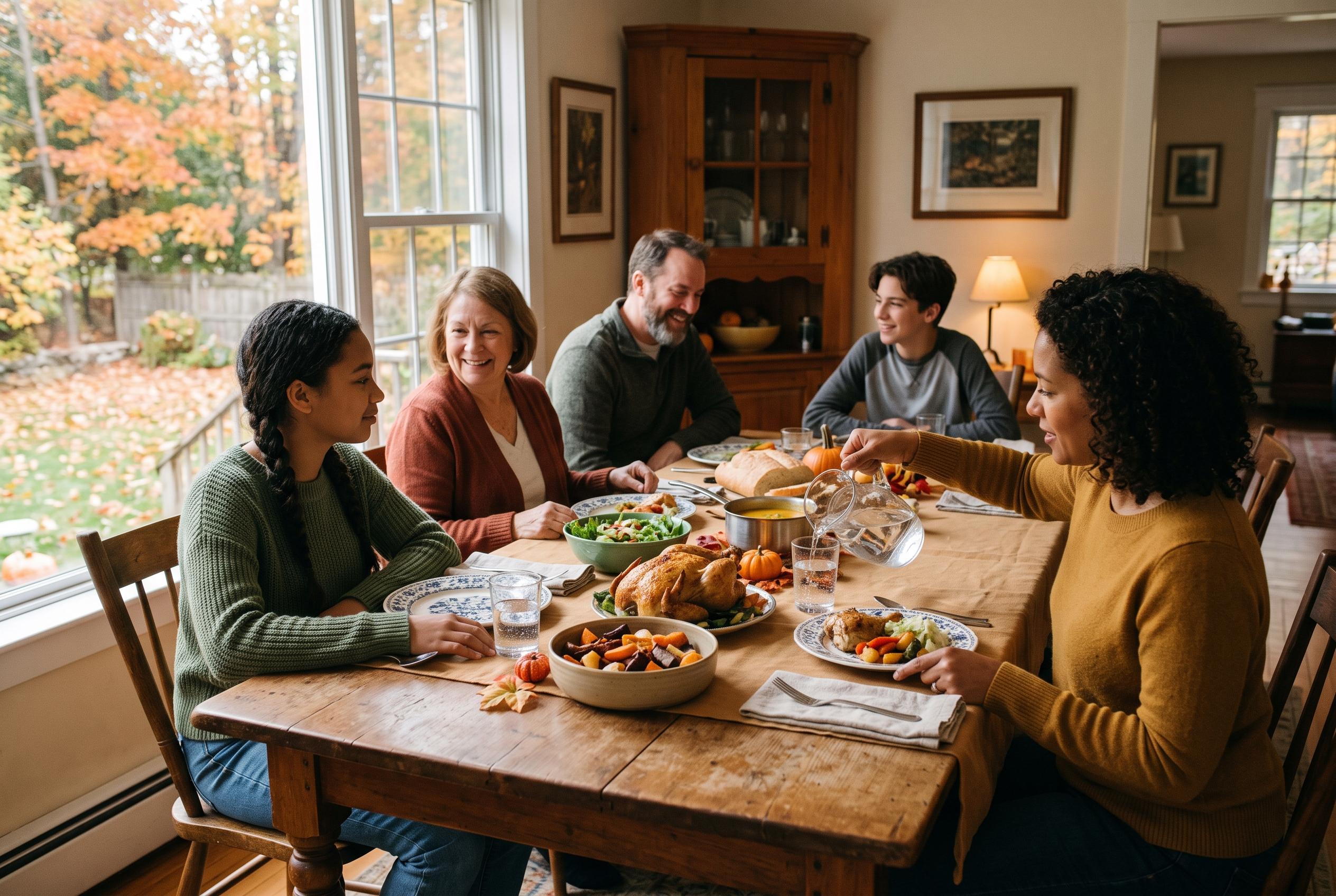

Planning meals, setting boundaries and arranging support can help people in eating disorder recovery navigate autumn events without sacrificing their wellbeing.
Fall gatherings can be joyful, but for people in eating disorder recovery they can also be loaded with stress. From pumpkin patch outings and school events to family dinners and the first round of holiday parties, autumn often centres on food, routines and comments that may feel harmless to others but are difficult for someone trying to stay well. That is why planning ahead matters: it can help people take part without sacrificing their recovery.
Experts and advocacy groups say the weeks around the holidays are a common time for added pressure. ANAD, the National Association of Anorexia Nervosa and Associated Disorders, says the season can leave people feeling isolated and in need of extra support, which is why it offers holiday-specific resources, including peer support, email guidance and educational materials. For many families, that added structure can make the difference between feeling overwhelmed and feeling equipped.
The first step is to make a realistic plan before attending an event. That might mean checking in with a therapist or dietitian, deciding in advance when to eat, and identifying a discreet way to step outside if anxiety rises. A simple grounding tool, such as a smooth object in a pocket or a calming scent, can help someone stay anchored. It also helps to think through logistics: how to get there, how to leave, and whether it would be better to arrive already nourished rather than waiting until the table is served.
Having ready-made language can reduce the strain of awkward conversations. Short responses such as “I’m not discussing my food choices today” or “Let’s change the subject” can be easier to use in the moment than trying to explain recovery under pressure. That matters because comments about weight, body shape, portions or willpower can be especially triggering. Boundaries are not rude; they are part of protecting health.
Once at the gathering, it can help to reduce the number of decisions you have to make. If the event is a buffet or potluck, scan the table first, choose what fits your plan and move away from the food area. Eating disorder recovery often depends on consistency, so keeping to regular meals and snacks on the day itself can be just as important as what happens at the event. If possible, bring a dish you know and trust, or a snack for later, so uncertainty does not become an excuse to skip food.
Mindfulness can also make social eating feel more manageable. That does not mean forcing yourself to be relaxed; it means noticing what is happening without judging it. Taking a breath between bites, putting down a fork briefly or focusing on the conversation rather than the table can all help. If the room begins to feel overwhelming, a grounding exercise such as naming things you can see, hear and feel may help reset the moment.
Support is often easier to use when loved ones know what is helpful. Families and friends can assist by avoiding diet talk, not commenting on someone’s plate and asking whether a person wants advice or simply company. F.E.A.S.T., the global family community for eating disorder caregivers, stresses the value of informed, practical support, and offers resources such as its moderated “Around the Dinner Table” forum and family guides. For parents and carers, that kind of peer education can make gatherings less fraught and more predictable.
For people who want additional support beyond their immediate circle, there are also free community-based options. ANAD offers virtual peer support groups for people affected by eating disorders, while the Nourish & Normalize Collective runs twice-monthly peer-led support circles online. ANAD also provides a free helpline for emotional support, referrals and general questions about eating disorders. These services cannot replace professional treatment, but they can help people feel less alone when seasonal events begin to pile up.
Recovery-minded aftercare matters as much as preparation. After an event, it can help to check in with a trusted person, notice what felt difficult and return as quickly as possible to regular meals, rest and normal routines. If symptoms escalate, if meals are being missed or if urges to compensate are becoming stronger, extra support may be needed. The strongest message from advocates and support organisations is a simple one: autumn gatherings do not have to be all-or-nothing. With planning, boundaries and support, it is possible to stay connected to the people and traditions that matter while still protecting recovery.
Disclaimer: This content is for informational purposes only and is not intended to be a substitute for professional medical judgment, advice, diagnosis, or treatment.



