

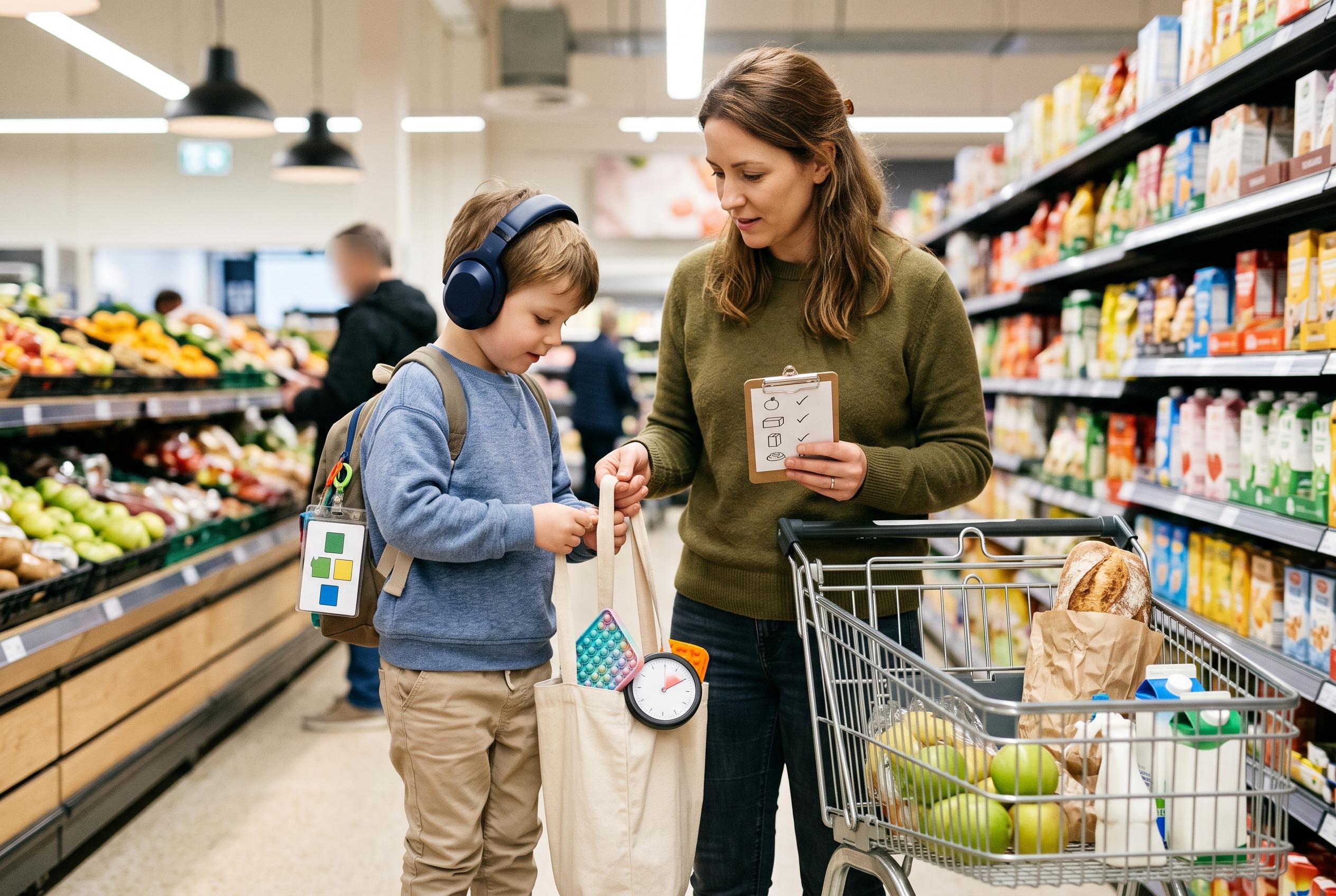

Practical preparation, visual aids, and sensory strategies are key to making grocery trips manageable for children with autism, turning a challenging task into a routine that can be repeated with confidence.
Grocery shopping can be one of the most routine jobs in a household and one of the most demanding for an autistic child. The aim is not to make the child tougher or more compliant, but to make the outing more predictable. Families that do best tend to reduce surprises before they leave home: they keep the list short, warn the child in advance, pack sensory supports, and decide in advance how the trip will end if things become too much.
The most effective preparation is usually practical rather than elaborate. According to guidance from Marcus Autism Center, families can make shopping easier by setting clear rules before entering the shop, bringing a snack or small distraction, using a visual checklist and keeping trips short enough to build tolerance gradually. Similar advice appears across autism and behaviour support resources, which emphasise that a calm, well-prepared adult does more to shape the experience than a longer list of instructions ever will.
A useful plan starts with the basics: a short shopping list, a clear start and finish point, payment ready before reaching the till, and a way home that does not depend on completing every item. Many families also benefit from a visual list, whether that is a laminated card, a picture-based checklist or a simple dry-erase board. Move Up ABA says practising the routine at home can help children understand what is coming, while Leafwing Center and Tulsa Autism both note that visual supports and low-pressure practice can lower anxiety before the first aisle is even reached.
Sensory preparation matters just as much. Bright lights, crowding, background noise and the stop-start rhythm of a busy shop can all overload a child who is already working hard to cope. Tulsa Autism recommends lower-traffic shopping times and a sensory kit with headphones, a chewy or fidget, a preferred snack and a familiar water bottle. The same theme runs through other autism support advice: bring what the child genuinely uses, not what simply seems helpful in theory. A comfort item, sunglasses, a billed cap or a blanket for a cold cart seat may make the difference between a manageable errand and a sudden exit.
Timing is another part of the plan. Weekday mornings soon after opening are often the easiest option because the aisles are quieter and the pace is slower. Leafwing Center and Move Up ABA both stress the value of starting small and keeping the early trips low-pressure. That may mean going in for just a few items at first, then gradually extending the outing as the child builds confidence. Social stories, as GrowTale explains, can also help by walking the child through the steps of the visit in advance and giving them a specific role, such as holding the list or putting items in the basket.
When a child becomes overwhelmed, the goal should be to reduce demand quickly rather than push through. That may mean moving to a quieter area, lowering the amount of talking, offering the comfort item or snack, and leaving before the situation escalates. The most useful plans include an exit signal that both parent and child understand. A grocery trip that ends early but calmly is more valuable than one that finishes the list and leaves everyone distressed. As multiple autism resources suggest, the long-term aim is not a perfect shop, but a repeatable routine that becomes easier over time.
For families trying to make this work week after week, the lesson is consistent: preparation does the heavy lifting. A short list, a visual preview, sensory support and a clear escape plan turn grocery shopping from a battle into a structured routine. That shift matters, because the real goal is not merely to get through the checkout. It is to make the weekly shop feel ordinary enough that the whole family can manage it again next time.
Disclaimer: This content is for informational purposes only and is not intended to be a substitute for professional medical judgment, advice, diagnosis, or treatment.



