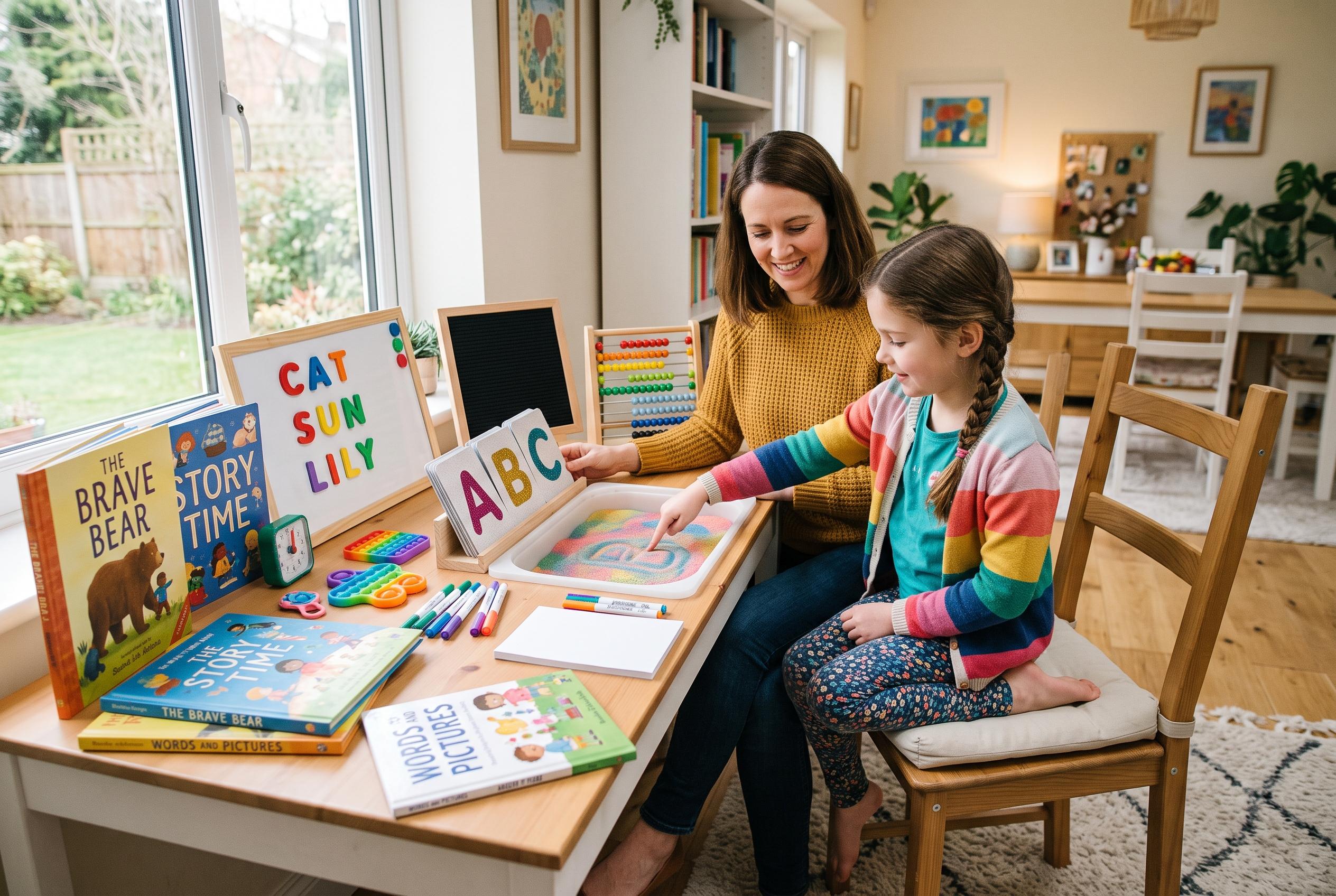

Educators and parents highlight how homeschooling offers a flexible, personalised environment crucial for dyslexic learners, challenging traditional school routines to foster confidence and progress.
Many parents begin homeschooling with the same mental picture they had of school: desks, worksheets, fixed bells and a day that runs from 8 am to 3 pm. But educators who work with dyslexic learners say that approach can become counterproductive when a child needs a different pace, different methods and more room to show what they know in ways that are not tied to reading speed.
The International Dyslexia Association says homeschooling can be a practical option for families when traditional schools do not provide enough support, because it allows for individualised teaching and the flexibility to build therapies and outside services into the day. LD OnLine makes a similar point, noting that children with dyslexia often need direct, systematic instruction in reading and spelling, along with teaching that is closely matched to the child rather than the class as a whole.
That flexibility matters because many dyslexic children do not learn on the same timetable as their peers. The organisation Decoding Dyslexia Oregon says homeschooling can give parents more freedom to strengthen a child’s interests and provide interventions without the layers of bureaucracy that can slow down support elsewhere. In practice, that can mean delaying formal writing, spending longer on reading or changing the day’s plan when a child needs a break.
Specialist learning platforms are built around the same idea. LittleLit, which offers curriculum designed for dyslexic learners, emphasises multimodal teaching, audio support, visual learning and progress tracking without punishing children for timed reading drills. Outschool says an Individualised Education Programme can also be a useful guide for homeschooling families, since it can point parents towards strategies and accommodations that previously worked in the classroom.
The broader lesson, advocates say, is that a successful homeschool does not need to resemble a conventional classroom to count as real education. For families teaching children with dyslexia or ADHD, the goal is not to preserve school-like routines for their own sake but to create an environment where the child can learn, build confidence and move forward in a way that fits.
Disclaimer: This content is for informational purposes only and is not intended to be a substitute for professional medical judgment, advice, diagnosis, or treatment.