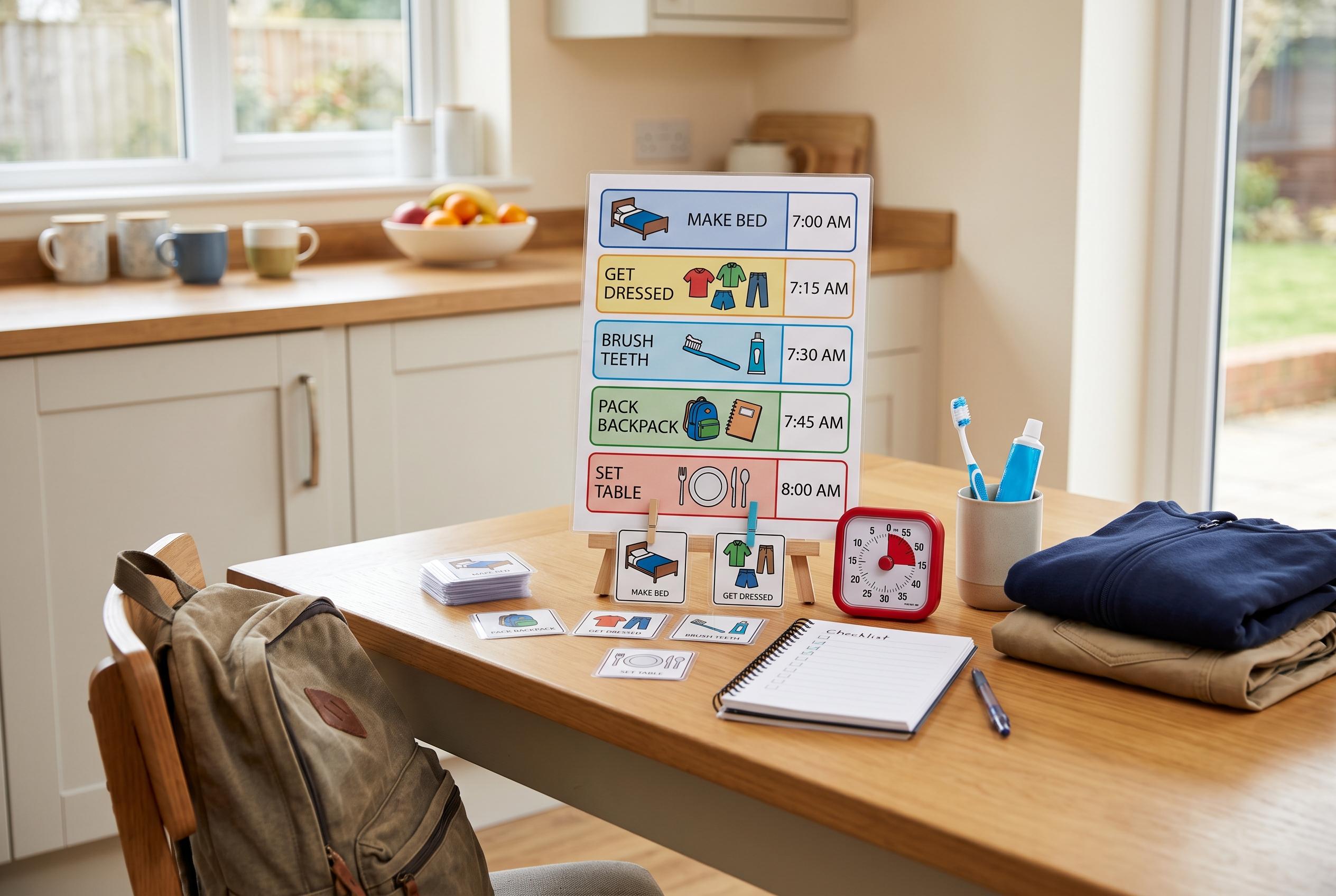

DYNSEO advocates for integrating everyday tasks and visual supports into routines to foster independence and social skills in teenagers with Down syndrome, emphasising patience and consistency at home.
Helping a teenager with Down syndrome at home works best when everyday life is treated as the lesson itself. DYNSEO’s guidance argues that repeated routines, clear visual cues and activities with a real purpose help learning stick far better than occasional formal exercises. The aim is not to chase perfection, but to build independence one familiar step at a time.
That approach matters because adolescence brings the same physical, emotional and social changes for teenagers with Down syndrome as for their peers, according to Healthline. It can also be a period when young people need extra support for adult life skills, relationships and confidence. DYNSEO’s framework fits that stage by turning ordinary tasks such as dressing, packing a bag or clearing the table into structured opportunities for progress.
The article recommends starting with what it calls a realistic level of challenge: a task should feel achievable most of the time, then be gradually made more demanding. It also stresses that instructions should be visible as well as spoken. Photos, pictograms and step-by-step sequences can be far more effective than long verbal explanations, especially for routines such as getting dressed, preparing food or organising belongings.
Practical independence is the thread running through the home tasks. DYNSEO suggests teaching teenagers to prepare their school bag, dress themselves, set and clear the table, and make a simple snack. The Down Syndrome Resource Foundation takes a similar view, saying life skills should be introduced early and broken into manageable steps, with occupational therapists often helping to adapt tasks safely and effectively. For self-care, the foundation recommends approaches such as task analysis and gradual prompting to support feeding, toileting, hygiene and dressing.
Communication is another central theme. DYNSEO recommends a communication binder, shopping visits that build vocabulary in context, shared reading and photo-based conversations about the day. These ideas align with broader advice from Kaiser Permanente, which encourages families to support school, community and personal interests, while also maintaining daily routines and keeping an eye on mental health. For many teenagers, comprehension may be stronger than spoken expression, so giving them visual supports and extra time to respond can reduce frustration.
The emotional side of adolescence also needs direct attention. DYNSEO suggests tools such as an emotions thermometer, a choices wheel and role-play for everyday social situations. Healthline notes that teenagers with Down syndrome may need help navigating social relationships and the demands of growing up, making rehearsal and structured choices especially useful. The point is to help the young person notice feelings earlier, choose a response and practise social scripts before they are needed in real life.
DYNSEO also places strong emphasis on the home environment. It recommends making rooms more predictable and accessible, with labels, visual schedules, fixed storage places and quiet areas for concentration. The organisation says digital tools can help too, provided they are used for short, regular sessions rather than open-ended screen time. Its advice is to keep the home from feeling like a therapy room and instead make it a place where learning happens naturally.
That philosophy carries through to routine-building. The Down Syndrome Resource Foundation and the Adult Down Syndrome Center both stress consistency, small steps and patience when habits are being formed. DYNSEO applies that thinking to daily and weekly planning, suggesting short, repeatable routines rather than ambitious schedules that quickly collapse. It also reminds families that rest, free play and ordinary family time matter just as much as structured learning.
For parents and caregivers, the practical message is simple: do things with the teenager, not for them; show more than you explain; and build success into the task from the start. When the home is organised around visibility, repetition and calm, the teenager has more chances to take part, practise and gradually do more for themselves.
Disclaimer: This content is for informational purposes only and is not intended to be a substitute for professional medical judgment, advice, diagnosis, or treatment.