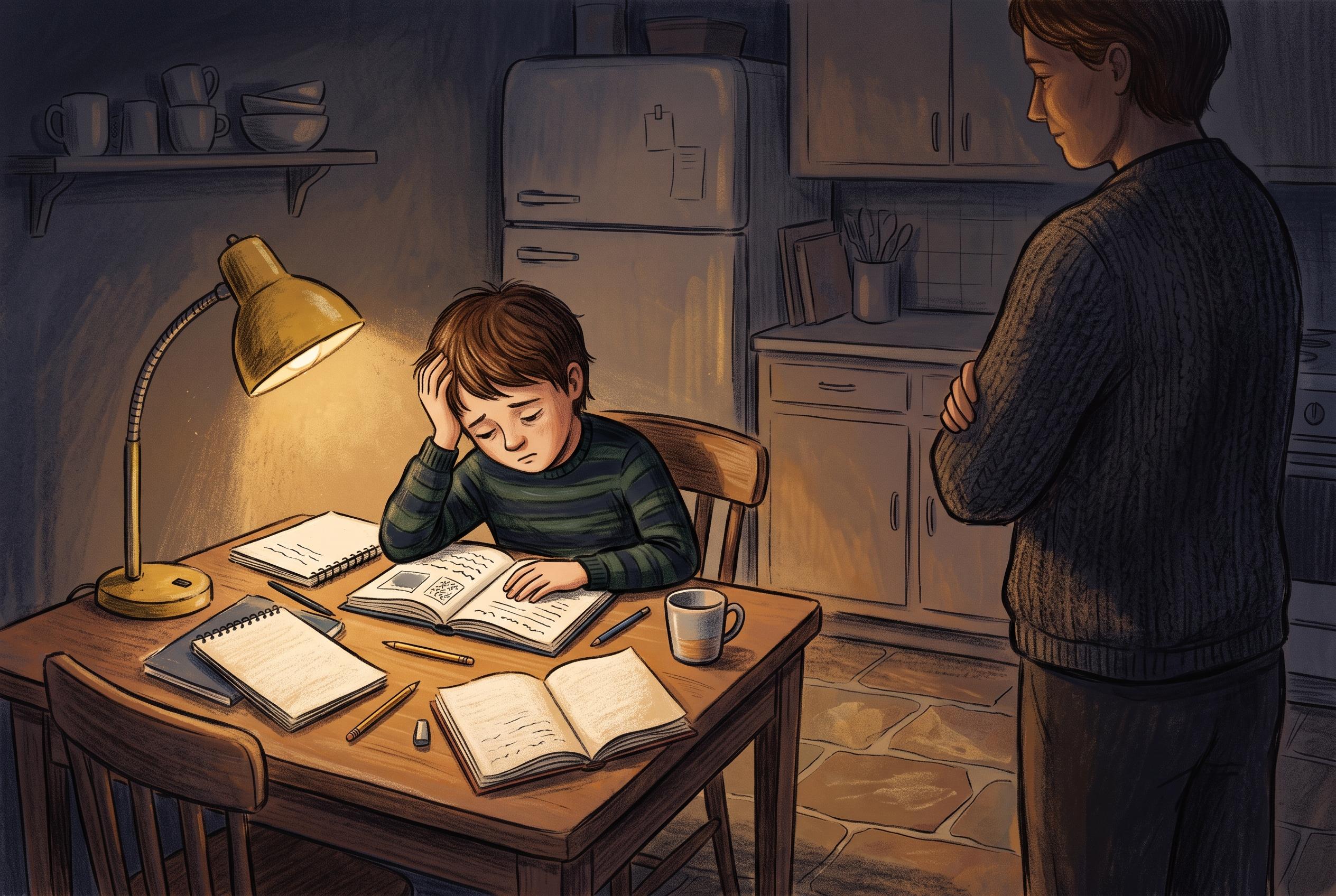

A new perspective highlights that children often mask the true extent of their academic struggles, with effort exerted at home revealing hidden fatigue and emotional strain, prompting calls for more nuanced parental support.
A child who looks fine at school can still be working far harder than anyone realises. That is the central point of a Brooklyn Letters piece that challenges a common assumption: strong marks and tidy classroom behaviour do not always mean learning feels easy. Some children compensate by memorising routines, copying peers, rereading instructions, or leaning heavily on adult prompts, all of which can hide real strain until they get home and finally let go.
The distinction matters because school performance and learning experience are not the same thing. A pupil may meet expectations, take part in lessons and bring home decent grades while using far more effort than classmates to get there. Education specialists say that homework is often where that hidden cost becomes visible, because parents see the full sequence of struggle rather than just the finished page. A worksheet completed in class may have taken repeated reminders, frustration and emotional effort to produce at home.
That gap between school and home is one reason teachers and parents can tell different stories about the same child. In class, teachers are supervising a roomful of pupils, moving through a structured day and often seeing only the polished result. At home, parents may see a child stare at a blank page, forget multi-step directions, become upset by a single spelling word or need repeated reassurance to keep going. Those moments do not always point to a diagnosis, but they can signal that a child is expending an unusual amount of effort just to keep up.
Homework battles and after-school meltdowns, specialists say, are often less about laziness than exhaustion. By the end of the school day, many children have already spent their best concentration on staying organised, paying attention and holding themselves together in public. Once they get home, that pressure can spill over into tears, resistance or shutdown. Resources from parenting and education organisations recommend calmer routines, shorter tasks, rest and clear structure before assuming a child is simply refusing to try.
The hidden strain can also affect confidence. Psychology Today has noted that bright children sometimes underperform when they absorb negative messages about their abilities or begin to doubt themselves. That makes early, specific parental observations especially important. If homework regularly takes far longer than expected, if a child understands a topic verbally but cannot express it in writing, or if reading and writing repeatedly trigger distress, those patterns deserve attention even when report cards look reassuring.
For parents, the practical step is to describe what they see in concrete terms and to ask better questions than “Is my child doing fine?” Questions about how long work takes, where the child gets stuck and how much support is needed can give teachers a clearer picture of what is happening outside the classroom. The broader lesson is simple: a child who appears to be coping may still be carrying a heavy load, and recognising that effort early can help families get the right support before frustration hardens into avoidance.
Disclaimer: This content is for informational purposes only and is not intended to be a substitute for professional medical judgment, advice, diagnosis, or treatment.