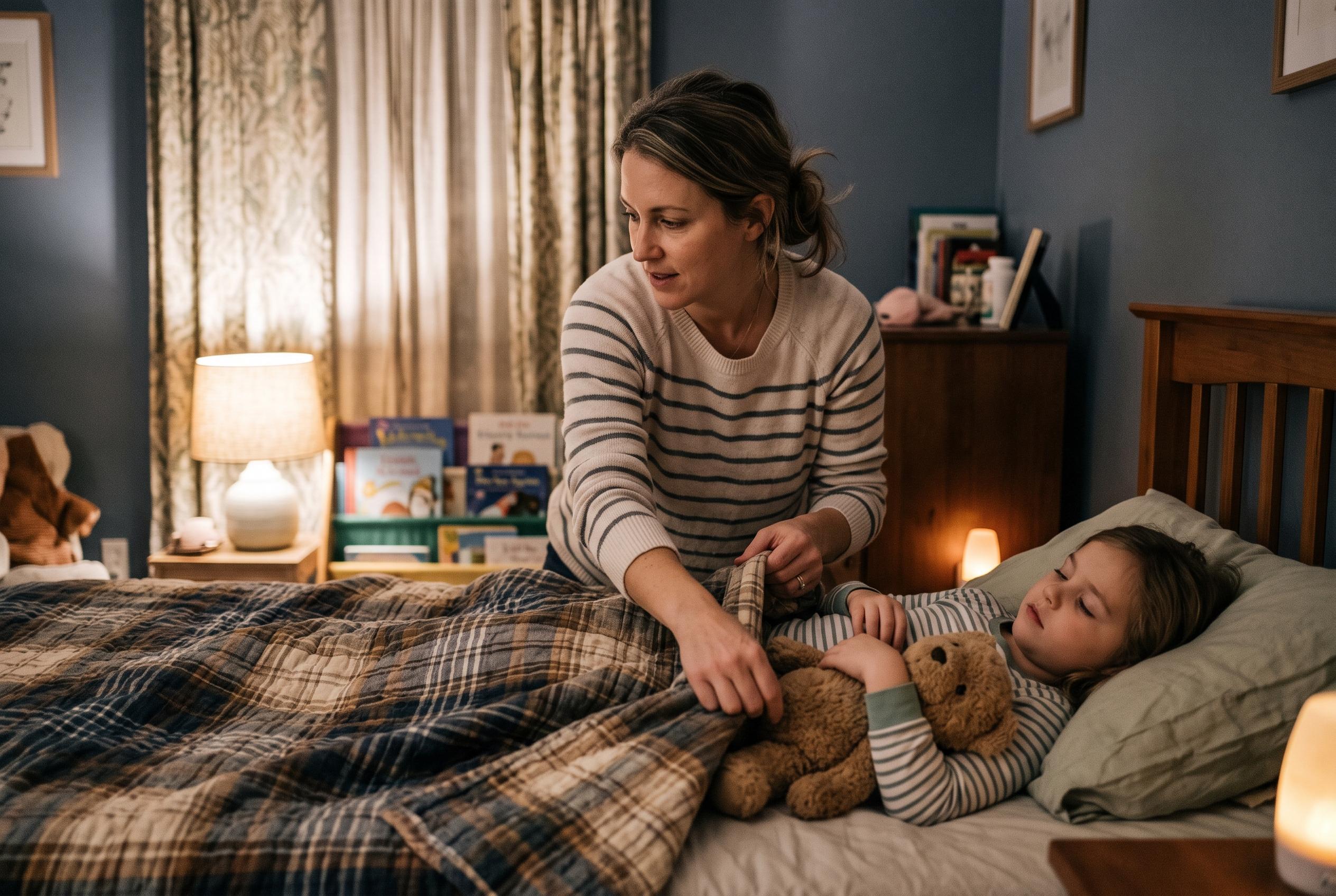

Children’s fear following earthquakes often intensifies at night. Experts advise parents to acknowledge fears, limit distressing content, and reinforce routines to support recovery and emotional resilience.
After an earthquake, many children seem to settle during the day only to become anxious once night falls. They may refuse to sleep alone, wake at the slightest sound or keep asking whether the ground will shake again. Child health guidance from Christus Health, Save the Children and UNICEF all points to the same pattern: fear after a disaster can surface in different ways and often becomes stronger when the house is quiet and routines change.
For parents and carers, the first step is to listen without brushing the fear aside. Experts say it is better to acknowledge that the child is frightened than to insist everything is fine. Saying that nobody can guarantee another tremor will not happen is more honest than making promises that cannot be kept. Instead, families can focus on what they can control: staying together, knowing what to do and practising calm responses.
It also helps to limit distressing images and conversations. Children do need age-appropriate explanations, but repeated exposure to footage of destruction, injuries or constant discussion of aftershocks can keep them feeling unsafe. The advice from Save the Children, UNICEF and North Dakota State University Extension is to keep explanations simple, answer questions directly and avoid overwhelming younger children with adult detail.
Rebuilding ordinary habits is another important part of recovery. A regular bedtime, bath, pyjamas, a story and other familiar steps can help restore a sense of predictability. If a child needs extra company to fall asleep for a while, specialists say that is reasonable, provided independence is encouraged again gradually and without pressure.
Preparation can also reduce anxiety. Children can be shown where to go during an emergency, where the family’s emergency bag is kept and which adult will stay with them. Quake safety guidance for children also recommends practising drills and pointing out safe spots in each room, so the lesson becomes something practical rather than frightening.
If fear begins to affect sleep, eating, school or daily behaviour for more than a short period, or if nightmares, withdrawal or other symptoms intensify, professional help may be needed. For many families, recovery after an earthquake is not only about fixing damaged walls. It is also about helping children feel secure enough to close their eyes and sleep again.
Disclaimer: This content is for informational purposes only and is not intended to be a substitute for professional medical judgment, advice, diagnosis, or treatment.