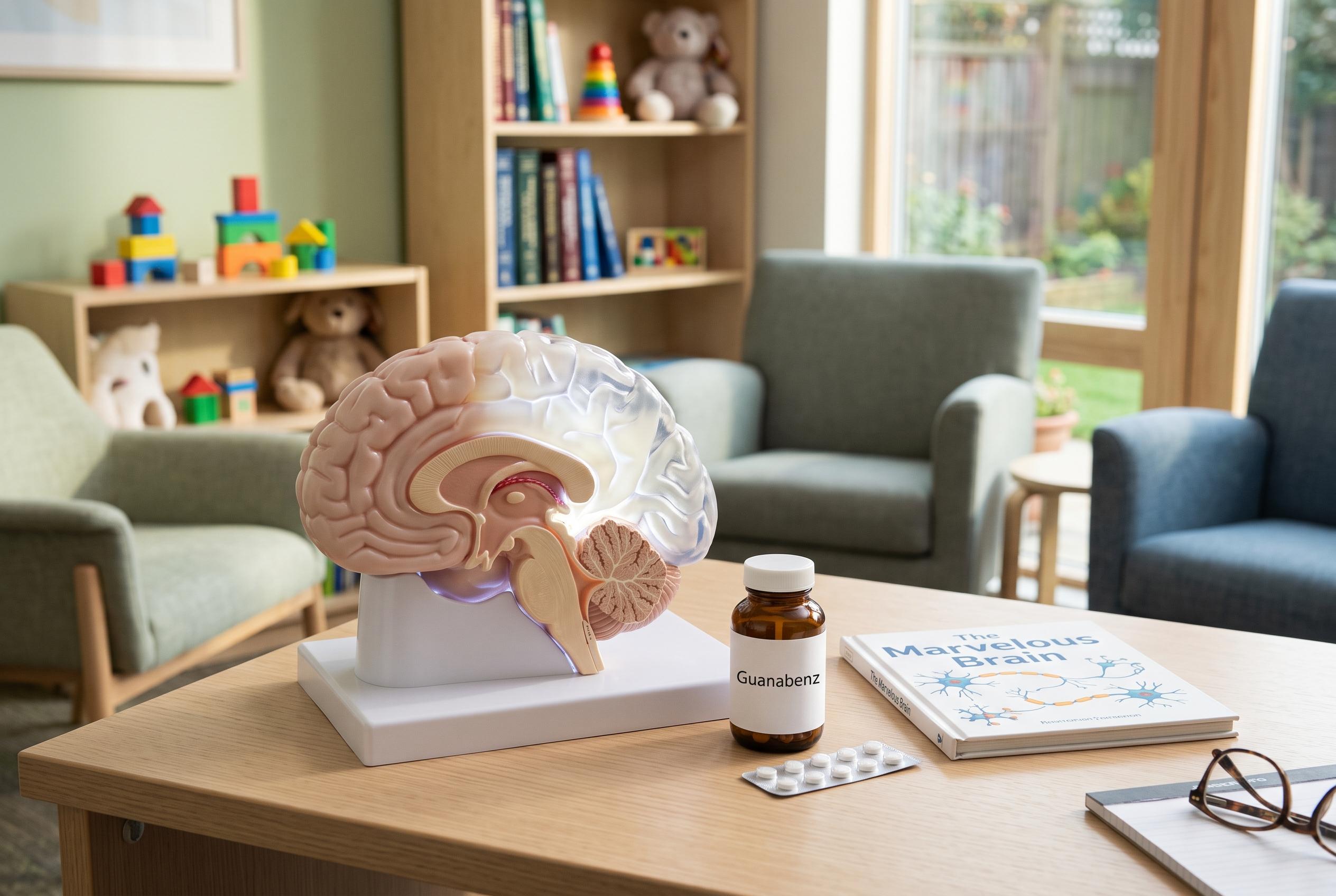

A preliminary study suggests that the blood pressure medication guanabenz may delay the progression of a rare and fatal inherited brain disease in children, offering new hope for treatment.
An experimental use of the blood pressure medicine guanabenz may help slow vanishing white matter, a rare inherited brain disorder that affects young children and can be fatal, according to Amsterdam University Medical Centers and a study published in The Lancet Neurology. The condition damages the brain’s white matter, which carries signals between different parts of the nervous system, and can gradually rob children of movement and thinking skills. Amsterdam UMC says no approved treatment currently exists to halt the disease.
In the study, researchers tracked children with vanishing white matter who received guanabenz and compared their course over three years with 66 children of similar severity drawn from an international registry who did not take the drug. The team reported that children on the medicine were less likely to become wheelchair dependent, or did so more slowly, than those in the comparison group. Marjo van der Knaap, the study’s first author and a retired professor of paediatric neurology at Amsterdam UMC, said the findings showed, for the first time, that the disease could be influenced.
The research builds on earlier work from Amsterdam UMC in mice, where guanabenz improved motor performance and appeared to reduce disease progression in a vanishing white matter model, while another compound, sephin1, did not show the same benefit. Separate Amsterdam UMC studies have also described some limited endogenous repair activity in affected brain regions and set out expert recommendations to improve diagnosis and care for the disease, which is linked to mutations in the EIF2B genes.
The latest human study also noted that none of the children treated with guanabenz died during the observation period, compared with five deaths among the 66 children in the comparison group. Side effects such as hallucinations, sleepiness, constipation and low blood pressure were reported mainly early in treatment, but most children later tolerated the drug well and none stopped because of adverse effects. Even so, the researchers stressed that guanabenz is not a cure, that its benefits appear to fade after treatment ends and that the study did not include a concurrent untreated control group. Amsterdam UMC says a longer follow-up study is now under way, including work on higher doses.
Disclaimer: This content is for informational purposes only and is not intended to be a substitute for professional medical judgment, advice, diagnosis, or treatment.