

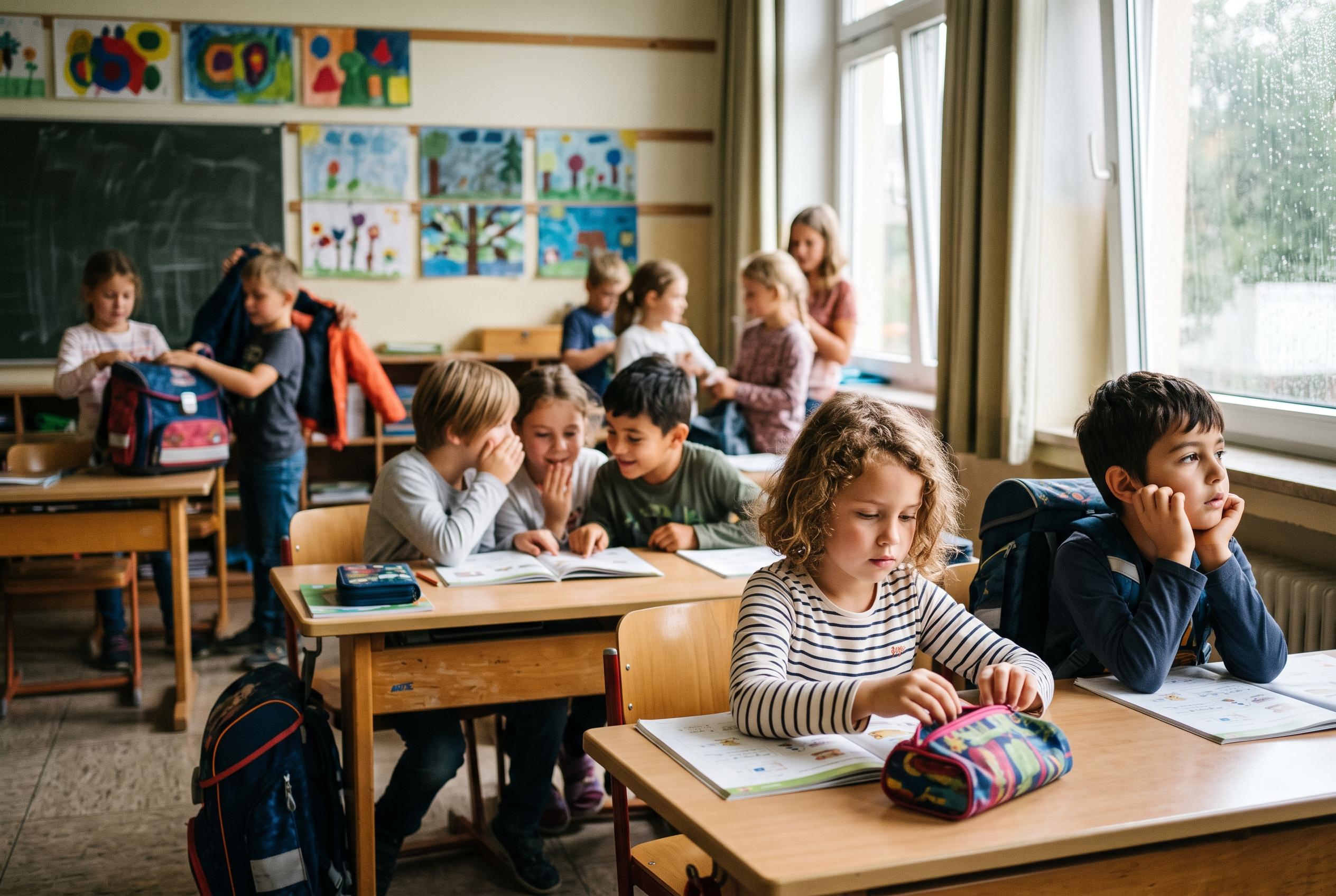

As children in Germany head back to school after summer, many face short-term stress and physical symptoms, while a minority grapple with more serious anxiety issues requiring attention.
When schools resume after the long summer break, many children struggle with the abrupt return to early mornings, timetables and homework. In Germany, where around 11.5 million pupils are heading back into class, that adjustment can show up not only as nerves but also as stomach pain, headaches, sweaty hands, restlessness and poor sleep.
The term “Schulrückkehrer-Syndrom” is often used to describe that response, but child and adolescent psychiatrist Gerd Schulte-Körne of LMU Klinikum München told Bayerischer Rundfunk that it is not a medical diagnosis. He said the reaction is usually temporary, as children move from the looser rhythms of the holidays back to the more demanding structure of school life.
Researchers have also found that wellbeing can be noticeably different in term time and during holidays. A 2025 study in the British Journal of Psychiatry Open, from Central South University in China, reported lower anxiety and depression symptoms among more than 1,000 teenagers during the summer break than during school time. That does not mean every child who complains before school is simply anxious about returning; it does underline that stress linked to school can be real and measurable.
The more important question is how long the symptoms last and what is driving them. According to Schulte-Körne, around 6% to 8% of pupils experience more serious school-related anxiety, which may stem from bullying, fear of failure, test pressure or separation anxiety. Specialists cited by Apotheken Umschau, DAK and other German health resources say the warning signs can include headaches, nausea, sleep problems and other physical complaints that should not be dismissed as excuses.
For parents, the first step is to listen closely and identify the trigger: a difficult classmate, a test, a new teacher, a changed class or something outside school altogether. A stable routine, regular bedtimes and calm mornings can help, and schools can ease the transition by giving children time to settle in after the holidays. But if the fear persists, the child is clearly distressed or begins to avoid lessons, experts advise seeking professional help rather than waiting for it to pass.
Disclaimer: This content is for informational purposes only and is not intended to be a substitute for professional medical judgment, advice, diagnosis, or treatment.



