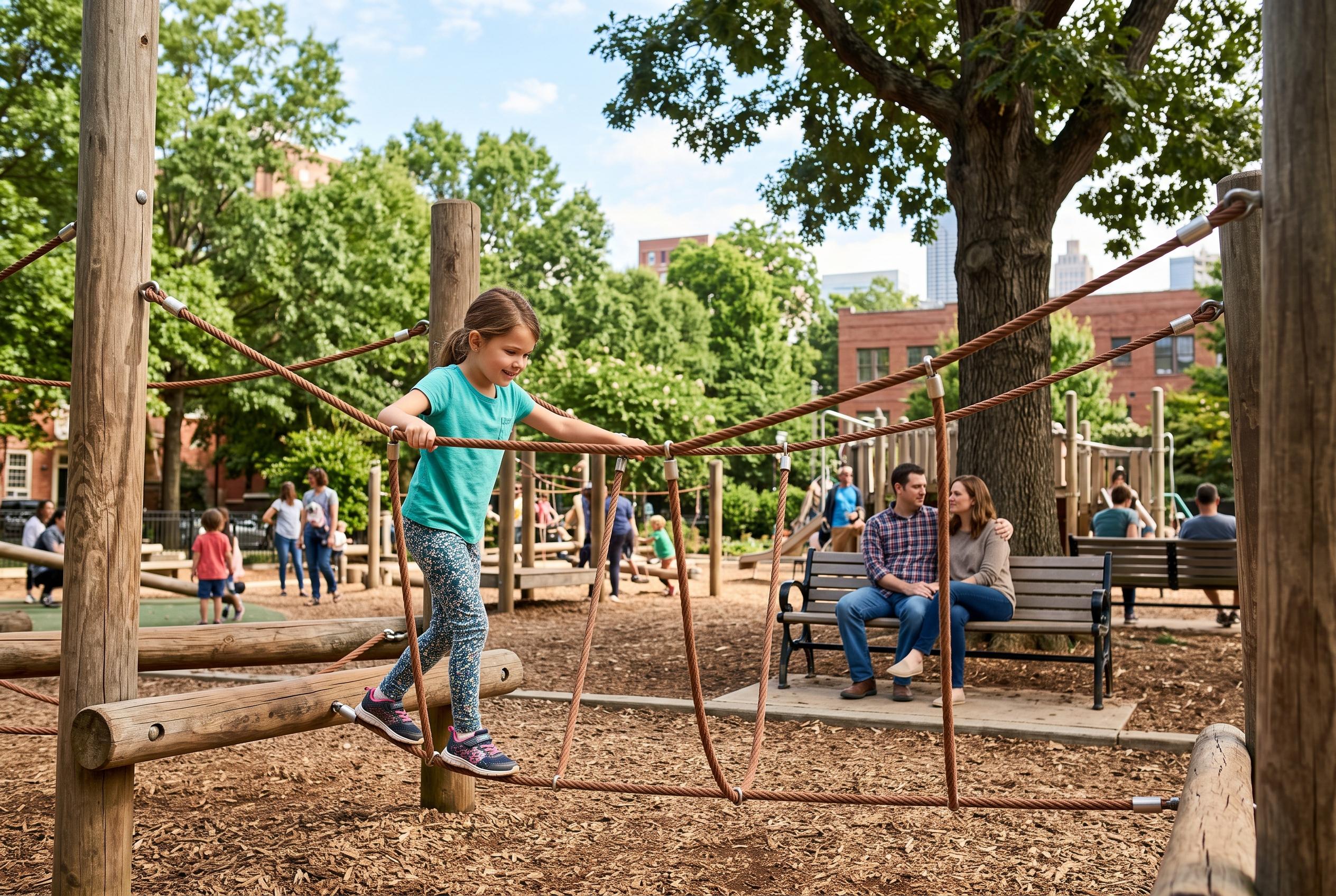

A family in Atlanta faced legal consequences after a six-year-old’s playground trip, highlighting broader debates on childhood independence, overprotection, and evolving laws to protect children’s right to autonomy.
A six-year-old’s scooter trip to a nearby playground ended with an accusation of neglect, then weeks of indoor confinement as his parents in Atlanta feared arrest. The family was later cleared after Georgia narrowed its neglect definition to protect children’s right to independent play, but the episode reflects a wider anxiety around childhood freedom and the pressure on parents to eliminate risk entirely. Researchers say that instinct can leave children less resilient and more fearful, with effects that may linger into adulthood. Studies in emerging adults have linked helicopter parenting with poorer mental health, lower self-efficacy and greater emotional strain, while resilience and autonomy appear to soften some of those harms.
The concern is not that parents are indifferent, but that overprotection can become its own source of damage. A recent Harris Poll found that 62% of children aged 8 to 12 have never walked or cycled somewhere without an adult. That lack of independence matters because children build competence by solving manageable problems on their own. Developmental psychologist Aliza Pressman of the Mount Sinai Parenting Center argues that children need room to make survivable mistakes if they are to feel capable. Peter Gray, a Boston College professor, has made a similar point in arguing that adults often underestimate children’s toughness and, in doing so, create the fragility they fear.
Parents themselves appear to recognise the trade-off. A 2023 survey from C.S. Mott Children’s Hospital in Ann Arbor, Michigan, found that 84% of parents with children aged 9 to 11 said unsupervised free time benefits children, yet only half would let a child search for an item alone in a grocery store. That mismatch between belief and behaviour has helped fuel legislative changes in at least 13 states, which have loosened neglect laws in recent years to avoid criminalising ordinary independence such as walking to a playground or playing outside.
The issue has also moved into Congress. A bipartisan bill called the Promoting Childhood Independence and Resilience Act was introduced in the House of Representatives in May, signalling broader concern that a culture of constant supervision may be doing children no favours. Academic studies add weight to that worry: research has associated overinvolved parenting with more interpersonal conflict among college students, weaker self-control and self-efficacy, and a higher risk of emotional problems. Taken together, the evidence suggests that protecting children is not the same as shielding them from every discomfort. Sometimes, the safer long-term choice is to let them practise being on their own.
Disclaimer: This content is for informational purposes only and is not intended to be a substitute for professional medical judgment, advice, diagnosis, or treatment.