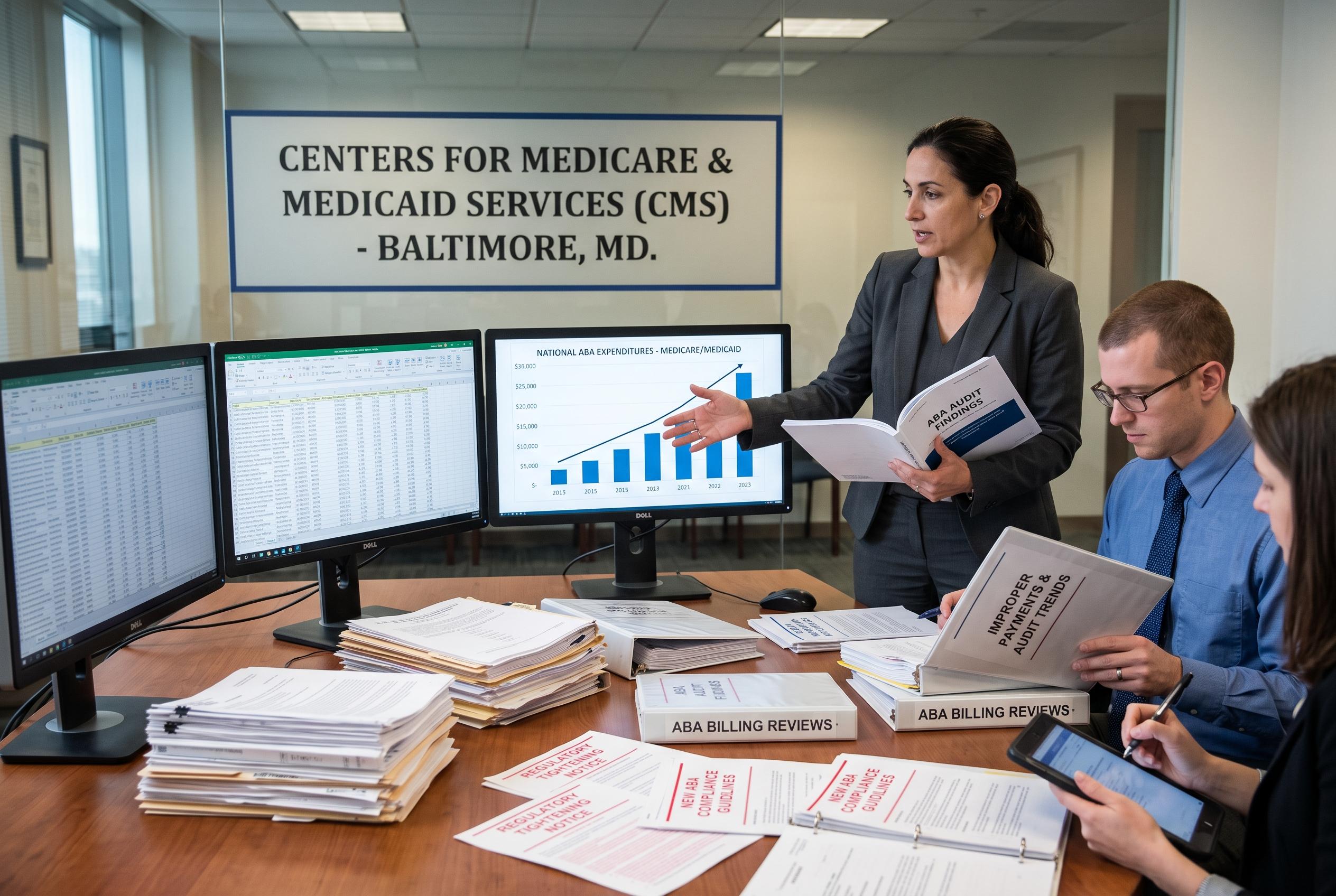

The Centers for Medicare and Medicaid Services intensifies oversight of applied behaviour analysis, as soaring billing patterns and audit findings prompt a tightening of regulations in the autism treatment sector.
Federal scrutiny of applied behaviour analysis, the main form of autism therapy, is intensifying as the Centres for Medicare and Medicaid Services moves to tighten oversight of billing patterns that have already drawn the attention of investigators. In an Aug. 5 toolkit for state Medicaid and Children’s Health Insurance Program officials, CMS said spending on ABA rose sharply between 2021 and 2025, outpacing growth in the number of children receiving services. The agency framed the document as guidance rather than a new rule, but its examples closely track the types of conduct that have appeared in recent audits and fraud cases. The National Law Review said the development reflects a broader enforcement trend in the sector.
The toolkit highlights a series of billing practices that federal officials now view as warning signs, including overlapping sessions, excessive hours without documented progress, copied notes across patients, group therapy billed as individual treatment and staffing levels that lack clinical explanation. It also points to audit risk when children receive 40 or more hours a week, discourages billing that bundles multiple 15-minute units into a single line item and cites one provider that reported extraordinarily high service totals in a single encounter. CMS also extends its scrutiny to referral relationships, warning against compensation tied to referral volume and encouraging monitoring for outlier patterns.
That focus fits a growing enforcement record. The Health and Human Services inspector general has already identified major improper payments in Medicaid ABA and related autism services, including at least $45.6 million in Maine and $285.2 million in Colorado, with sampled claims showing problems such as missing assessments, weak documentation and unsupported billing. Coverage cited by the National Law Review also notes similar findings in Indiana and Wisconsin, bringing the total identified improper payments in those state audits to well above $198 million. Industry reporting has repeatedly pointed to documentation failures, non-therapeutic activities being billed as treatment and claims that used individual rates for group sessions.
Congress has now joined the effort. In July, the House Committee on Education and Workforce opened an inquiry into autism therapy billing, seeking records from The Perfect Child founder Simcha Bendet after a Wall Street Journal report on alleged overbilling and aggressive collections. Taken together with the CMS toolkit and the inspector general’s audits, the message to providers is clear: treatment plans that default to maximum hours, records that do not individualise care, billing structures that obscure actual time spent and referral arrangements with financial strings attached are all likely to face more scrutiny. For providers, the immediate task is to review compliance systems before investigators do it for them.
Disclaimer: This content is for informational purposes only and is not intended to be a substitute for professional medical judgment, advice, diagnosis, or treatment.