

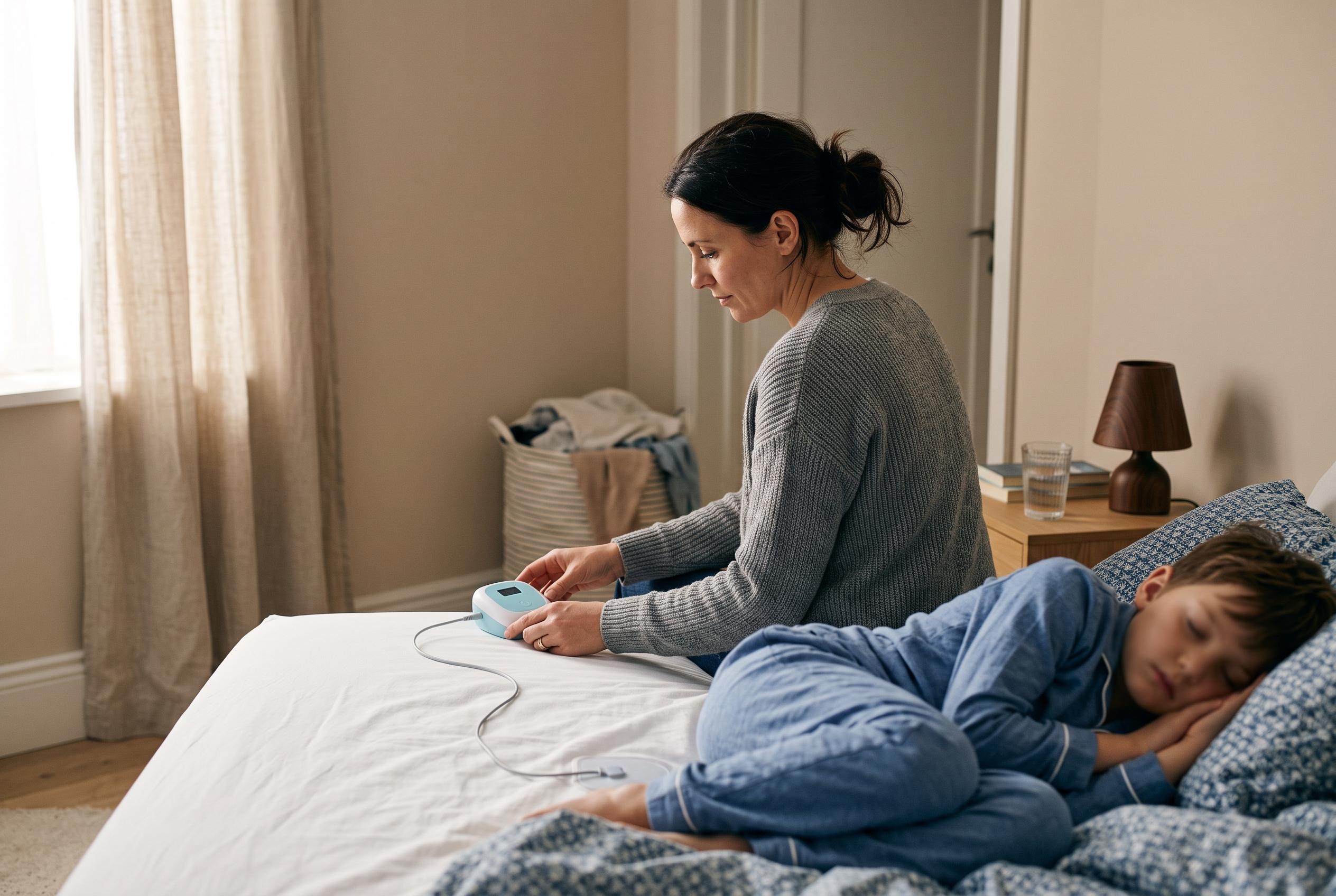

Despite their potential, bedwetting alarms require proper, consistent use and patience. Experts highlight common pitfalls and suggest ways for families to optimise device effectiveness over time.
Bedwetting alarms can be a useful tool for helping children build awareness of nighttime bladder signals, but they are not a quick fix. Families often decide an alarm has failed when the real problem is something more practical: it is being used irregularly, set up incorrectly, chosen for the wrong sleeper or expected to deliver immediate dry nights. Cleveland Clinic says the devices work best when they are used consistently and fitted properly, and that success depends on repetition over time rather than a single dramatic change.
One of the most common mistakes is expecting results too soon. Alarm training is usually a learning process, not an overnight cure, and early progress may be subtle. A child might wake sooner after the alarm sounds, wet less of the bed, or begin responding before a full void. Enuresis UK says families should be patient because improvement often arrives gradually, and stopping too early can undo progress that is only just beginning to show.
How the alarm is used matters just as much as which model is chosen. Consistency is central, and several sources stress that alarms should be used every night, with the sensor checked and the device tested before sleep. Incorrect placement can delay activation, while worn batteries, loose cables or dirty sensors can also make a system seem unreliable. Stop Bedwetting advises parents to follow the manufacturer’s instructions closely, including cleaning, battery checks and proper cord routing, so the alarm can do its job when wetting begins.
The child’s sleep pattern is another important factor. Some children wake easily, but deep sleepers may sleep through even a loud signal. In those cases, parents often need to help wake the child at first so the full routine happens: waking, turning off the alarm, using the toilet, changing if needed and resetting the device. That sequence matters, because the aim is not merely to silence the alarm but to link moisture, waking and toileting in the child’s mind. The Bedwetting Store notes that parents sometimes make the process harder by expecting the child to manage everything alone before they are ready.
Comfort and fit also influence success. A wearable alarm that rubs, slips or feels awkward may be abandoned, even if the technology itself works well. A bedside option may suit children or teenagers who dislike clothing sensors, while a wearable system may be better for those who need detection close to the point where wetting starts. If progress stalls, the problem is not always the child or the family’s effort. It may be that the alarm is the wrong type, the setup is flawed, or the sleeper’s needs have changed. In those cases, reviewing the routine, testing the equipment and reassessing the model can be more helpful than giving up.
Disclaimer: This content is for informational purposes only and is not intended to be a substitute for professional medical judgment, advice, diagnosis, or treatment.



