

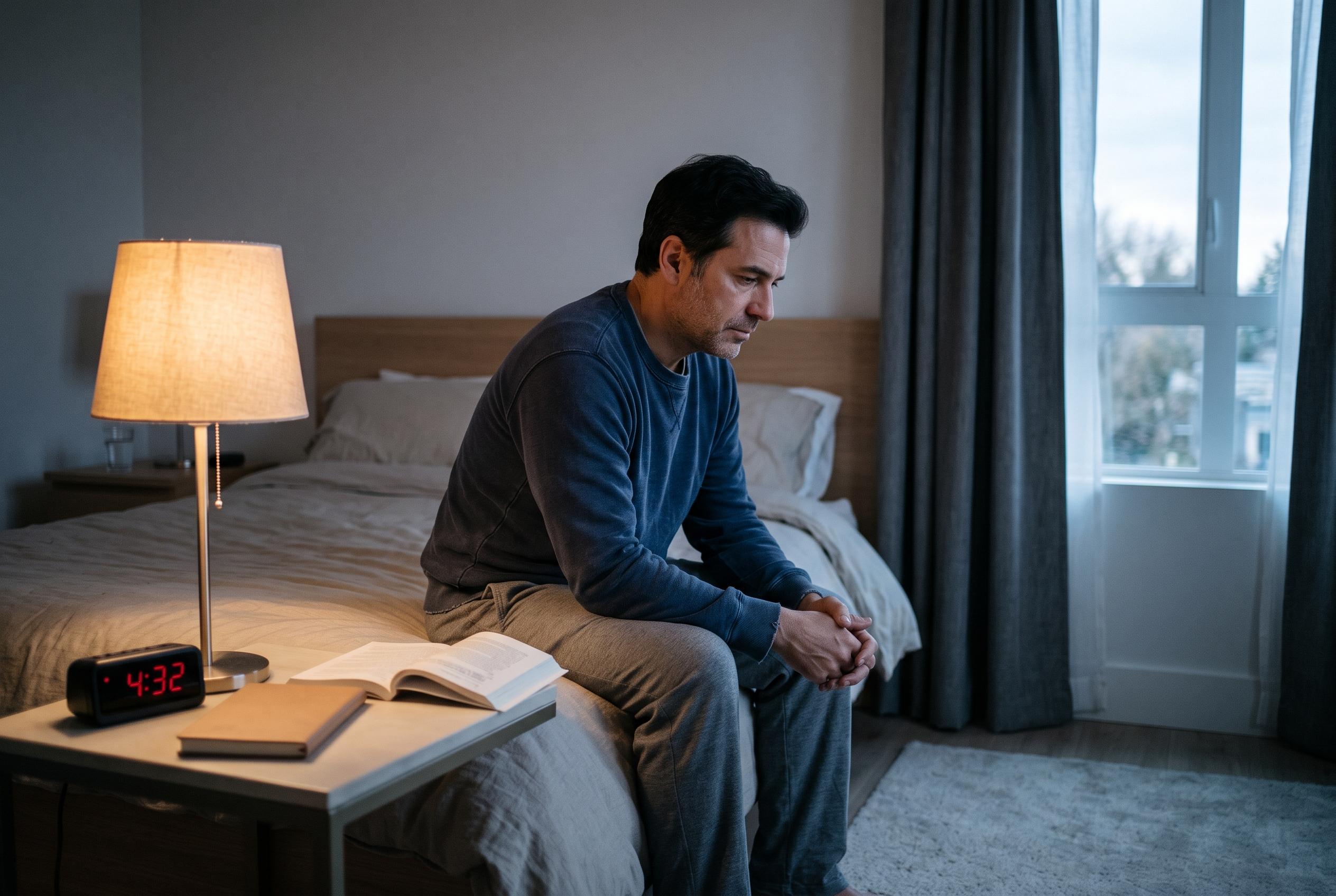

Australian researchers have identified a possible depression pattern linked to disrupted sleep-wake cycles, raising questions about whether light therapy and other sleep-focused treatments could help some patients.
Scientists are investigating whether a distinct form of depression, driven by a disrupted body clock, may help explain why some patients do not improve with standard antidepressants. Researchers in Australia have described the pattern as “circadian depression”, saying it may account for symptoms in a substantial minority of people whose illness is closely tied to sleep and waking problems.
The study, published in the British Journal of Psychiatry, drew on data from more than 11,000 participants in the Australian Genetics of Depression Study. Of those, 2,604, or nearly a quarter, were classified as having the circadian subtype. The researchers said the group tended to show seasonal changes in mood, excessive sleep during depressive episodes, persistent fatigue and a preference for being awake late at night.
They also found that these patients were more likely to develop depression earlier in life and to experience more severe symptoms, including mania and suicidal thoughts. Genetic analysis suggested higher risks of heart disease, inflammatory conditions and neurodevelopmental disorders such as attention deficit hyperactivity disorder, or ADHD.
Dr Emiliana Tonini of the University of Sydney, the study’s lead author, said recognising different forms of depression could help patients get the most effective treatment sooner. Dr Jacob Crouse, a co-author, said therapies that focus on the circadian rhythm, such as light therapy and melatonin, may be more relevant for this group than antidepressants alone. Melatonin is a hormone produced by the brain in response to darkness and helps signal the body to prepare for sleep.
The researchers said cognitive behavioural therapy, which aims to change unhelpful thinking and behaviour patterns, may also be useful. Professor Ian Hickie of the University of Sydney’s Brain and Mind Centre said identifying circadian depression in young people is especially important because many are first offered selective serotonin reuptake inhibitors, or SSRIs, even though some may benefit more from sleep-focused approaches.
The findings come as antidepressant use in England has reached record levels, with one in seven adults prescribed the drugs last year, according to the article. That backdrop has also sharpened scrutiny of the medicines, after health officials issued a safety alert last week warning that antidepressants can be linked to long-lasting sexual side effects and suicidal thoughts even after treatment ends.
Not all experts are persuaded that the new label should change practice. Professor David Curtis of University College London argued that people with depression show a wide range of symptoms and that selecting patients with certain features does not necessarily prove a new subtype exists. He also said the word “circadian” may be misleading because classic features of depression, including early waking and worse mood in the morning, are themselves tied to the sleep-wake cycle.
Even so, researchers outside the study said the work reinforces the need to look carefully at sleep patterns when assessing mood disorders. For clinicians and patients, the practical message is that a poor response to antidepressants does not necessarily mean treatment has failed; it may mean the underlying pattern of illness needs to be understood differently.
Disclaimer: This content is for informational purposes only and is not intended to be a substitute for professional medical judgment, advice, diagnosis, or treatment.



