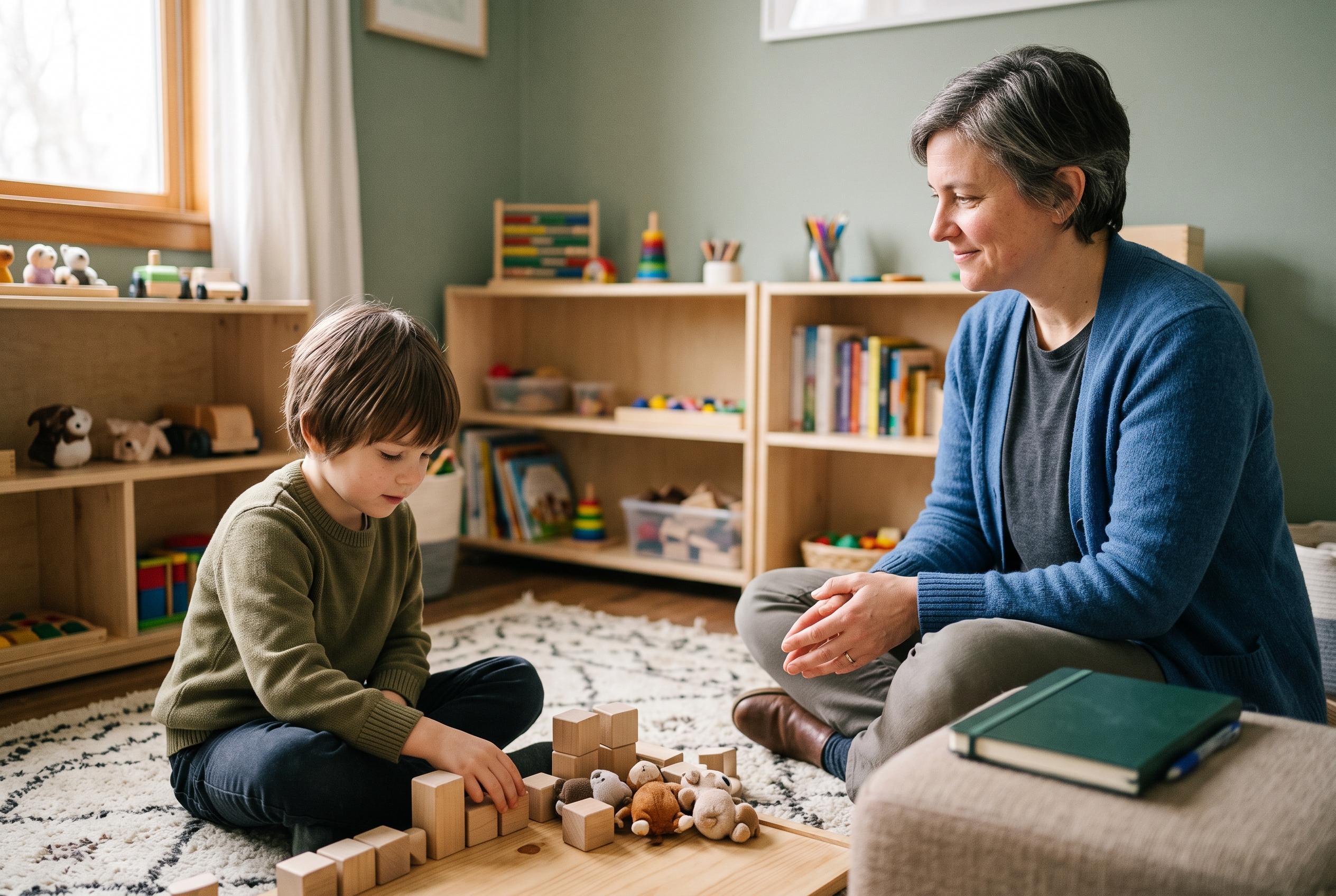

Emerging evidence suggests child-centred play therapy can alleviate anxiety, trauma and behavioural issues in children, but researchers call for more consistent studies to validate its effectiveness.
Child-centred play therapy is gaining support as a way to help children manage anxiety, trauma and behaviour problems, although researchers say the evidence is still uneven and more standardised studies are needed.
A systematic review published on PubMed examined seven peer-reviewed studies involving young people who had experienced traumatic events. It found improvements in self-concept, competence, internalising difficulties, externalising behaviours and post-traumatic stress-related symptoms after child-centred play therapy, but also noted wide variation in study design and outcome measures, which made firm conclusions difficult. That caution matters for parents and schools looking for dependable answers: the overall signal is promising, but the research base is not yet uniform.
Other studies point in the same direction. A randomised controlled trial published in the Journal of Counselling and Development followed 36 elementary school-age children who received 16 sessions of child-centred play therapy and 35 children on a waiting list. Parents reported statistically significant improvements in aggression, self-regulation and empathy, while teacher ratings were less conclusive. In a separate trial, researchers studying 53 children aged six to eight found that those given child-centred play therapy showed meaningful reductions in anxiety and worry compared with a control group.
Broader reviews suggest the approach has a measurable, if moderate, effect. A meta-analysis of 52 controlled studies found an overall treatment effect size of 0.47, which points to a positive but not dramatic benefit across different childhood concerns. The same review found that outcomes varied depending on factors such as the child’s age, ethnicity, caregiver involvement, treatment quality and the issue being treated, underscoring that child-centred play therapy is not a one-size-fits-all intervention.
The approach is rooted in the idea that play gives children a developmentally appropriate way to express feelings they may not yet be able to describe in words. Supporters argue that this makes it especially useful in cases involving trauma, anxiety and school-related behaviour issues. Even so, researchers continue to stress that future work should use more consistent measures and stronger methods before the field can draw firmer conclusions about who benefits most and under what circumstances.
Disclaimer: This content is for informational purposes only and is not intended to be a substitute for professional medical judgment, advice, diagnosis, or treatment.