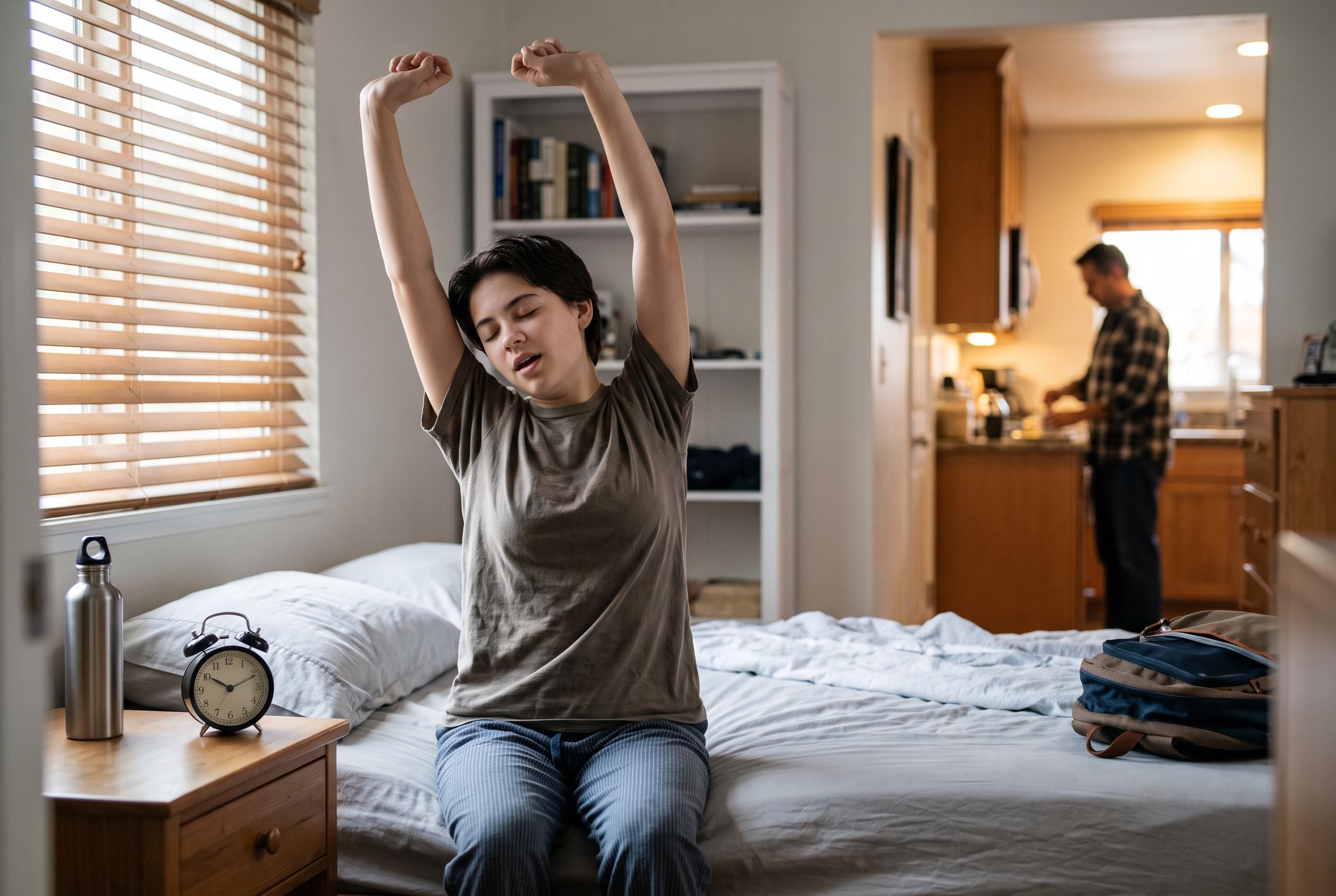

A law implemented in California requiring later start times for middle and high schools is leading to longer sleep, improved mental health, and academic gains among teenagers, highlighting its significance as a public health measure.
California’s 2019 decision to require later middle and high school start times is beginning to look like more than a symbolic nod to exhausted teenagers. The law, which took effect for most districts in the 2022-23 school year, was meant to align school schedules more closely with adolescent sleep patterns. A National Bureau of Economic Research working paper now suggests it has done exactly that, with students sleeping longer, reporting fewer mental health problems and posting gains in maths and English.
For many families, the case for change was already obvious. During his sons’ years at Newport-Mesa Unified School District, one parent recalled that they were sometimes in class before 7am because advanced placement options were only available through an early “zero period”. With sports, extracurricular activities and homework added on top, sleep regularly fell below the eight to 10 hours recommended for teenagers. That kind of chronic exhaustion is not unusual, and it helps explain why supporters of the law saw it as a public health measure as much as an education policy.
Researchers who examined California’s school start-time mandate found measurable benefits. According to the NBER study, the share of students getting at least eight hours of sleep a night rose by 13%, meeting the minimum recommended by the Centres for Disease Control and Prevention for this age group. The paper also reported lower levels of sadness, hopelessness and suicidal thoughts among boys, as well as improved concentration among Hispanic students. Those findings are consistent with a broader body of research, including a literature review in PubMed that concluded later start times generally extend weeknight sleep by shifting wake-up times later.
That evidence sits alongside a law that, as legal analysts have noted, has not been painless to implement. Districts have had to rework transport schedules, adjust staffing and, in some cases, negotiate around labour agreements. California Education Code provisions also make clear that the mandate applies to traditional public schools and charter schools serving secondary pupils, though rural districts are exempt. Even with the new start-time floor, some schools still run “zero periods”, meaning a number of teenagers are still beginning around 7.30am, and the statute does not reduce the total instructional minutes schools must provide.
Local officials, meanwhile, say the transition has become part of normal operations. Newport-Mesa Unified spokeswoman Annette Franco said in a written response that the district has been operating under the later start times for several years and has not seen significant effects that can be directly tied to the change. That does not mean the policy has solved the larger problem. Screen time remains a major obstacle to healthy sleep, as the light from devices can suppress melatonin and make it harder to fall asleep, while the stimulation from phones and tablets can keep teenagers alert long after they should be winding down. The law may have helped, but it is only one part of a much wider effort to keep adolescents healthy, attentive and ready to learn.
Disclaimer: This content is for informational purposes only and is not intended to be a substitute for professional medical judgment, advice, diagnosis, or treatment.