

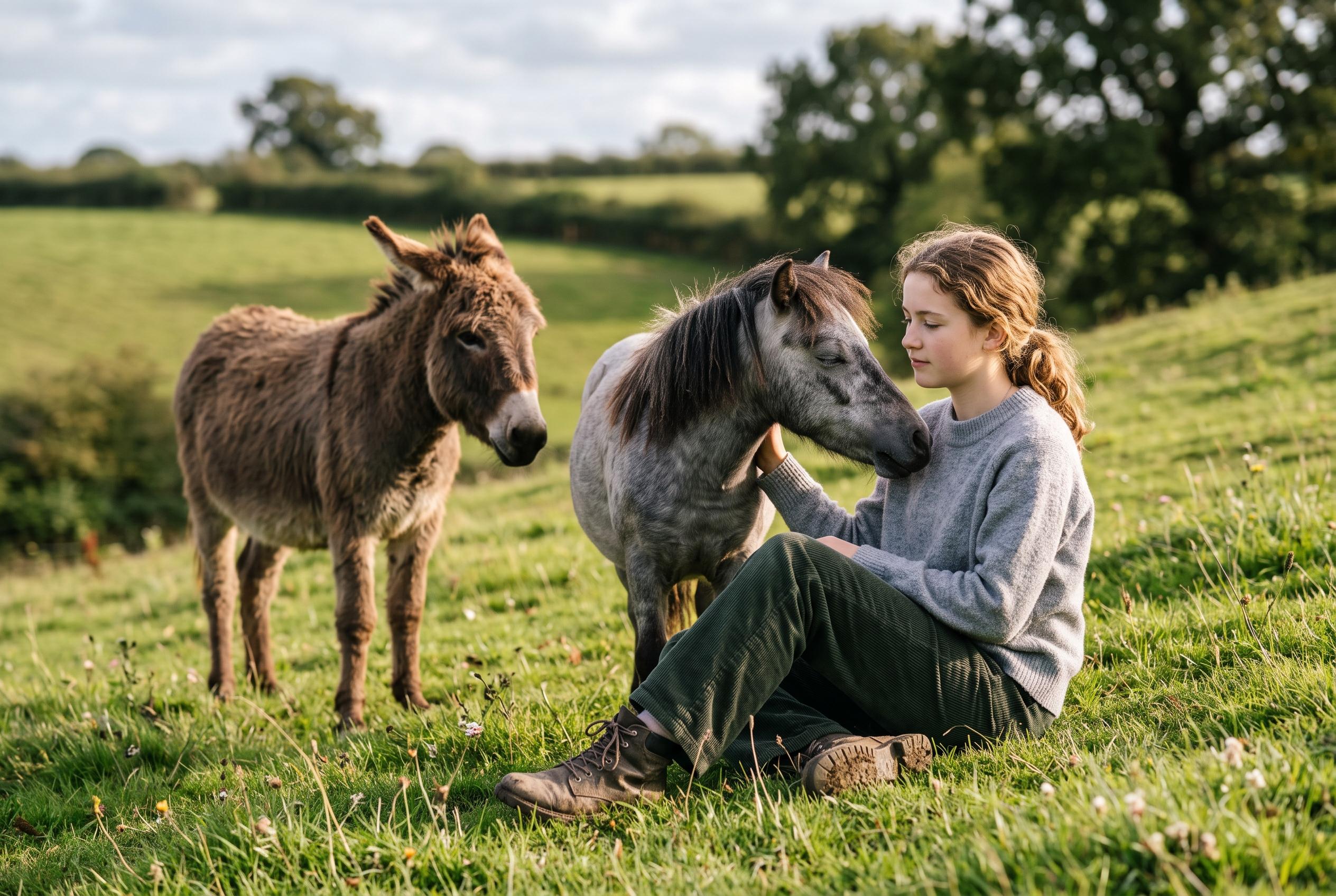

A UC Davis study reveals that just three minutes with miniature horses and donkeys can help teens experiencing anxiety feel calmer and less lonely, highlighting the therapeutic potential of animal interactions.
A UC Davis study suggests that even a brief encounter with miniature horses and donkeys may help adolescents feel calmer, less lonely and less sad. Researchers found that just three minutes with the animals was enough to lift mood for teens coping with anxiety and other emotional strain.
The work was led by Rebecca Calisi Rodríguez, an associate professor of neurobiology, physiology and behaviour at UC Davis and director of the university’s Green Care Lab. Published on September 15, 2026, in Scientific Reports, the study asked teenagers to learn two simple clues about the animals’ behaviour: lip-wriggling, which signalled pleasure during a scratch, and walking away, which showed the animal wanted space.
Calisi Rodríguez said the findings supported what she described as a two-way approach, in which the animal’s response shapes the human experience as much as the human’s touch affects the animal. According to UC Davis, teens reported feeling better even when the miniature horses or donkeys chose to move away, a result the researchers say may reflect the value of giving the animals agency and making the interaction feel more natural.
The study adds to a growing body of research into animal-assisted support for young people. The National Institute of Mental Health estimates that one in four adolescents aged 13 to 18 has an anxiety disorder, while about one in 17 experiences severe anxiety. UC Davis has also explored animal-based therapy in other settings, including work with horses and people living with dementia, as part of a broader One Health approach that links human and animal wellbeing.
Disclaimer: This content is for informational purposes only and is not intended to be a substitute for professional medical judgment, advice, diagnosis, or treatment.



