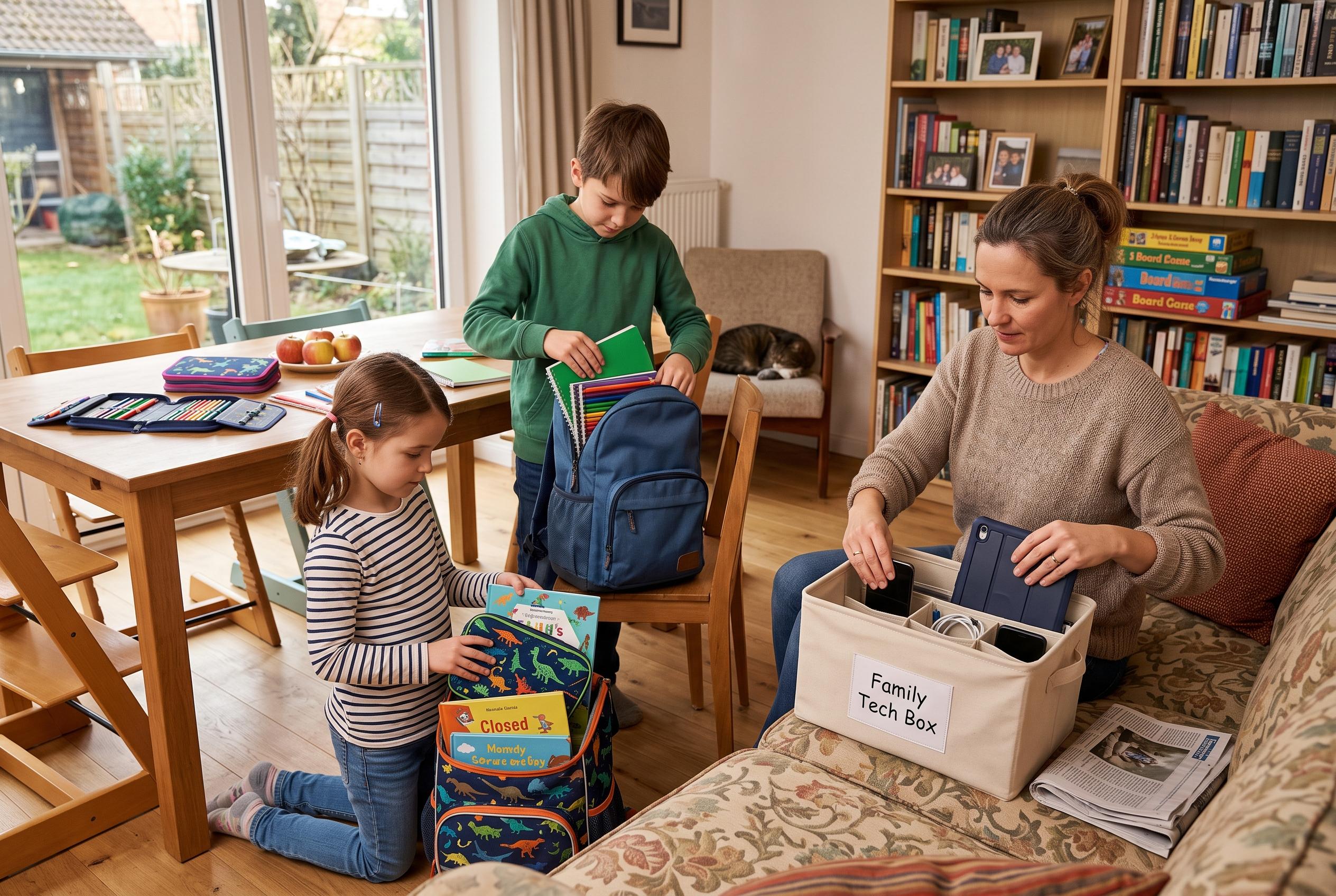

As children return to school, experts highlight the importance of resetting screen routines, emphasising gradual changes and mindful media use to support healthy development amid parental stress and changing routines.
Parents under pressure are more likely to hand children a tablet, phone or television remote and less likely to hold firm on limits, according to a new study from Florida International University’s Centre for Children and Families. The research suggests that screen use is often less about a child misbehaving than about a caregiver trying to get through a demanding day.
That pattern fits a broader body of evidence showing that what adults do strongly shapes what children do. A long-running study published in Pediatrics found that parents’ television viewing time was more closely associated with children’s viewing habits than household access to a television or even parental rules. Another Pediatrics study linked early self-regulation problems in young children with slightly higher media exposure, suggesting that behaviour and device use can reinforce one another over time.
The American Academy of Pediatrics says the effects of screen exposure depend heavily on age, content and context. For infants and toddlers, excessive use, especially at night, has been associated with poorer sleep and weaker language development. For school-age children, carefully chosen educational media can be useful in moderation, but heavy use has been tied to lower academic performance, weaker attention control and less effective cognition.
That makes the back-to-school period a useful moment for families to reset routines. Jeff Temple, a psychologist at UTHealth Houston who was not involved in the Florida International University study, told CNET that screens can be one of several tools families use to get through the day, but the difficulty comes when summer habits fail to adjust to the school year. Tiffany Munzer, a paediatrician at the University of Michigan Medical School, said school can give families a natural pause from summer childcare pressures and a chance to reconsider digital habits as routines change.
Experts recommend gradual changes rather than abrupt crackdowns. Jason Nagata, an associate professor of paediatrics at the University of California, San Francisco, told CNET that families should revisit screen rules based on a child’s age, school schedule and whether devices are needed for homework or communication. The American Academy of Pediatrics advises families to create a media plan, set screen-free times and pay attention to warning signs such as conflict over devices, difficulty cutting back and screen use that begins to interfere with sleep, relationships or other activities.
Disclaimer: This content is for informational purposes only and is not intended to be a substitute for professional medical judgment, advice, diagnosis, or treatment.