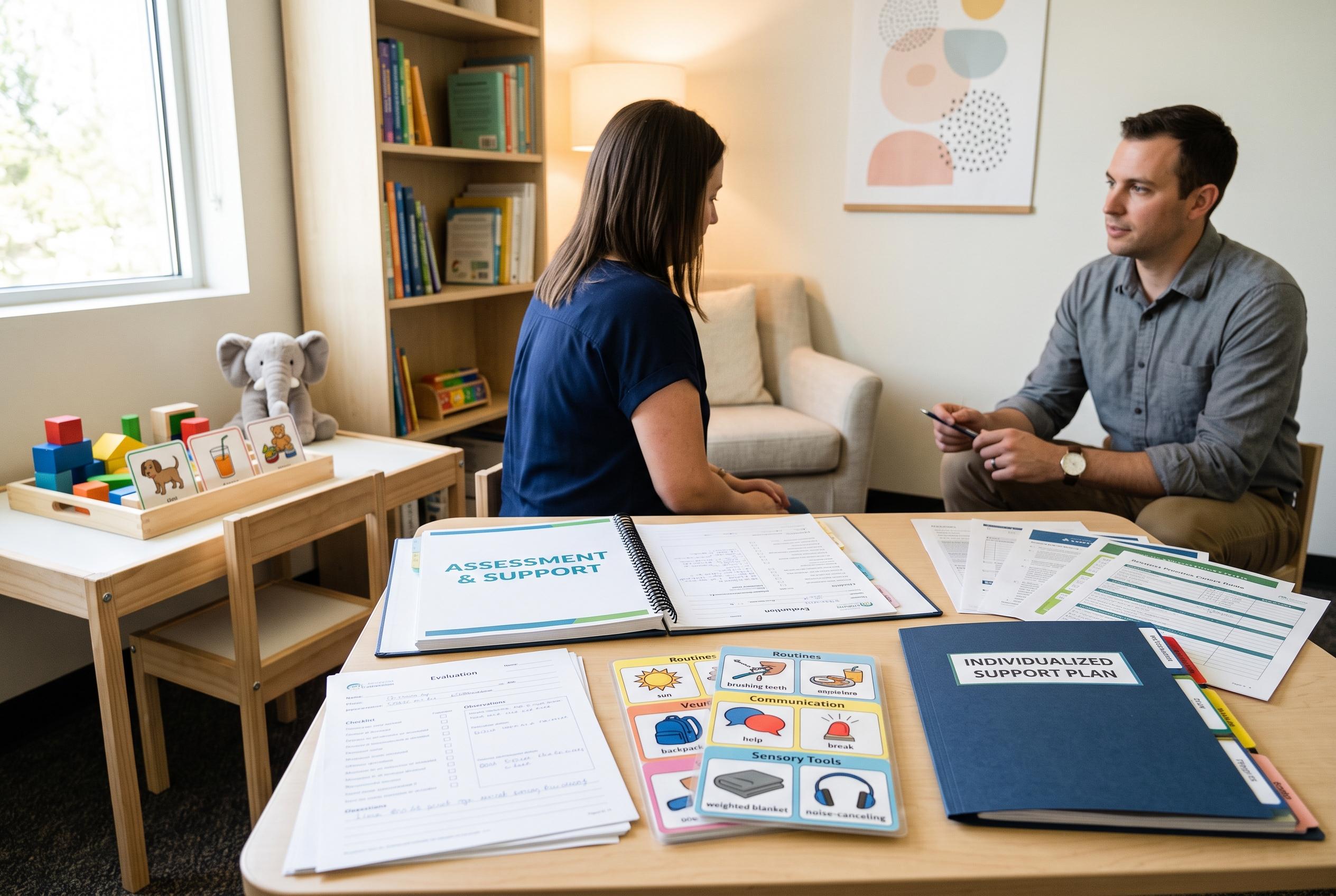

Penelope Trunk highlights the limited diagnostic clarity of autism evaluations, emphasising their role in guiding support and highlighting risk factors for self-harm and suicide among autistic children.
Penelope Trunk argues that many autism assessments are misunderstood by parents who expect a clear-cut verdict, when in practice the process often yields only partial answers. In a blog post published on 12 August 2026, Trunk said school-based testing is often narrow, while private evaluations can be more detailed but still leave families with too little practical guidance.
Her central claim is that an assessment matters less as a label than as a tool for getting support. Trunk said parents need the results to press for an individualised education programme, understand how their child learns and identify related issues such as language, attention or movement difficulties. She also argued that evaluations are most useful when they are followed by sustained parent coaching, not simply a written report.
The stakes, she said, are especially high for autistic children because of the link with self-harm and suicide risk. That concern is supported by recent research. A Penn State College of Medicine study found children with autism spectrum disorder faced a higher risk of suicidal thoughts and attempts than non-autistic peers, with particularly high rates among Black and Hispanic children. Other research, including a multinational study indexed in PubMed and a review in Current Developmental Disorders Reports, has likewise found sharply elevated rates of suicidal ideation and attempts among autistic people.
Additional studies point to factors that may worsen risk. Work published in Frontiers in Psychiatry in 2026 found sleep problems, especially daytime sleepiness and poor sleep quality, may be tied to suicidality in autistic youth. A study in JAMA Network Open found autistic females had the highest cumulative self-harm events, while autistic males had the highest cumulative incidence of suicide deaths. Together, the research suggests that better assessment can do more than confirm a diagnosis: it can help identify vulnerabilities that schools and families might otherwise miss.
Trunk’s broader message is that parents should view evaluation as the starting point for advocacy rather than the end of the process. She said early identification can help children learn to explain their needs and manage their environment, while also giving parents a clearer basis for challenging schools that minimise concerns. Her post is a reminder that, for families navigating special education, the value of an evaluation lies not just in the diagnosis itself, but in what comes next.
Disclaimer: This content is for informational purposes only and is not intended to be a substitute for professional medical judgment, advice, diagnosis, or treatment.