

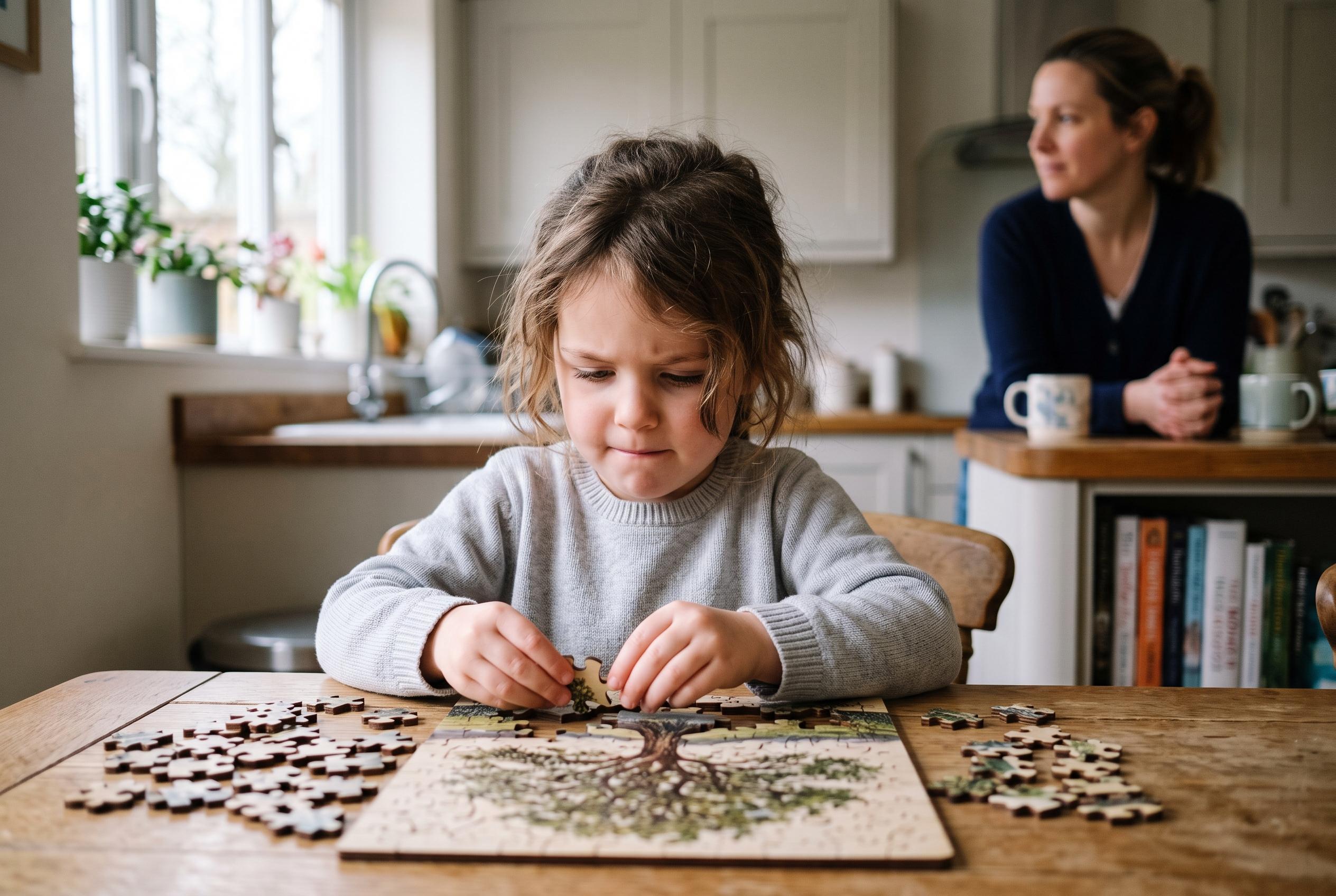

Experts highlight the importance of letting children face small challenges to foster independence and resilience, amidst increasing reliance on quick answers and adult intervention.
Parents are often tempted to step in the moment a child loses a lunchbox, faces a tricky sums question or cannot work out how to get from one place to another. But educators and child development specialists say those small frustrations can be useful precisely because they force children to practise working things out for themselves.
According to the Associated Press, that is becoming harder in a world where answers are instant and adults can monitor children more closely than ever. Experts cited in the report said independence is not a vague virtue but a set of habits: planning, making decisions, recovering from mistakes and trying again. Dana Suskind, a University of Chicago professor and author of “Human Raised”, told AP that children need the experience of figuring things out rather than being handed the answer. Stephanie Carlson, who leads the Institute of Child Development at the University of Minnesota, warned that if children never have to struggle, they may find it much harder to cope when they eventually must.
That does not mean leaving children unsupported. HealthyChildren.org says parents can encourage a can-do mindset by letting children watch adults solve problems, avoiding the urge to micromanage and using play to build creativity and resilience. Nationwide Children’s Hospital recommends involving children in family problem-solving, teaching them a process for working through challenges and gradually increasing the difficulty as they grow. Children’s Health similarly says mistakes are part of learning and that even simple household tasks, from setting the table to sorting laundry, can build confidence and responsibility.
Real families often apply those ideas in ordinary ways. The AP report cites Nicole Knoth, a mother in Flagstaff, Arizona, who began giving her daughters small choices early, including working out what they could buy with $5 at a shop. Jemia Cunningham-Elder, a mother in Chicago, said she adjusts expectations child by child, giving them more freedom when they are ready and more support when they are not. In southern Italy, Caroline Chirichella said she and her husband eventually stopped rescuing their daughter from forgotten homework, telling her: “Your homework is your responsibility.”
The experts also draw a line between healthy struggle and genuine risk. Parents still need to step in when safety is at stake, but for lower-stakes problems, they can pause, ask questions and let a child think. The aim, the specialists say, is not to make children do everything alone, but to help them learn when to try, when to ask for help and how to keep going.
Disclaimer: This content is for informational purposes only and is not intended to be a substitute for professional medical judgment, advice, diagnosis, or treatment.



