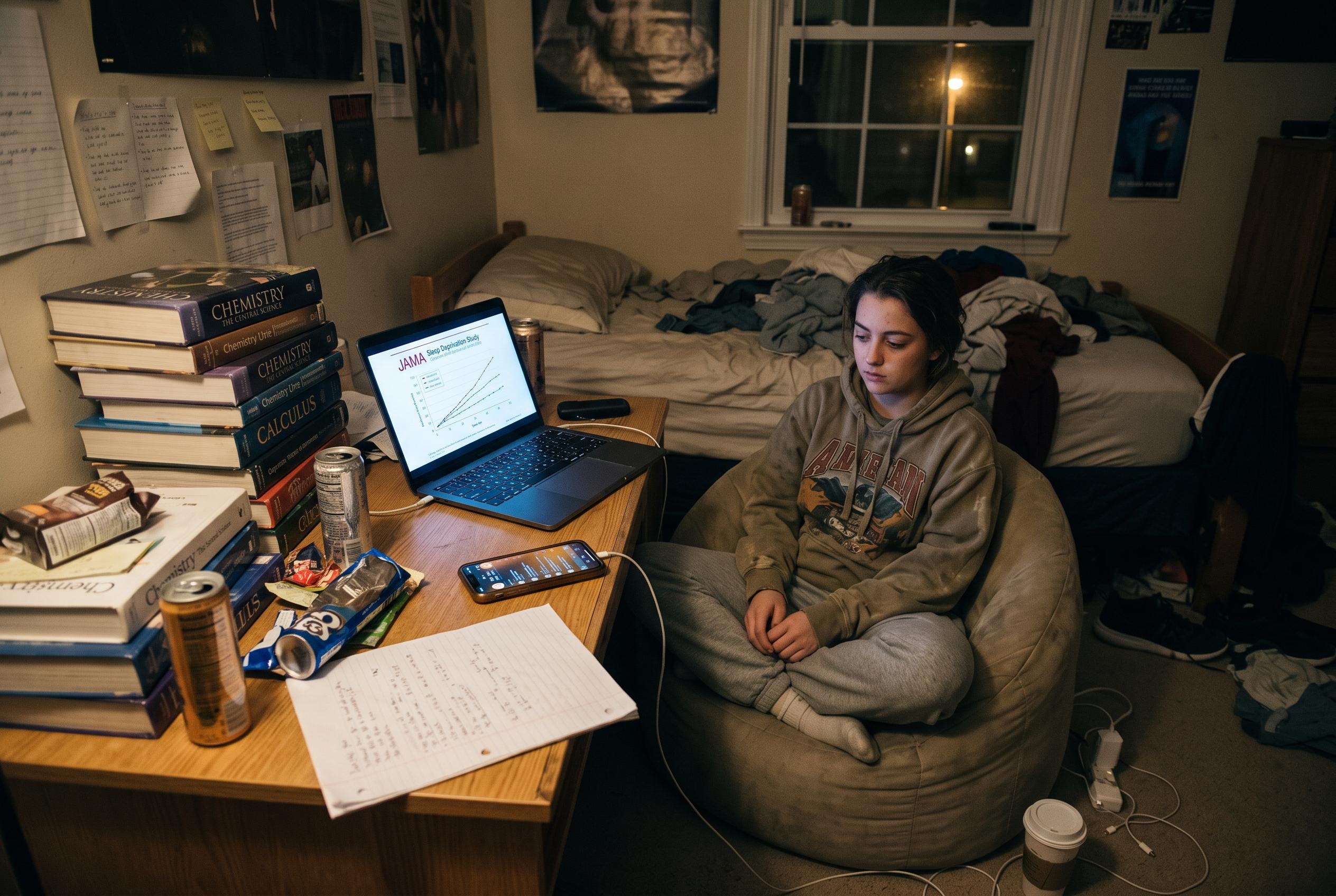

A recent JAMA study reveals that sleep deprivation among US teenagers has increased significantly from 2007 to 2023, across all demographic groups, sparking debates over broader systemic solutions beyond individual behaviour change.
A new JAMA study suggests adolescent sleep deprivation has become even more widespread in the United States, with the share of teenagers getting too little sleep rising from 68.9% in 2007 to 76.8% in 2023. The researchers, using national Youth Risk Behaviour Survey data, said the increase was seen across all demographic groups and was driven largely by a sharp rise in very short sleep, defined as five hours or less a night. The finding adds weight to long-running concerns that chronic sleep loss has become a mainstream health issue for young people, not a niche problem.
The study also found that insufficient sleep rose across sex, grade and race and ethnicity groups, with larger increases among non-Hispanic Black students than among non-Hispanic White students. It was also more common across nearly all behavioural risk groups, including teens without obvious risk factors, suggesting that sleep loss is not confined to a single set of habits or circumstances. The authors said the trend points to a need for a broader response than advice aimed only at individual families.
An accompanying JAMA editorial argued that education alone has not been enough. It said families and patients should still be urged to improve sleep habits, including earlier bedtime routines and less use of devices that disrupt sleep, but noted that such campaigns have not moved population-level behaviour very far. The editorial instead called for structural changes, including later school start times and tighter limits on digital media designs that encourage late-night use.
That broader approach is also reflected in a related JAMA response that addressed concerns about whether changes in screen-time questions affected the trend data. After reanalysing the figures without the 2021 and 2023 screen-time measures, the authors still found that insufficient sleep increased significantly across all screen-time groups from 2007 to 2019, with the steepest rise among adolescents reporting no screen time. Taken together, the studies suggest that the sleep problem is persistent, complex and unlikely to be solved by a single intervention.
Disclaimer: This content is for informational purposes only and is not intended to be a substitute for professional medical judgment, advice, diagnosis, or treatment.