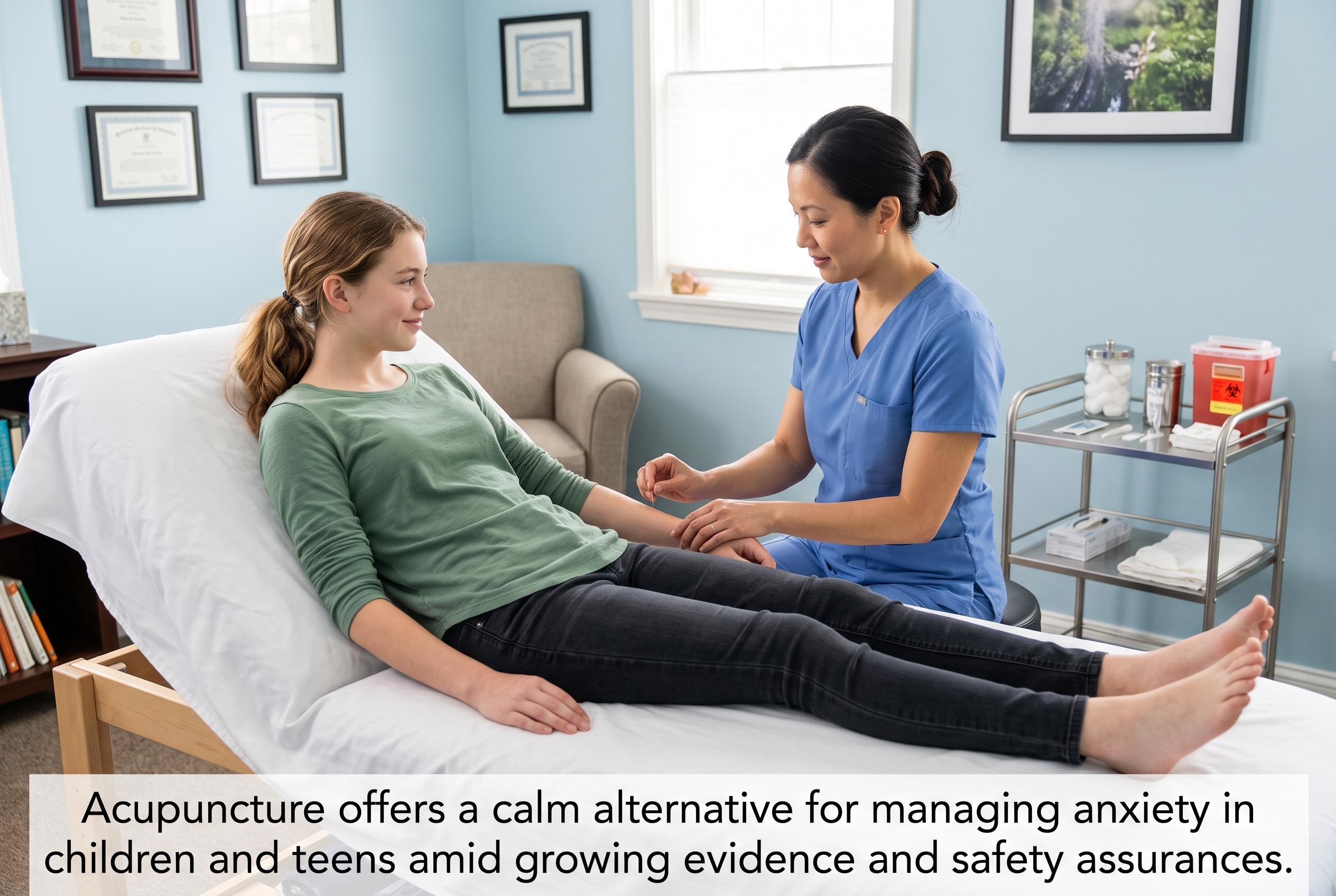

As anxiety rises among young populations, acupuncture, featuring gentle techniques and characterised by safety, emerges as a supportive option, though evidence of effectiveness remains mixed and should complement professional medical care.
Anxiety among children and teenagers often becomes more noticeable as the school year begins, when new routines, heavier workloads, social pressure and poor sleep can all feed stress. For parents looking beyond standard care, acupuncture is one option that is sometimes considered alongside help from a paediatrician or therapist.
The idea of acupuncture can sound daunting, especially for younger children, but practitioners point out that the needles used are far finer than those used for injections. In paediatric care, treatment does not always involve needles at all. Gentle approaches such as shonishin, a Japanese technique that uses light tapping, brushing and stroking, and acupressure, which applies targeted pressure rather than puncturing the skin, are often used first for children who are anxious about needles.
Safety is one of the main questions parents ask. Reviews cited by paediatric acupuncture advocates suggest serious complications are uncommon when treatment is carried out by a properly trained clinician, and a review of studies in children found side effects were generally limited and infrequent. Healthline and the National Centre for Complementary and Integrative Health both say it is important to choose a licensed practitioner who uses sterile techniques and to speak to a doctor first if a child has other medical issues.
The evidence on whether acupuncture helps anxiety is promising but still incomplete. A recent systematic review and meta-analysis of randomised trials found manual acupuncture reduced anxiety in the short term compared with sham treatment and usual care, although the benefit was less clear over longer periods when compared with usual care. Earlier reviews reached a similar conclusion: some studies show positive results, but the overall evidence remains too mixed to support firm claims. Researchers and clinicians generally describe acupuncture as a possible supportive therapy rather than a replacement for mental-health treatment.
That distinction matters most when a child’s symptoms are severe. Paediatricians and mental-health professionals should be involved first if anxiety is leading to panic attacks, school refusal, depression or self-harm concerns. In milder cases, some families say acupuncture offers a calm, low-pressure setting that helps children settle, particularly when gentle techniques are used and parents are allowed to stay in the room. For teenagers, the appeal may be different: a quiet space, some privacy and a sense of control over a treatment that aims to help the nervous system switch out of overdrive.
Disclaimer: This content is for informational purposes only and is not intended to be a substitute for professional medical judgment, advice, diagnosis, or treatment.