

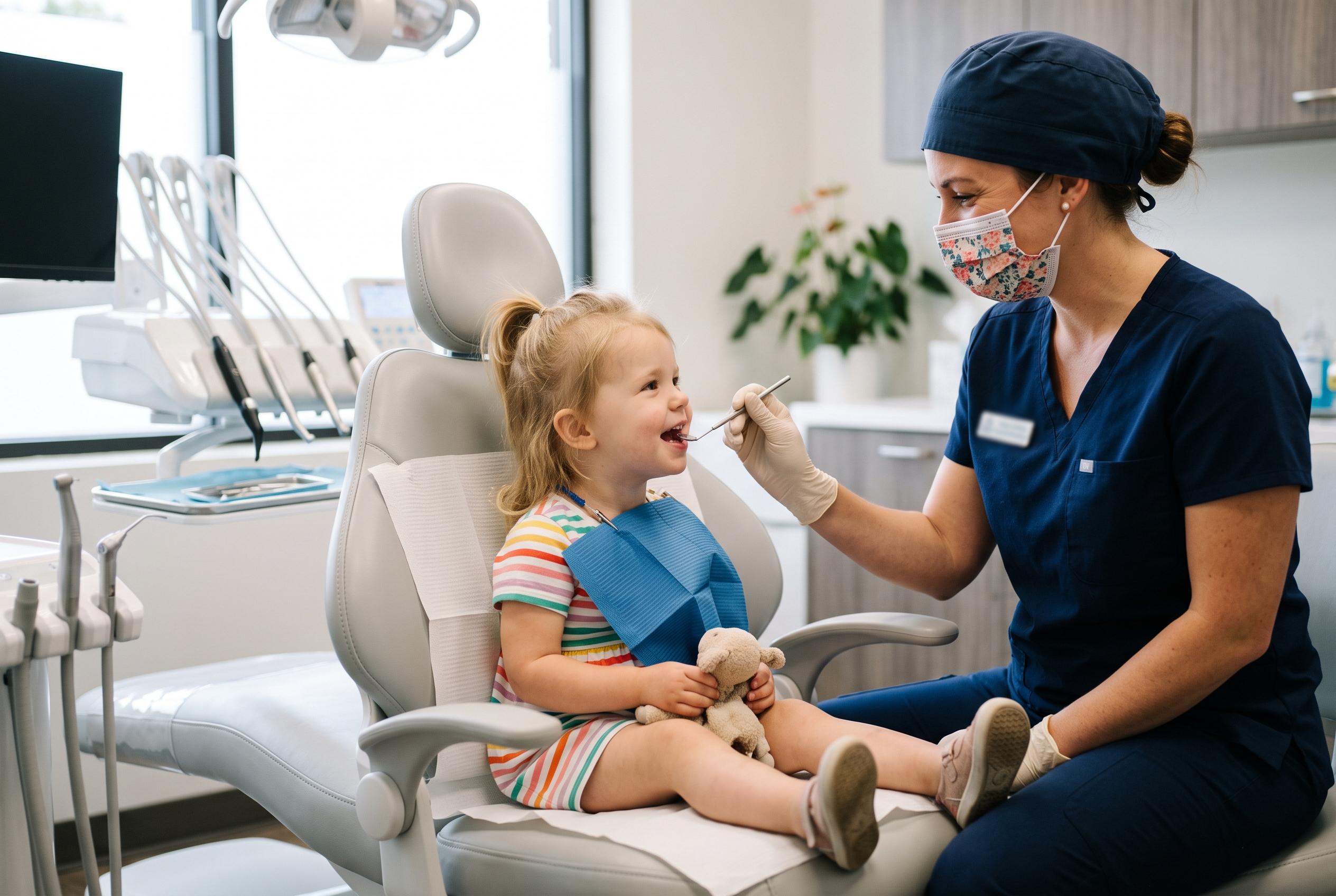

Dentists recommend an early first visit, by age one or within six months of the first tooth, to prevent decay, build healthy habits and reduce anxiety about treatment.
Many parents leave a child’s first dental appointment until well after the time dentists recommend, often because waiting until the first birthday or until school seems more sensible. But according to the American Academy of Pediatric Dentistry, the right moment is much earlier: by age 1, or within six months of the first tooth erupting, whichever comes first. That first appointment is less about treatment than prevention, helping to spot early decay, monitor tooth development and give a child an early, low-pressure introduction to dental care.
If the date has already passed, dentists generally advise booking as soon as possible rather than waiting for another milestone. Early visits help create what paediatric dentists call a dental home, a regular place where parents can ask questions, get guidance on brushing and feeding habits and build a routine before a child ever needs more involved treatment. Studies and dental organisations alike link that early start with better prevention of early childhood caries, the term for decay in very young children.
What happens at that first visit is usually simple. For infants and toddlers, the dentist may only inspect the gums and emerging teeth, talk through fluoride use, thumb-sucking and bottle habits, and explain how to clean a baby’s mouth at home. Some practices use a knee-to-knee exam, where the child sits facing the parent for a quick look at the mouth. Unless there is a specific concern, there is usually no drilling, no complex procedure and often no X-rays at that stage.
As children grow, the rhythm changes. Many will move into a twice-yearly check-up schedule, although the American Academy of Pediatric Dentistry says the exact interval should depend on a child’s individual risk of decay and gum problems. Children with a history of cavities, limited fluoride exposure or other risk factors may need to be seen more often. The logic is simple: small problems are easier and cheaper to address when they are caught early, before they become painful or disruptive.
That is particularly important because decay in baby teeth is common. The National Institute of Dental and Craniofacial Research has found that a meaningful share of children already have decayed or filled primary teeth by preschool age, and the proportion rises as they get older. Baby teeth have thinner enamel than permanent teeth, which means cavities can spread quickly even in children whose families brush regularly and pay close attention to diet. Fortunately, today’s treatment is usually far less daunting than many adults remember from childhood, with tooth-coloured fillings now common and procedures often quick when decay is caught early.
Dentists often begin discussing sealants when the first permanent molars, sometimes called six-year molars, come in. A sealant is a thin protective coating brushed on the chewing surface of a back tooth to block food and bacteria from settling into the grooves where cavities commonly start. The American Dental Association says sealants can sharply reduce decay on treated teeth, and because the process is painless and fast, it is often one of the easiest preventive steps parents can choose.
For families trying to reduce anxiety around the appointment, small details help. A visit scheduled around the child’s best time of day, a favourite comfort item and neutral language about what will happen can all make the experience easier. Parents are usually better off avoiding dramatic reassurances or warnings and instead treating the trip as a routine part of staying healthy. If a child is especially anxious, many practices can adapt with shorter visits or, when appropriate, nitrous oxide, commonly known as laughing gas, which is widely used in paediatric dentistry.
The broader message from dental specialists is straightforward: the first visit should not wait for a problem. By starting early, parents give dentists a chance to guide habits, spot trouble before it escalates and make the office feel familiar long before a child needs more than a glance and a conversation. In dentistry, as in much of childhood healthcare, the earliest appointment is often the one that makes all the later ones easier.
Disclaimer: This content is for informational purposes only and is not intended to be a substitute for professional medical judgment, advice, diagnosis, or treatment.



